
By ABT News Security Desk
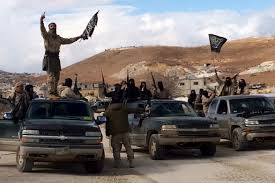
ABUJA — The United States has issued a chilling warning that should make every Nigerian freeze in their tracks: following the destruction of their strongholds in Iraq and Syria, remnants of the world’s most dangerous terrorist organization, ISIS, have officially relocated to Africa, with the Lake Chad Basin and West Africa identified as major hubs.
As Nigeria’s political elite and citizens become increasingly consumed by the political permutations and power struggles ahead of the 2027 general elections, a far more sinister and existential threat is quietly massing at our borders and within our ungoverned spaces.
According to the newly released 2026 US counterterrorism strategy document, the collapse of ISIS in the Middle East has forced these hardened jihadist fighters to seek new safe havens. They have found fertile ground in the Sahel, Mozambique, Sudan, Somalia, and terrifyingly, the Lake Chad Basin—right on Nigeria’s doorstep.
The Warning We Cannot Ignore
The US strategy document is explicit: the resurgent terror threat in Africa is no longer a possibility; it is a reality. These highly trained, ideologically driven fighters are exploiting weak security structures and ungoverned territories to re-establish their deadly enterprise.
The US has stated its objective is to prevent these groups from establishing operational bases capable of launching attacks. Washington is promising actionable intelligence and partner-force development but has also made it clear that it expects African nations to shoulder more of the counterterrorism burden, maintaining only a “light military footprint” itself.
The document also starkly noted that the protection of Christians targeted by terrorist groups remains a key priority for the US administration, referencing decisive action recently taken by President Donald Trump regarding attacks in Nigeria.
Why Continuing “Business as Usual” is Deadly
Nigeria is currently caught in a political frenzy. The airwaves and public discourse are dominated by zoning debates, coalition building, and who will occupy Aso Rock in 2027.
But it is exactly this distraction that these terror groups rely on. It is incredibly dangerous to proceed “business as usual” for several reasons:
- Exploitation of Divided Attention: While our security forces are stretched thin managing election-related violence, protests, and VIP protection, terrorists will exploit the security vacuum to consolidate their hold on rural and border communities.
- Infiltration of Ungoverned Spaces: ISIS remnants thrive in areas where the state’s presence is weak. Political distraction means less focus on rural development, border security, and community policing, giving terrorists the perfect environment to establish strongholds.
- Weaponizing Political Divisions: Terrorist organizations are experts at exploiting existing societal fault lines. As political rhetoric heats up and ethnic or religious tensions are inflamed for electoral gain, these groups will use the resulting chaos to recruit, radicalize, and strike.
Actionable Mitigation Steps: A Blueprint for Survival
Nigeria cannot afford to sleepwalk into an ISIS resurgence while arguing over ballot boxes. The government, security apparatus, and citizens must take immediate, unified action:
1. Immediate Depoliticization of National Security: The fight against terrorism must be completely insulated from partisan politics. The National Assembly and the Executive must declare a state of security emergency in the Lake Chad Basin and northern borders, treating it as an existential threat rather than a regional issue.
2. Aggressive Intelligence Gathering and International Cooperation: Nigeria must fully leverage the intelligence-sharing agreements offered by the United States and other international partners. We must move beyond reactive military operations to proactive, intelligence-led disruption of terrorist supply chains, financing, and movement.
3. Securing “Ungoverned Spaces”: Military action alone will not suffice. The government must establish a robust state presence in vulnerable rural areas. This means deploying specialized border security units, improving infrastructure, and, crucially, winning the hearts and minds of local populations to prevent them from becoming terrorist recruits or informants.
4. Enhanced Inter-Agency Collaboration: The perennial rivalry between Nigeria’s security and intelligence agencies must end. A unified command structure, seamlessly sharing real-time intelligence between the military, DSS, Police, and border control, is non-negotiable.
5. Citizen Vigilance and Community Policing: National security is not just the job of the military. Citizens must be educated on the signs of radicalization and terrorist infiltration. Empowering and equipping local community defense groups, integrated into a formal security framework, is vital for early warning and defense.
A Stark Choice
The 2027 elections are important, but they will mean nothing if the nation is consumed by a reinvigorated, internationally backed insurgency. The arrival of battle-hardened ISIS fighters in our region changes the security dynamic entirely.
Nigeria faces a stark choice: unite and focus the nation’s immense resources on annihilating this threat, or remain distracted by political maneuvering and watch as our ungoverned spaces become the new capital of global terrorism. We have been warned.
For more exclusive reports and critical updates, stay tuned to www.abtnews.net.

 By
By