
ABT NEWS | World Affairs & Technology | www.abtnews.net
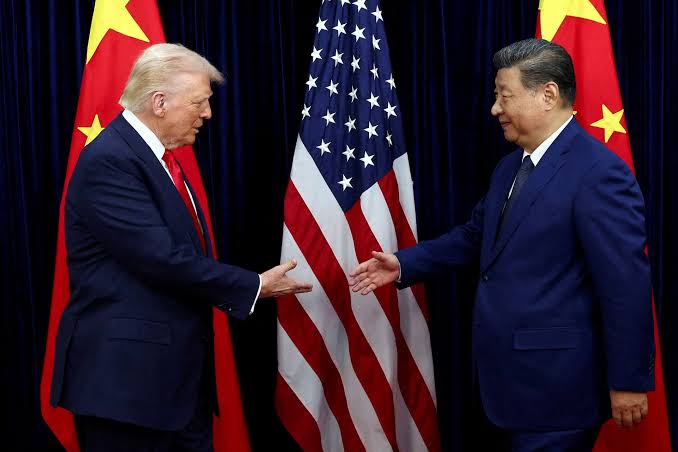
WASHINGTON & BEIJING — Ahead of a high-stakes bilateral summit in Washington between U.S. President Donald Trump and Chinese President Xi Jinping, Beijing has firmly rejected proposals from top American tech leaders to slow the pace of artificial intelligence development.
Analysts warn that deep-seated mutual distrust, starkly different definitions of “AI safety,” and intense strategic rivalry will severely limit the scope of any superpower agreement to establish global guardrails on frontier AI technology.
1. Beijing Rejects U.S. “Slowdown” Calls as a “Cold War Script”
The latest friction ignited after prominent U.S. AI figures, led by Anthropic CEO Dario Amodei and supported by OpenAI’s Sam Altman and Elon Musk, advocated for a coordinated pause or intentional pacing in training ultra-capable frontier models. In a published essay, Amodei warned that a Chinese lead in AI would pose severe national security risks to the Democratic world.
Beijing reacted swiftly. Chinese Foreign Ministry spokesperson Guo Jiakun accused American tech leaders of “spreading threat narratives and engaging in confrontation and malicious competition.” State-run outlets branded the proposal a “Cold War script” designed to preserve Washington’s monopoly while suppressing China’s technological modernization.
2. A Narrowing Tech Gap Leaves Neither Side Willing to Blink
The pushback comes at a time when Chinese AI developers have rapidly closed the capability gap with American rivals. Estimates from industry analysts put top Chinese models, developed by firms like DeepSeek and Moonshot AI, within 6 to 9 months of leading U.S. closed-source systems.
China’s strategy heavily leverages open-weight and open-source models (such as Moonshot’s Kimi K3), which can be downloaded, adapted, and deployed internationally at a fraction of the cost of proprietary Western platforms. Because Chinese developers are making significant gains despite U.S. semiconductor export controls, Beijing views any call for a development moratorium as an attempt to freeze the race while America holds a slight advantage.
3. Clash of Definitions: What Does “AI Safety” Actually Mean?
Even as both nations express interest in AI safety, Washington and Beijing hold fundamentally incompatible views on what constitutes a safety threat:
- The U.S. Focus: American discussions center on existential risks, preventing AI from being weaponized, maintaining human oversight of autonomous systems, and avoiding uncontrollable model behavior.
- The Chinese Focus: Beijing approaches AI security primarily through the lens of political, ideological, and regime stability. Chinese officials, including State Security Minister Chen Yixin, argue that AI risks must be managed to prevent cognitive warfare, misinformation, and threats to the ruling Communist Party’s central authority.
This fundamental ideological divergence makes drafting joint technical standards or safety protocols virtually impossible.
4. Washington Embraces Competition Over Regulation
Inside the United States, enthusiasm for AI slowdowns is equally muted at the political level. President Trump has repeatedly rejected calls for tight domestic AI regulation, framing the technological push as a zero-sum battle for international supremacy.
“We’re leading China in AI. We’re the most sophisticated country in the world, and frankly I want to keep it that way because whoever wins AI wins.”
— President Donald Trump
Senior U.S. officials and key Congressional leaders have similarly warned that enforcing domestic restrictions or mandatory pauses would amount to unilateral technological surrender to Beijing.
5. High-Level Talks Continue, But A Superpower Pact Remains Out of Reach
Preparatory talks between U.S. Treasury Secretary Scott Bessent and Chinese Vice Premier He Lifeng have included the AI agenda alongside economic and trade discussions. Furthermore, veteran diplomats like former Chinese Ambassador to the U.S. Cui Tiankai have called for sustained dialogue on AI safety.
However, analysts at major think tanks characterize the dynamic as a classic Prisoner’s Dilemma. Without mechanism-level verification, which neither superpower is willing to grant to the other, neither country can afford to slow down capability gains. Consequently, while the upcoming Trump-Xi summit may establish basic crisis communication channels, global AI development will continue to be driven by intense competition rather than caution. Who blinks first? Time will tell!
Please keep an eye on ABT NEWS platform www.abtnews.net for further developments immediately as they unfold!


 By
By