
An ABT NEWS Exclusive | www.abtnews.net
When most people think about family offices and business succession, they think about money. Investments. Properties. Trusts. Tax planning. Asset protection.
But after years of analyzing family businesses, governance systems, and wealth preservation, a controversial truth emerges: Financial capital is the weakest capital in any family office.
The strongest family enterprises are not built on financial capital alone. They are sustained by a triad of assets:
- Financial Capital
- Human Capital
- Social Capital
While most families obsess over the first, it is usually the neglect of the second and third that ultimately destroys generational wealth.
The Illusion of Social Capital
This lesson is often learned the hard way. When a first-generation wealth creator passes away, the assumption is that the greatest loss to the family is financial. Often, it isn’t. The greatest shock is watching how quickly social capital evaporates.
Relationships that appeared structurally sound often reveal themselves as strictly transactional. People who benefited from the founder’s generosity can become unavailable, opportunistic, or simply vanish.
Not all social capital is created equally. Some relationships are built on shared values and mutual respect; others are anchored merely in shared benefits and dependency. When the central figure holding that network together is gone, the true nature of those connections is exposed.
Every successful business owner needs people, and every family office requires networks. However, relationships built from sentiment, pity, obligation, or dependency rarely survive a generational transition. First-generation wealth creators often build social capital from a noble place of helping people survive. But survival-based relationships create gratitude, whereas legacy-based relationships create stewardship. The difference between the two dictates what survives.
The Human Capital Blind Spot
Even when families possess vast financial capital, they often lack a deliberate strategy for human capital. Human capital is the collective capability of a family—its education, leadership capacity, emotional intelligence, and conflict resolution skills. It is the ability of a family to work together without destroying one another.
In many African families, traditional paradigms heavily influence succession planning. In parts of the Southern region, for example, daughters are often viewed differently when it comes to business continuity. The prevailing assumption—“They will eventually get married”—means they are frequently excluded as long-term investments for family enterprise continuity.
When a family has multiple daughters and perhaps one son, focus is naturally thrust upon the “obvious” heir. But true succession is not about identifying a single bloodline successor; it is about developing collective capability. Recognizing the diverse talents, strengths, and perspectives already sitting inside the family is critical. A family office that ignores its human capital because of tradition is actively engineering future governance risks. Wealth survives through capable people, not simply through bloodlines.
Why Wealth Dies Even When Money Exists
A common misconception is that generational wealth disappears because of poor investments. In reality, wealth evaporates because of poor governance. The values embedded within a family determine whether financial capital compounds or collapses.
Financial capital will inevitably suffer if a family’s culture:
- Rewards dependency over contribution.
- Teaches entitlement rather than stewardship.
- Lacks frameworks for constructive conflict resolution.
- Penalizes independent opinions and disagreement.
Groupthink is one of the most dangerous threats to a family office. The inability to challenge assumptions or have difficult conversations represents a fundamental governance failure long before it manifests as a financial failure. By the time the money disappears, the cultural decay has often been compounding for years.
Institutionalizing Governance and Curating Access
To protect financial assets, governance must begin long before wealth transitions to the second generation. Families must intentionally develop leadership capacity, establish clear roles, and create accountability systems. These are not “soft issues”—they are hard asset protection mechanisms. The families that survive across generations are not necessarily those with the most money, but those that produce the most capable individuals.
The same intentionality must be applied to social capital. Family offices should not simply accumulate relationships; they must rigorously curate them. Social capital should be built around trust, competence, and shared purpose—not proximity or convenience.
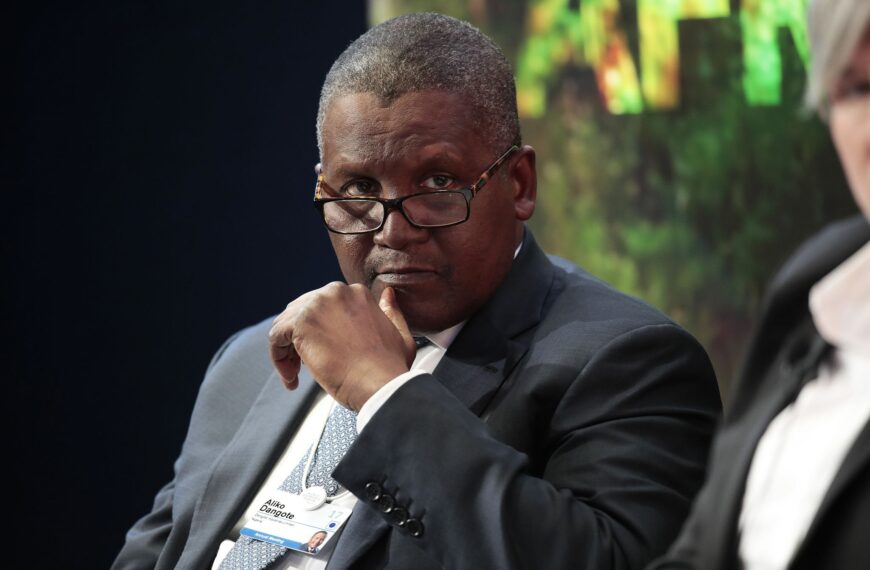
Leading industrialists, such as Aliko Dangote, demonstrate a profound understanding of this dynamic. When founders intentionally involve the next generation in executive leadership, they are making a definitive statement. They are investing in human capability before a transition is forced upon them, ensuring continuity long before succession becomes necessary.
The Future of Family Offices
The future of family wealth will not be determined solely by investment returns. It will be determined by how well families align financial, human, and social capital.
Financial capital creates opportunities. Human capital creates capability. Social capital creates access. But only governance aligns all three.
Legacy is not measured by the assets a founder leaves behind; it is measured by what survives after they are gone. What survives is rarely money alone. It is values. It is people. It is structure. That is what turns wealth into a lasting legacy, and that is exactly what every forward-thinking family office must build.

 By
By