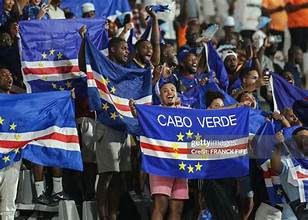

MIAMI — It was the David vs. Goliath clash that brought the footballing world to a complete standstill. At the Miami Stadium on Friday night, defending champions Argentina narrowly escaped one of the greatest upsets in FIFA World Cup history, defeating a heroic Cape Verde side 3-2 after a breathless 120 minutes of extra time.
The Blue Sharks may have lost the match, but they undoubtedly won the game of global respect.
A Masterclass in Resilience and Strategy
From the opening whistle, Cape Verde proved they were not just there to make up the numbers. While analysts pointed to Argentina’s heavy reliance on their captain—the widely debated Messidependencia—the island nation executed a tactical game plan that heavily frustrated the South American giants.
Lionel Messi drew first blood in the 29th minute, a strike that seemed destined to open the floodgates. However, the Blue Sharks responded with unyielding discipline and a rapid transition game. Deroy Duarte stunned the stadium with a 59th-minute equalizer, forcing the reigning champions into extra time.
Even after Lisandro Martinez put Argentina back in front in the 92nd minute, Cape Verde struck back again through Sidny Cabral in the 103rd. It ultimately took a devastating 111th-minute goal from Diney Borges to end the African Cinderella story.
The geopolitical and digital ripple effects of the match were immediate. Telecommunications infrastructure across the African continent reported unprecedented surges in data consumption as millions tuned in via mobile streams, pushing local networks to their limits as fans witnessed West African resilience on the grandest stage. Vozinha, the 40-year-old goalkeeping marvel, continued to dominate the digital economy of the tournament, further solidifying his multi-million social media following with another string of gravity-defying saves. Africans in the diaspora were not left out as they massively rallied round to cheer and support Cape Verde, the darlings of Africa.
The Numbers Behind the Thriller
Despite boasting just 36.5% possession, Cape Verde was ruthlessly efficient. They matched Argentina in set-piece opportunities and surprisingly out-crossed the South American champions, proving they possessed the offensive bite to threaten Emiliano Martinez’s goal and keep the pressure high for the full two hours until the very end.
World Cup 2026 Round of 32: Argentina vs. Cape Verde Match Stats
| Statistic | Argentina | Cape Verde |
| Possession | 63.5% | 36.5% |
| Shots | 22 | 16 |
| Shots on Target | 10 | 5 |
| Corners | 8 | 8 |
| Crosses | 15 | 21 |
| Fouls | 13 | 12 |
Match Goalscorers Summary
| Minute | Player | Credited Team | Scoreline (ARG-CPV) |
| 29′ | Lionel Messi | Argentina | 1 – 0 |
| 59′ | Deroy Duarte | Cape Verde | 1 – 1 |
| 92′ (ET) | Lisandro Martinez | Argentina | 2 – 1 |
| 103′ (ET) | Sidny Cabral | Cape Verde | 2 – 2 |
| 111′ (ET) | Diney Borges | Argentina | 3 – 2 |
The Ultimate ROI in World Football
Cape Verde leaves the 2026 World Cup having provided an extraordinary return on investment for their loyal diaspora. A nation of roughly 525,000 citizens pushed the defending champions to the absolute brink, demonstrating a structural rigidity and tactical maturity that will serve as a blueprint for underdog nations for decades to come.
Argentina survives to fight another day, but Friday night in Miami belonged entirely to the Blue Sharks. And the football world will talk about this unforgettable night for a long time!
Stay locked on to ABT NEWS for cutting-edge updates, post-match strategic analysis, and all the breaking trends from the digital and sporting world.
It pays to advertise your business, products and services on ABT NEWS www.abtnews.net. Please send your enquiries to advertise@abtnews.net or +447918790290


 By
By