
Why your apartment balcony is a wasted food resource and how smart urbanites are trading decorative petunias for juicy dwarf avocados and pixie oranges.
NAIROBI, KENYA — There is a silent, green rebellion taking over the concrete jungles of Africa, and it is happening right under our noses—or rather, right above our heads.
For decades, the standard African dream of agriculture involved sprawling acres in the countryside, heavy tractors, and erratic rainy seasons. But as inflation bites and global food prices continue their relentless climb, a profound paradigm shift is underway. The message shaking the continent is simple yet revolutionary: Nobody should be hungry or poor if they embrace an agricultural thinking and mindset.
The front line of this revolution? The humble apartment balcony. Experts are now warning city dwellers that if their balconies only hold decorative flowers, they are looking at nothing but wasted space and drained pockets.
Your Business and Services can be advertised here. Send a mail to ABT NEWS: info@abtnews.net or call +447918790290 or +2349066106786
The 2026 Urban Shift: From Flora to Food
Across major African tech hubs, a new breed of “smart urban farmers” is quietly dismantling the aesthetic of the concrete jungle. Instead of nursing non-edible ferns and roses, apartment residents are converting tiny outdoor spaces into high-yielding micro-orchards and intensive vegetable systems.
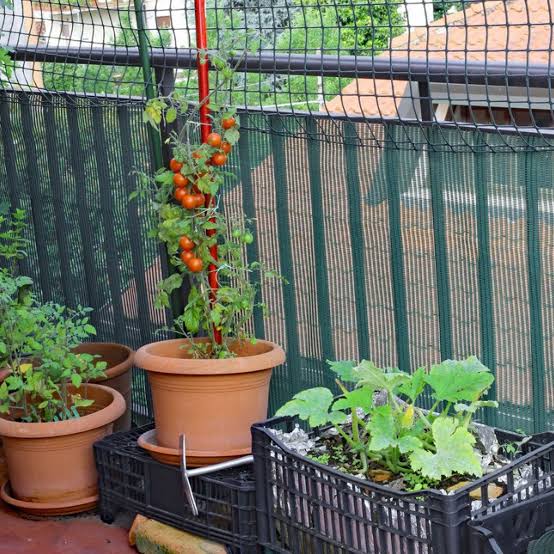
As seen in urban centers like Nairobi’s Kilimani or the estates of Mombasa, residents are stepping outside their glass doors to harvest fresh, premium produce daily. The visual transformation is stunning. Where flower pots once sat, balconies are now bursting with:
- Premium Fruits: Sweet Pixie oranges, rapid-fruiting dwarf mangoes, Meyer lemons, and highly lucrative dwarf avocados.
- Kitchen Staples: Vibrant cherry tomatoes, hot chilies, spring onions, and the ever-essential sukuma wiki (collard greens).
This is not merely a hobby; it is a calculated shield against soaring grocery bills. Traditional food systems in Sub-Saharan Africa rely heavily on long, fossil-fuel-intensive supply chains. By moving production directly to the consumer’s living space, urbanites are completely cutting out the middleman and eliminating food miles.
Smashing the “Acres of Land” Myth
The biggest barrier to food sufficiency has always been psychological. Most people assume that to feed a family or run an agricultural venture, you need vast fields.
Modern agritech has proven that assumption completely wrong. According to international agricultural data, indoor and modular vertical farming can yield up to 15 to 100 times higher productivity per square meter compared to conventional horizontal land cultivation. The future of global food security does not require more land; it requires smarter spaces.
The structural blueprint of this modern urban farming movement relies on five pillars:
| Urban System | How It Works | Primary Benefit |
| Container Farming | Utilizing lightweight, durable vessels like recycled 100-liter industrial drums. | Portable, highly controlled root environment. |
| Balcony Food Systems | Tailoring custom shelves and structural arrays to fit specific balcony footprints. | Turns dead real estate into a biological asset. |
| Vertical Growing | Training crops to grow upwards on walls, modular A-frames, or stacked towers. | Multiplies growing space by up to 400%. |
| Grafted Dwarf Fruit Trees | Genetically compact hybrids designed to max out at 2 meters while maintaining massive yields. | Delivers full-sized fruit (30–50 fruits per season) in a pot. |
| Smart Irrigation Systems | Low-cost, gravity-fed, or solar-powered automated drip setups. | Slashes water consumption by 80% to 90% compared to traditional soil farming. |
Your Business and Services can be advertised here. Send a mail to ABT NEWS: info@abtnews.net or call +447918790290 or +2349066106786
The Practical Blueprints: Entering the “Crazy Kanairo” Method
To bridge the gap between abstract tech and real-world implementation, local agritech pioneers have begun open-sourcing the exact science of small-space survival.
Leading the charge is Kenyan agritech outfit Crazy Kanairo Farming, which has just released a groundbreaking, highly sought-after manual titled “20 Best Dwarf Fruit Trees and Vegetables for Balcony Farming in Kenya.”
The guide has quickly gone viral among estate WhatsApp groups because it moves past the theory and addresses the raw mechanics of apartment farming. Inside the masterclass guide, everyday citizens are learning the precise steps needed to convert their spaces safely and profitably:
1. Weight-Safe Farming Methods: The critical science of calculating structural load limits so a wet soil setup doesn’t compromise balcony integrity.
2. The “Magic” Soil Mixing Systems: Forgoing heavy, dense backyard dirt for friable, nutrient-dense, loose mixtures (e.g., combining topsoil with composted goat manure and aerating elements like rice husks or river sand).
3. Spotting the Con Artists: How to avoid the massive wave of “fake grafted seedlings” flooding open-air markets, ensuring buyers purchase true, certified ultra-dwarf genetics.
4. Financial Independence (ROI Breakdowns): Hard economic data tracking how a simple investment in a vertical tower kit pays for itself in vegetable savings within the first four months.
Your Business and Services can be advertised here. Send a mail to ABT NEWS: info@abtnews.net or call +447918790290 or +2349066106786
The Grand Vision: A Hunger-Free Continent
As African populations rapidly urbanize—with city populations projected to nearly triple by 2050—traditional agriculture will simply no longer be able to keep pace with urban demand. Climate vulnerability, erratic rainfall, and soil degradation are making rural farming increasingly volatile.
By adopting an active agricultural mindset, African city dwellers are proving that food sufficiency can be decentralized. When thousands of apartments across Nairobi, Lagos, Johannesburg, and Cairo actively produce even 30% of their own fresh produce, the pressure on national grids, rural water reserves, and commercial food supply chains drops dramatically.
The era of relying entirely on the countryside to fill the dinner plate is over. Stop planting flowers that only drain your water bill. Start planting food that fills your kitchen.
For the latest breakthroughs in global agritech and sustainable urban living, keep your browser locked to ABT NEWS at www.abtnews.net.


 By
By