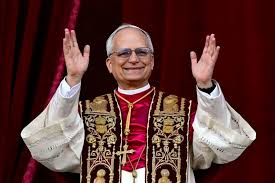

VATICAN CITY — In a decisive moment for the 1.4-billion-member Catholic Church, Pope Leo XIV has ruled out immediate plans to overturn centuries-old rules on priestly celibacy.
Speaking to journalists aboard his return flight to Rome on November 16, 2026, concluding a 12-day apostolic journey across Uruguay, Argentina, and Peru, the pontiff stated that allowing married men to be ordained as priests would currently cause too much division within the global Church.
During the 45-minute airborne press conference, Pope Leo also confirmed he would uphold his predecessor Pope Francis’s 2021 restrictions (Traditionis Custodes) on celebrating the Traditional Latin Mass, emphasizing that his primary focus is healing rifts and maintaining communion.
“Married priests are a solution which in certain areas of the Church can cause division”, Pope Leo told reporters. “It may be in the future that some things will change. However, for right now, I believe an important part of my ministry of the Church is to heal, bring people together.”
The Context Behind the Ruling
The question of ordaining viri probati, older, married men of proven virtue, has been fiercely debated for years, particularly following the 2019 Synod of Bishops on the Amazon. Advocates argued the measure was necessary to address severe priest shortages in remote regions where Catholics can go months without celebrating Mass.
However, Pope Leo pointed to his own missionary experience in Peru, noting that Augustinian vocations there have actually grown compared to when he first arrived. While acknowledging that clerical celibacy is a Church discipline rather than unchangeable dogma, and noting that married priests already serve in Eastern Catholic Churches and via special dispensations, he stressed that “the whole question about married men as clergy is complicated” and requires patient discernment rather than rushed reform.
Juxtaposing the Debate: The Merits and Demerits of Catholic Celibacy
As Pope Leo’s decision reignites global conversation, theologians, clergy, and laypeople continue to weigh the centuries-old discipline against modern pastoral realities.
| The Merits of Priestly Celibacy | The Demerits & Challenges of Celibacy |
|---|---|
| Undivided Spiritual Devotion: Rooted in Scripture (1 Corinthians 7:32–35) and the life of Jesus, celibacy frees a priest to dedicate his time, energy, and heart entirely to God and his parish without competing familial obligations. | Worsening Priest Shortages: In many Western and remote regions, mandatory celibacy deters otherwise devout men from pursuing the priesthood, leaving parishes without regular access to the sacraments. |
| 24/7 Pastoral Availability: Unencumbered by spousal or parenting duties, celibate priests can respond immediately to hospital emergencies, late-night crises, and sudden diocesan reassignments. | Isolation and Loneliness: Critics and psychologists note that mandatory celibacy can contribute to profound emotional isolation, burnout, and mental health struggles among clergy. |
| Financial Sustainability for Parishes: Supporting a single priest living in a rectory requires significantly less diocesan funding than providing family housing, healthcare, and living wages for a spouse and children. | Historical & Biblical Precedent: Reformers point out that St. Peter and several apostles were married, and mandatory celibacy in the Latin Rite was a later disciplinary development rather than a divine command. |
| Eschatological Witness: The Church views voluntary celibacy as a powerful living sign of the Kingdom of Heaven, modeling total self-gift in an increasingly secularized world. | Departure of Talented Clergy: Thousands of dedicated priests have left active ministry over the decades simply because they tilted towards marriage and family life. |
What Are People Saying?
Public reaction across Catholic communities and social platforms reflects the exact polarization Pope Leo cited as his reason for caution:
- Traditionalist & Conservative Voices: Many lay Catholics welcomed the announcement with relief, praising the Pope for prioritizing stability and refusing to bow to progressive pressures. Supporters argued that relaxing celibacy would not magically solve vocation shortages, pointing out that Protestant denominations with married clergy face similar declines and suggested the Church should instead focus on strengthening recruitment and the permanent diaconate.
- Reform-Minded Catholics: Advocates for modernization expressed disappointment, particularly in regions like Germany and the Amazon basin where lay committees have pushed for optional celibacy. Many questioned how communities in remote areas can maintain a Eucharistic-centered faith without enough priests to celebrate Sunday Mass.
How Are Priests Reacting?
Within the priesthood itself, reactions reveal a nuanced divide between theological ideals and day-to-day pastoral realities:
- Support for Tradition and Unity: Many Latin-rite priests have echoed Pope Leo’s warning that sudden changes could fracture parishes. Clerics who favor maintaining celibacy emphasize that priesthood and marriage are two distinct, all-consuming vocations; attempting to balance both, many argue, risks shortchanging either the parish or the priest’s family.
- Practical Warnings from Married Catholic Priests: Interestingly, some of the most candid caution comes from the small number of married men already ordained in the Latin Rite (typically former Anglican clergy granted special dispensations). Having lived both realities, several have noted the intense strain that 24/7 parish demands place on marriages, alongside the complex financial realities dioceses face when funding family households.
- Calls for Continued Dialogue: Meanwhile, missionary priests working in under-resourced territories view the Pope’s phrase “for right now” as an open door. While respecting his call for unity, many clergy in priest-scarce regions hope ongoing synodal discussions will eventually yield localized solutions.
For now, Pope Leo XIV has made his governing philosophy clear: in a fractured world and a polarized Church, preserving unity takes precedence over sweeping structural reform.


 By