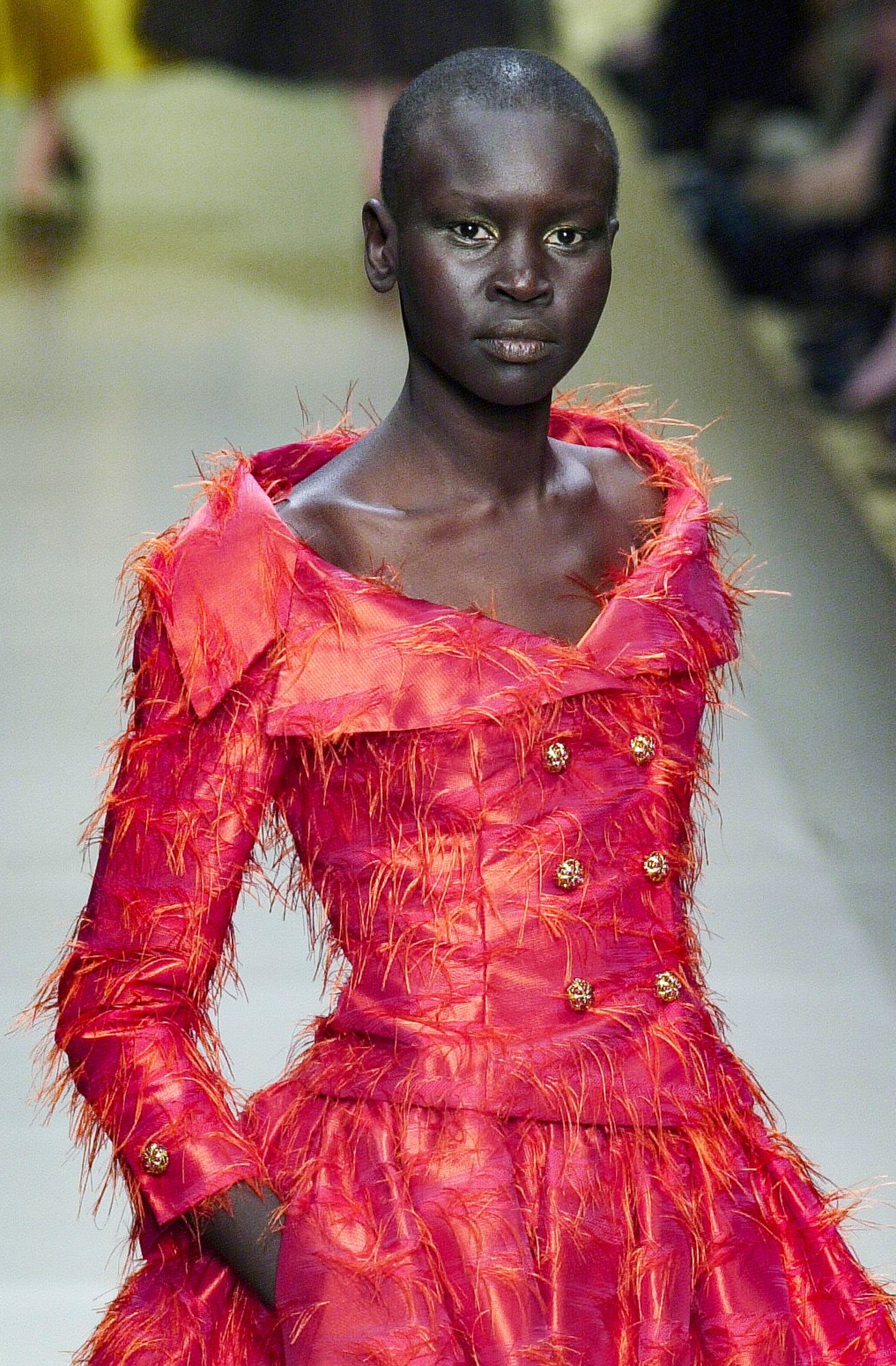

In the ever-evolving world of haute couture, few phenomena have been as transformative, radiant, and disruptive as the meteoric rise of South Sudanese fashion models. Characterized by their striking, flawless ebony skin tones, statuesque heights, and commanding runway presence, these extraordinary women have taken over the international fashion capitals of Paris, Milan, London, and New York.
For www.abtnews.net, we explore how this East African powerhouse of talent is rewriting the global standard of beauty and mesmerizing top-tier luxury fashion houses.
The Anatomy of a Runway Revolution
The global fashion landscape has historically struggled with inclusive representation. However, the unprecedented demand for South Sudanese talent has flipped industry standards on their head.
Casting directors, luxury creative directors, and photographers are increasingly captivated by distinct physiological traits:
- Luminous, Rich Skin Tones: The deep, unblemished melanin of South Sudanese models catches runway lighting and camera lenses in ways that bring textiles and garments to life.
- Statuesque Stature & Long Limbs: With high average heights and elongated silhouettes, these models possess the structural architecture tailor-made for haute couture tailoring.
- Commanding Presence: Beyond physical attributes, these women bring a regal poise, fierce grace, and compelling personal narratives that captivate global audiences.
Prominent Names and the Fashion Houses They Command
From pioneering trailblazers to contemporary icons and award-winning sensations, South Sudanese models occupy the highest echelons of the industry, working intimately with the world’s most prestigious luxury labels.
1. Alek Wek – The Ultimate Trailblazer
Discovered in London in the 1990s, Alek Wek single-handedly dismantled monolithic European beauty standards. Her striking features and magnetic runway aura opened doors for generations of Black models. She has fronted campaigns and graced runways for iconic houses including Chanel, Marc Jacobs, Balmain, Moschino, and John Galliano.
2. Awar Odhiang – The Reigning Icon
Cementing her status at the pinnacle of modern fashion, Awar Odhiang made history by closing major collections. Her monumental career milestone includes closing creative director Matthieu Blazy’s landmark debut for Chanel. Recognized globally for her breathtaking poise, Odhiang continues to dominate campaigns for Jil Sander, Prada, and Valentino.
3. Adut Akech – Global Haute Couture Royalty
A refugee-turned-supermodel, Adut Akech is a household name across global fashion weeks. Handpicked by top designers, she has been a muse for Chanel, Saint Laurent, Valentino, Alexander McQueen, and Givenchy, frequently closing out high-profile couture shows with unmatched elegance.
4. Anok Yai & Grace Bol
- Anok Yai made history as the first Black model in two decades to open a Prada show, subsequently becoming a permanent fixture for luxury giants like Chanel, Schiaparelli, and Fendi.
- Grace Bol brings an electric, sculptural energy to the runway, headlining major presentations for Givenchy, Oscar de la Renta, and Lanvin.
The Economic & Cultural Impact
The meteoric rise of South Sudanese models who routinely command a remarkable share of the world’s top-tier catwalks and rank among the global elite on platforms like Models.com is far more than a passing aesthetic trend. It represents a profound shift in the economics and cultural power dynamics of the multi-billion-dollar global luxury fashion market.
1. Economic Impact: Value Creation, Remittances, and Local Infrastructure
The Financial Lifeline & Wealth Redistribution
At an individual level, international luxury campaigns and exclusive runway contracts yield life-changing financial returns. In a developing economy where a vast majority live under the poverty line, successful models earning tens of thousands of dollars per season become vital economic pillars for their families and extended communities. Remittances sent home fund housing, education, and small businesses, creating localized pockets of economic mobility.
Catalyzing Local Industry and Regional Trade Hubs
The phenomenon has transformed cities like Juba into unexpected scouting hotbeds. Local agencies—such as Doris Sukeji’s Jubalicious—and platforms like South Sudan Fashion Week are building foundational infrastructure. While an asymmetry historically existed between South Sudan’s massive global model export (producing nearly a fifth of the world’s top-tier models) and its domestic design economy, this global visibility is actively accelerating investment into African fashion value chains, regional training, and entrepreneurial networks.
Forcing Supply-Chain Evolution in Luxury Houses
The undeniable commercial power of South Sudanese icons has forced global luxury conglomerates (LVMH, Kering, Chanel) to invest more deeply in inclusive supply chains. High-fashion houses have had to reform backstage operations—financially and logistically—ensuring that international hair stylists, makeup artists, and wardrobe teams are properly trained to work with deep complexions and diverse hair textures, permanently altering how luxury beauty and cosmetics markets allocate resources.
2. Cultural Impact: Dismantling Monolithic Standards & Redefining Beauty
Re-Architecting Global Aesthetic Norms
For decades, Eurocentric standards dominated the haute couture playbook. The physical attributes celebrated in South Sudanese talent—rich, luminous ebony skin tones that absorb and reflect runway lighting uniquely, combined with striking statuesque statures—have redefined what global luxury looks like. They have shifted the industry from tokenistic inclusion to treating deep-toned beauty as the ultimate gold standard of high fashion.
Cultural Ambassadors and Narrative Shift
Models like Alek Wek, Adut Akech, Anok Yai, Awar Odhiang, and Grace Bol function as living cultural ambassadors. By proudly carrying their heritage onto international stages, they challenge deeply ingrained global stereotypes about East Africa. They replace narratives of conflict and hardship with stories of regal poise, fierce intellect, and artistic excellence, inspiring a new generation of youth across the continent to “take up space” on the global stage.
3. Structural Challenges and the Road Ahead
Despite their massive cultural and economic footprint, this movement faces systemic friction:
- Visa and Mobility Barriers: Bureaucratic hurdles and stringent Western immigration policies frequently leave signed, sponsored South Sudanese models grounded, unable to cross borders for crucial fashion week bookings.
- Backstage Inequities: While representation on the runway has surged, structural equity in behind-the-scenes credit, long-term brand equity deals, and parity in campaign compensation remain ongoing battles championed by these models acting in solidarity.
Ultimately, South Sudanese talent has permanently expanded the boundaries of global luxury. They have proven that diversity in high fashion is not a charitable concession, but an economic and artistic imperative that drives the modern multi-billion-dollar market forward.
Beyond the Catwalk: A Cultural Shift
The dominance of South Sudanese models is much more than a fleeting aesthetic trend; it is a profound cultural renaissance. As emerging local agencies in Juba nurture raw domestic talent, these women stand as global symbols of resilience, elegance, and uncompromised identity.
For ABT NEWS, this movement proves that true beauty cannot be confined to narrow boxes, it thrives in bold colors, towering statures, and authentic heritage.


 By

 By