
By ABT News Editorial Board
The Nigerian Law School (NLS) is utterly broken. It is a bureaucratic dinosaur, an administrative bottleneck, and for many, a multi-million naira waste of time and space. Yet, instead of confronting this glaring reality, the system’s custodians would rather point fingers.
At the recent Annual General Meeting of the Nigerian Bar Association (NBA) in Port Harcourt, the newly minted Director-General of the NLS, Dr. Olugbemisola Odusote, took to the podium to deliver her statutory report. Her target? Nigerian universities.
Dr. Odusote vehemently blamed universities for the crippling admission quota crisis, accusing them of treating legal education as a “lucrative revenue-generating venture” and churning out law graduates who are left stranded, unable to secure immediate spots at the Law School. She called universities a “monster” operating with arrogant disregard for the Council of Legal Education (CLE) quotas.
She isn’t wrong about the universities. But her conclusion that calls to scrap the Nigerian Law School are “unwarranted and devoid of any merit” is where she absolutely misses the forest for the trees.
The truth that no one in the legal establishment wants to admit is this: The Nigerian Law School, in its current format, has outlived its usefulness. It is time to shut it down!
The Blame Game Ignores the Root Disease
Let us look at the facts presented by the DG herself. Universities are greedy, yes. Deans of Law and Vice Chancellors are under immense, suffocating pressure from Nigeria’s elite and powerful politicians to admit students far beyond their approved capacities.
But who are the real victims of this bottleneck?
First, the students, who spend years in limbo waiting for a Law School slot. Second, the severely understaffed NLS lecturers, who have been burning the candle at three ends for two decades, crushed under an unending workload to service a system that is fundamentally unsustainable.
Look at the abysmal statistics from the May 2026 Bar Final Examination resit: Out of 1,995 candidates, a staggering 983 candidates (50.3%) failed. While the DG blames students for relying on “businessmen” who purport to teach them better than NLS staff, the reality is that the sheer volume of students has overwhelmed the institution’s capacity to deliver quality, modern legal training.
While the December 2025 exams saw 6,010 successful candidates (including 212 First Class graduates), this factory-line production of lawyers masks a deeper, more uncomfortable truth: Most of these people do not even want to practice law.
The “Bragging Rights” Factory
Let’s be brutally honest. For a vast majority of those who enroll, the Nigerian Law School is a practical waste of government resources and personal time.
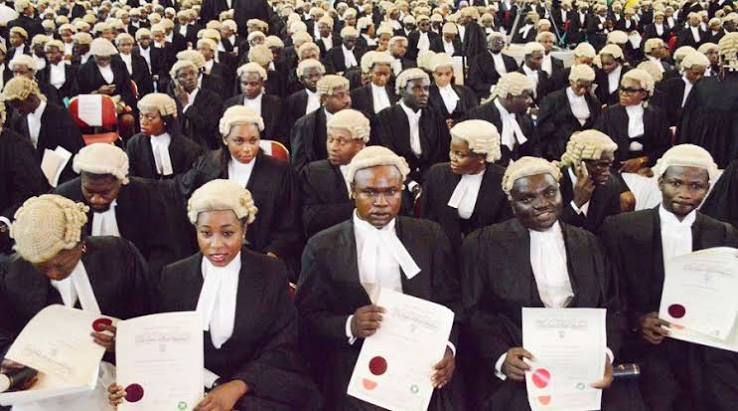
They do not need the BL (Barrister at Law) certificate for anything other than sheer social bragging rights. It is a status symbol in Nigeria to be “called to the Bar.” Once the wig is worn and social media pictures are posted, a massive percentage of these newly minted lawyers abandon the wig and gown. They find more productive, fulfilling, and lucrative careers in tech, banking, business, and media.
Why is the Federal Government sinking billions of Naira into funding a monopoly institution just so a few thousand Nigerians can secure social bragging rights?
The Solution: The ICAN Model
It is time to democratize and deregulate legal education in Nigeria. We must strip the Council of Legal Education of its monopoly on teaching and transition it strictly into an examination and licensing board—exactly like the Institute of Chartered Accountants of Nigeria (ICAN).
Here is how a modernized, no-holds-barred system should work:
- Disband the NLS Campuses: The government should stop funding the physical Nigerian Law School campuses. The immense cost of maintaining these facilities, feeding students, and housing them is a wasteful drain on public resources.
- CLE as an Exam Board Only: The Council of Legal Education should be solely saddled with organizing the Bar Final Examinations and enforcing the curriculum.
- Open the Market for Private Tutors: Allow law graduates to self-study or attend private, accredited legal academies to prepare for their licensing exams. Just as ICAN students flock to specialized tuition centers, deregulating legal education will create a booming business opportunity for exam coaches, trainers, and seasoned legal practitioners to open preparatory schools.
- Maintain the Externship: The practical requirement of spending six weeks in courts and six weeks in law firms (Bar Part II) can easily be maintained. Students will simply log their hours and submit their portfolios directly to the CLE for verification before sitting for their exams.
Time to Wake Up
Dr. Odusote’s “ARISE” mantra, focused on academic excellence, infrastructure rebirth, and digitalization, is a noble vision for 2026. But you cannot digitalize or rebrand a monopoly that is structurally designed to fail in a population of over 200 million people.
If we adopt the ICAN model, the admission quota crisis disappears overnight. Universities can admit whoever they want. Graduates don’t have to wait years to get into a physical law school. If you think you are smart enough, you pay your exam fees to the CLE, study privately, and sit for the Bar Finals. If you pass, you get your wig. If you fail, you try again.
No more bottlenecks. No more overwhelmed NLS staff. No more wasting government funds on a glorified finishing school for social elites.
The Nigerian Law School has run its course. It is time to pull the plug, open up the system, and let a modern, decentralized era of legal education take its place.
What do you think? Should the Nigerian Law School be scrapped for the ICAN model? Drop your thoughts in the comments below and share this article! Stay tuned to ABT NEWS for more no-holds-barred commentary.



 By
By