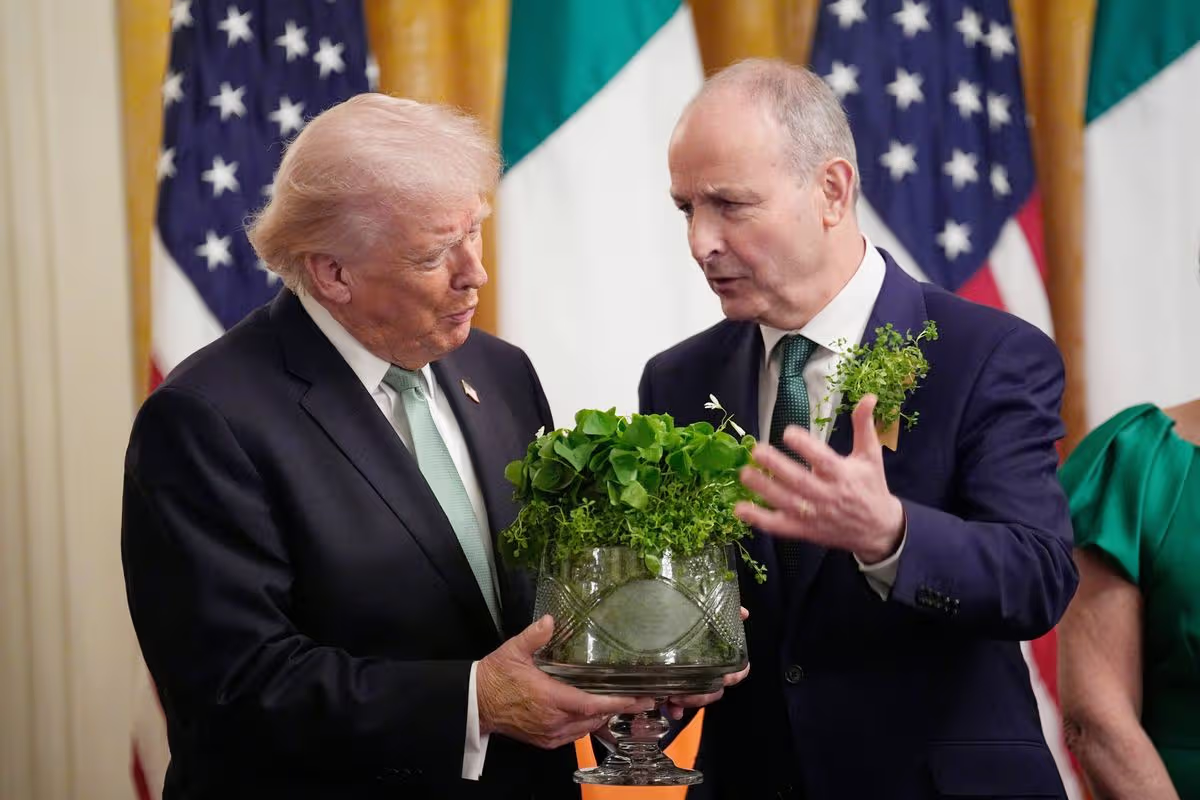

Donald Trump’s explicit willingness to embrace a United Ireland has sent political shockwaves across London, Dublin, and Belfast. For a British diplomatic establishment long accustomed to American alignment on its sovereign boundaries, external commentary of this nature strikes at the heart of post-Brexit UK influence and territorial cohesion.
1. Decoding the Rhetoric: Why Express Support for Irish Unity?
Trump’s commentary on Irish reunification reflects a mix of electoral strategy, personal affinity, and transactional diplomacy:
- The Irish-American Voter Base: Irish-American voters represent a powerful political demographic across key US battleground states. Aligning with aspirations for Irish unity resonates deeply with heritage organizations and political action groups in the US.
- Disruption of Diplomatic Norms: Trump’s foreign policy approach frequently bypasses traditional diplomatic protocol. Expressing support for a United Ireland challenges the conventional statecraft long maintained between Washington and London.
- Business and Investment Footprint: Trump has long-standing commercial ties to Ireland, including his golf resort in Doonbeg, County Clare. His public sentiment often reflects a favorable view of Irish economic dynamism compared to post-Brexit regulatory friction in the UK.
2. London’s Response: Defensive Diplomacy and Hegemonic Friction
The reaction in Westminster and Whitehall has been a mix of strategic silence and firm reaffirmation of British sovereignty:
                          TRANSATLANTIC IMPACT
                                   │
       ┌───────────────────────────┴───────────────────────────┐
       ▼                                                       ▼
UK Foreign Office                                    Sovereignty Standard
Reaffirms the principle of consent                  Frames NI's constitutional status
under the 1998 Belfast Agreement.                   as non-negotiable without a vote.
- Reaffirming the Good Friday Framework: UK officials consistently downplay external rhetoric by emphasizing that Northern Ireland’s status within the United Kingdom is governed strictly by the consent of its people, not external political leaders.
- Erosion of Soft Power: For London, foreign political endorsement of a United Ireland undermines the perception of British global influence (often framed around post-Brexit “Global Britain”). It highlights vulnerabilities in UK territorial integrity at a time when Scottish independence remains an active debate.
- Navigating the “Special Relationship”: The UK government must carefully balance defending its constitutional framework without alienating major political figures in Washington, given the critical importance of US-UK security and trade partnerships.
3. Dublin’s Measured Calculus vs. Northern Ireland’s Fractured Landscape
Reaction across the island of Ireland reflects deep historical and political divisions:
| Jurisdiction / Faction | Primary Reaction | Strategic Objective |
| Dublin (Irish Government) | Cautious Diplomacy | Welcomes international interest in Irish unity, but insists on adhering strictly to peaceful, constitutional pathways outlined in international treaties to avoid destabilizing peace. |
| Nationalist / Sinn Féin | Strong Endorsement | Views the statements as momentum building toward a future Border Poll, using international visibility to pressure London into setting criteria for a referendum. |
| Unionist / DUP & UUP | Sharp Rejection | Condemns external commentary as uninformed interference in UK internal affairs, reaffirming Northern Ireland’s economic and political ties within the Union. |
4. The “Friday’s Agreement” Connection: Consent vs. External Pressure
The debate directly intersects with the Good Friday Agreement (Belfast Agreement) signed on Good Friday, April 10, 1998:
- The Principle of Consent: The 1998 agreement explicitly states that Northern Ireland remains part of the UK unless a majority of its citizens—and a majority in the Republic of Ireland—vote in favor of a United Ireland via concurrent referendums.
- The US Role as Co-Guarantor: The United States served as a key mediator during the 1998 peace process (led by Envoy George Mitchell). Any US presidential or political stance carries outsized weight in interpreting the future of the peace accord.
- Triggering the Border Poll: Under the terms of the Agreement, the Secretary of State for Northern Ireland is obligated to call a referendum if it appears likely that a majority of voters would support a United Ireland. Rhetoric from major global leaders fuels public discussion on whether that threshold is approaching.
Analytical Summary
While statements from US political figures do not legally alter Northern Ireland’s constitutional standing, they significantly alter the diplomatic backdrop. By bringing Irish reunification into mainstream international discourse, such declarations complicate London’s geopolitical narrative, bolster Nationalist momentum in Belfast, and test Dublin’s long-term strategy for peaceful integration under the 1998 framework.


 By
By