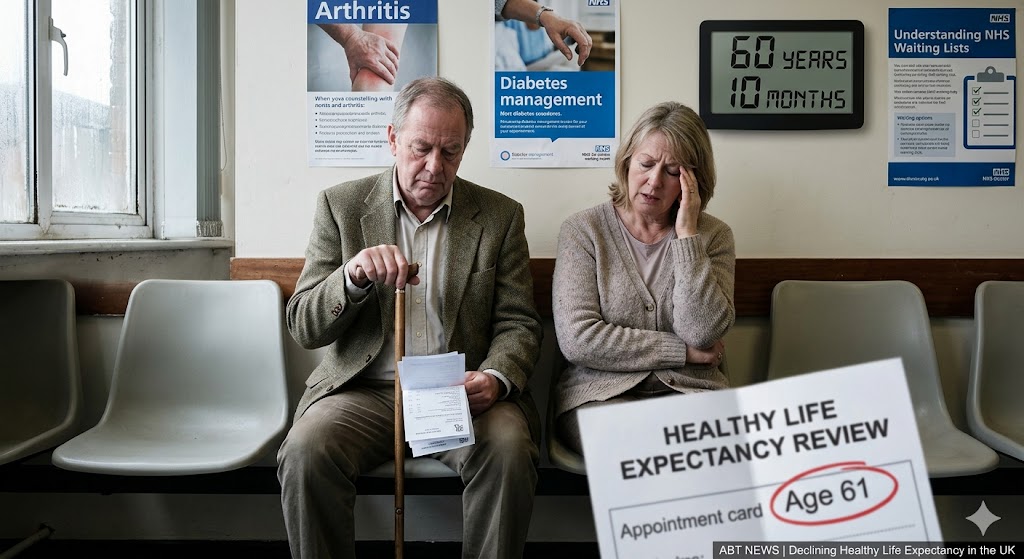

LONDON — A alarming new report has revealed a significant decline in the quality of life for residents across the United Kingdom. Over the past decade, Healthy Life Expectancy (HLE)—the number of years a person can expect to live in “good” health—has dropped by approximately two years, leaving both men and women facing chronic health issues before they even reach their 61st birthday.
The Staggering Numbers
According to the latest data, the age at which people can expect to remain healthy has fallen to just 60.5 years for men and 60.9 years for women. This represents a sharp decline from a decade ago, when those figures stood at 62.7 and 63.3 years, respectively.
While overall life expectancy has also stalled or declined in some regions, the more pressing concern for policymakers is the widening gap between “living” and “living well.” On average, people in the UK are now expected to spend the last two decades of their lives in “poor” or “very poor” health.
Why is the UK Getting Sicker?
Health experts and sociologists point to a “perfect storm” of factors that have eroded the nation’s health over the last ten years:
- Widening Inequality: There is a massive “postcode lottery” regarding health. Those in the most deprived areas are falling into ill health nearly two decades earlier than those in affluent areas.
- NHS Backlogs and Access: Record-high waiting lists for elective surgeries and specialist consultations mean that minor conditions often develop into chronic, debilitating issues while patients wait for treatment.
- The Rise of Chronic Conditions: Increased rates of obesity, diabetes, and mental health disorders have significantly contributed to the decline. Additionally, musculoskeletal issues (such as chronic back and joint pain) are keeping people out of the workforce earlier.
- Economic Stagnation: A decade of austerity measures followed by the “Cost of Living” crisis has impacted nutrition, housing quality, and stress levels, all of which are primary drivers of long-term health.
- The COVID-19 Hangover: The pandemic not only directly claimed lives but also disrupted routine screenings for cancer and heart disease, the effects of which are now manifesting in these statistics.
The “Retirement Gap”: What the Future Holds
The decline in healthy life expectancy creates a looming crisis for the UK government and the economy. As the state pension age is set to rise to 67 and eventually 68, a significant portion of the population will find themselves “too sick to work, yet too young to retire.”
What this portends for the future:
- Workforce Shortages: With health failing at 60, the UK faces a shrinking labor market, as older workers are forced into early retirement due to disability.
- Overwhelmed Social Care: A population living 20+ years in poor health will place an unprecedented financial and operational burden on the social care system and the NHS.
- Economic Drag: The cost of treating preventable chronic illnesses and supporting those on long-term sickness benefits is expected to rise, potentially leading to higher taxes or further cuts to other public services.
Health Foundation analysts warn that without a radical shift toward preventative medicine and a concerted effort to tackle the “social determinants” of health—such as poverty and housing—the UK risks becoming a nation defined by its infirmity rather than its longevity.
Stay informed on the latest health and economic developments. Visit www.abtnews.net for breaking news, expert analysis, and more.


 By
By