
How NNPCL’s Energy Security Costs Expose the Political Economy of Incomplete Reform
Three years after the removal of fuel subsidy, NNPCL’s rising energy security expenses and growing federation receivables reveal a deeper challenge confronting Nigeria’s reform agenda. The question is no longer whether subsidy was removed. The question is whether Nigeria has successfully transitioned from a state-managed petroleum economy to a genuinely competitive energy market, or merely replaced one form of state intervention with another.
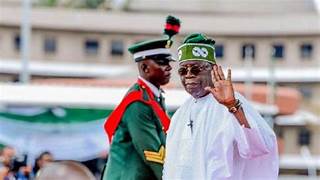
On 29 May 2023, President Bola Ahmed Tinubu announced that “fuel subsidy is gone.” In many respects, that declaration represented the most consequential economic policy decision taken by any Nigerian administration since the return to democratic governance in 1999. For decades, fuel subsidy had occupied a central place in Nigeria’s political economy. It was simultaneously an economic policy, a social contract, a political bargaining instrument, and a source of entrenched rent-seeking. Its removal was presented as a necessary step toward fiscal sustainability, market efficiency, and economic modernization.
The logic appeared compelling. In 2022 alone, Nigeria reportedly spent over ₦4 trillion subsidizing petrol consumption. Over two decades, cumulative expenditure likely exceeded ₦15 trillion. The subsidy regime distorted market incentives, encouraged cross-border smuggling, discouraged domestic refining, and diverted scarce public resources from productive sectors. Economists had long argued that Nigeria was effectively borrowing money to subsidize consumption while neglecting investments that could expand productive capacity.
Three years later, however, the debate has returned in an unexpected form.
The trigger is not the pump price of petrol. Nor is it a political campaign speech. It is the audited financial statements of the Nigerian National Petroleum Company Limited (NNPCL).
The company’s audited accounts show approximately ₦4.8 trillion in Energy Security Expenses in 2023 and ₦7.13 trillion in 2024, amounting to nearly ₦12 trillion within two years. At the same time, NNPCL’s receivables and claims on the Federation continue to expand, with public discussions placing the figure at approximately ₦17.5 trillion when various obligations are combined.
These disclosures have revived a question many believed had been settled: if subsidy has been removed, why do fuel-related public liabilities remain so substantial?
The answer lies not in accounting classifications but in understanding the political economy of reform.
The first principle is straightforward. Economic realities do not disappear because governments change labels. Whenever the cost of supplying petrol exceeds the amount recovered from the market, somebody absorbs the difference. That burden may be carried by consumers, taxpayers, public institutions, future generations through debt, or a combination of all four. The essential question is not what government calls the expenditure. The essential question is who ultimately bears the cost.
Before May 2023, the arrangement was explicit. Government fixed petrol prices below market levels and compensated NNPC for the resulting losses through direct subsidy payments and under-recovery mechanisms. The subsidy was visible, politically controversial, and fiscally expensive.
After May 2023, the architecture changed. Pump prices rose sharply, reflecting a greater alignment with market realities. Consumers began paying significantly more for petrol. In that sense, the old subsidy regime was unquestionably dismantled. Yet the emergence of substantial energy security expenses suggests that the transition from subsidy to market pricing may be incomplete.
This distinction matters because the Petroleum Industry Act (PIA) fundamentally altered NNPCL’s role. Under the PIA, NNPCL serves as the nation’s supplier of last resort, a responsibility that requires it to ensure continuous fuel availability even when private operators are unable or unwilling to meet national demand. In fulfilling this role, the company may incur costs related to foreign exchange fluctuations, import financing, logistics, inventory management, and market stabilization.
From a technical perspective, such costs are not necessarily subsidies. A subsidy exists primarily to reduce consumer prices. Energy security expenditures exist to guarantee supply.
Yet public policy analysis demands a deeper examination. If the Federation ultimately absorbs costs incurred to stabilize fuel supply, the distinction between subsidy and energy security intervention becomes less important than the fiscal reality itself. Citizens are justified in asking whether public resources continue to support fuel consumption indirectly even after direct subsidy removal.
This brings us to what may be called the three tests of reform.
The first is the fiscal test.
Did government liabilities decline?
This was the principal justification for subsidy removal. The expectation was that eliminating subsidy would significantly reduce fiscal pressures and create space for investment in development priorities. Yet the emergence of nearly ₦12 trillion in energy security expenses and growing receivables raises legitimate questions about whether fiscal burdens have disappeared or simply migrated from one accounting framework to another.
This does not automatically imply policy failure. Transitional reforms often generate temporary costs. However, it does suggest that the fiscal story is more complicated than the simple narrative of subsidy elimination.
The second is the market test.
Did competition increase?
The ultimate objective of deregulation was not merely to raise petrol prices. It was to create a competitive downstream petroleum market capable of functioning without extraordinary state intervention. A truly liberalized market would feature multiple suppliers, transparent pricing mechanisms, robust domestic refining, and declining dependence on state institutions to stabilize supply.
Nigeria has made progress toward this objective. The emergence of the Dangote Refinery represents one of the most significant structural changes in the country’s energy sector in decades. Private sector participation has expanded. Import dependence may gradually decline as domestic refining capacity grows.
Yet the persistence of substantial energy security expenditures suggests that the market has not fully matured. NNPCL remains a central stabilizing actor. This indicates that Nigeria occupies a transitional space between the old state-managed system and a genuinely competitive market order.
The third is the governance test.
Did transparency improve?
This may be the most important test of all.
The legitimacy of reform depends not only on economic outcomes but also on public trust. Citizens are more willing to endure short-term hardship when they understand the rationale, the costs, and the expected benefits of reform. Transparency transforms sacrifice into investment.
Unfortunately, this is where the current debate becomes problematic. Nigerians know that nearly ₦12 trillion has been recorded as energy security expenses. What they do not know is precisely how these costs were incurred, how they are calculated, how long they are expected to persist, and what measurable benefits they have produced.
In the absence of such information, speculation inevitably fills the vacuum.
The deeper challenge, however, extends beyond NNPCL.
It speaks to a longstanding feature of Nigeria’s political economy that the late Professor Peter Ekeh famously described as the problem of the “Two Publics.”
The civic public demands fiscal discipline, market efficiency, and institutional accountability. The primordial public demands protection from economic hardship and social dislocation. Nigerian governments frequently attempt to satisfy both constituencies simultaneously.
The result is often policy ambiguity.
Governments announce market reforms to satisfy fiscal realities and investor expectations while simultaneously retaining interventionist mechanisms to cushion social and political pressures. The outcome is neither a fully liberalized market nor a fully interventionist state. Instead, hybrid arrangements emerge that combine elements of both systems.
The current fuel reform appears to exhibit precisely these characteristics.
This is not unique to Nigeria. Indonesia, often cited as one of the most successful examples of fuel subsidy reform in the developing world, also faced intense public resistance. The difference was that Indonesian governments paired subsidy reduction with targeted cash transfers, extensive public communication, and clearly articulated transition plans. Citizens understood not only what government was doing but also why it was doing it and how vulnerable groups would be protected.
Nigeria’s experience has been different.
Subsidy removal occurred alongside exchange-rate liberalization, creating a dual shock that significantly increased the cost of living. Inflation surged. Transportation costs rose sharply. Food prices escalated. Real incomes declined. For many households, the reform became synonymous with economic hardship.
In such an environment, the emergence of trillions of naira in energy-related public liabilities inevitably generates skepticism.
This skepticism matters because Nigeria’s economic ambitions are becoming increasingly ambitious. Policymakers have repeatedly articulated aspirations for a $1 trillion economy. Achieving that objective requires substantial private investment, deeper capital markets, stronger institutions, and sustained economic growth.
None of these conditions can be achieved without policy credibility.
Investors require predictability. Markets require transparency. Citizens require trust.
All three depend on the integrity of reform.
This is why the debate over energy security expenses should not be dismissed as a technical accounting matter. It is fundamentally a question of statecraft.
Statecraft concerns the capacity of governments to manage complex transitions while maintaining public confidence. It is the art of balancing economic necessity with political legitimacy. It requires institutions capable of explaining difficult choices, managing competing interests, and demonstrating measurable progress.
Viewed through this lens, NNPCL’s energy security expenses become more than accounting entries. They become indicators of a broader challenge confronting the Nigerian state: how to transition from a political economy built on distribution and consumption toward one anchored in production, competition, and investment.
The central question before Nigeria is therefore no longer whether fuel subsidy was removed.
The more important question is whether the country has successfully completed the transition to a market-based energy system.
The evidence suggests it has not.
Nigeria has undoubtedly moved beyond the old subsidy architecture. Consumers now bear a greater share of fuel costs. Market signals play a larger role in pricing. Domestic refining capacity is expanding. Yet significant public interventions remain. Large energy security expenditures persist. Federation liabilities continue to grow. Transparency remains inadequate.
These realities suggest that the reform journey is ongoing rather than completed.
The economics of fuel subsidy reform, therefore, remain unfinished.
And until policymakers provide greater transparency regarding the costs, objectives, and timeline of the transition, the public debate surrounding subsidy removal will remain unfinished as well.
The challenge before the Nigerian state is not simply to remove subsidies. It is to complete the journey from a politics of consumption to an economy of production without losing the trust of the citizens whose sacrifices make reform possible.
That is the true test of statecraft.
Three years after the removal of fuel subsidy, NNPCL’s rising energy security expenses and growing federation receivables reveal a deeper challenge confronting Nigeria’s reform agenda. The question is no longer whether subsidy was removed. The question is whether Nigeria has successfully transitioned from a state-managed petroleum economy to a genuinely competitive energy market, or merely replaced one form of state intervention with another.
On 29 May 2023, President Bola Ahmed Tinubu announced that “fuel subsidy is gone.” In many respects, that declaration represented the most consequential economic policy decision taken by any Nigerian administration since the return to democratic governance in 1999. For decades, fuel subsidy had occupied a central place in Nigeria’s political economy. It was simultaneously an economic policy, a social contract, a political bargaining instrument, and a source of entrenched rent-seeking. Its removal was presented as a necessary step toward fiscal sustainability, market efficiency, and economic modernization.
The logic appeared compelling. In 2022 alone, Nigeria reportedly spent over ₦4 trillion subsidizing petrol consumption. Over two decades, cumulative expenditure likely exceeded ₦15 trillion. The subsidy regime distorted market incentives, encouraged cross-border smuggling, discouraged domestic refining, and diverted scarce public resources from productive sectors. Economists had long argued that Nigeria was effectively borrowing money to subsidize consumption while neglecting investments that could expand productive capacity.
Three years later, however, the debate has returned in an unexpected form.
The trigger is not the pump price of petrol. Nor is it a political campaign speech. It is the audited financial statements of the Nigerian National Petroleum Company Limited (NNPCL).
The company’s audited accounts show approximately ₦4.8 trillion in Energy Security Expenses in 2023 and ₦7.13 trillion in 2024, amounting to nearly ₦12 trillion within two years. At the same time, NNPCL’s receivables and claims on the Federation continue to expand, with public discussions placing the figure at approximately ₦17.5 trillion when various obligations are combined.
These disclosures have revived a question many believed had been settled: if subsidy has been removed, why do fuel-related public liabilities remain so substantial?
The answer lies not in accounting classifications but in understanding the political economy of reform.
The first principle is straightforward. Economic realities do not disappear because governments change labels. Whenever the cost of supplying petrol exceeds the amount recovered from the market, somebody absorbs the difference. That burden may be carried by consumers, taxpayers, public institutions, future generations through debt, or a combination of all four. The essential question is not what government calls the expenditure. The essential question is who ultimately bears the cost.
Before May 2023, the arrangement was explicit. Government fixed petrol prices below market levels and compensated NNPC for the resulting losses through direct subsidy payments and under-recovery mechanisms. The subsidy was visible, politically controversial, and fiscally expensive.
After May 2023, the architecture changed. Pump prices rose sharply, reflecting a greater alignment with market realities. Consumers began paying significantly more for petrol. In that sense, the old subsidy regime was unquestionably dismantled. Yet the emergence of substantial energy security expenses suggests that the transition from subsidy to market pricing may be incomplete.
This distinction matters because the Petroleum Industry Act (PIA) fundamentally altered NNPCL’s role. Under the PIA, NNPCL serves as the nation’s supplier of last resort, a responsibility that requires it to ensure continuous fuel availability even when private operators are unable or unwilling to meet national demand. In fulfilling this role, the company may incur costs related to foreign exchange fluctuations, import financing, logistics, inventory management, and market stabilization.
From a technical perspective, such costs are not necessarily subsidies. A subsidy exists primarily to reduce consumer prices. Energy security expenditures exist to guarantee supply.
Yet public policy analysis demands a deeper examination. If the Federation ultimately absorbs costs incurred to stabilize fuel supply, the distinction between subsidy and energy security intervention becomes less important than the fiscal reality itself. Citizens are justified in asking whether public resources continue to support fuel consumption indirectly even after direct subsidy removal.
This brings us to what may be called the three tests of reform.
The first is the fiscal test.
Did government liabilities decline?
This was the principal justification for subsidy removal. The expectation was that eliminating subsidy would significantly reduce fiscal pressures and create space for investment in development priorities. Yet the emergence of nearly ₦12 trillion in energy security expenses and growing receivables raises legitimate questions about whether fiscal burdens have disappeared or simply migrated from one accounting framework to another.
This does not automatically imply policy failure. Transitional reforms often generate temporary costs. However, it does suggest that the fiscal story is more complicated than the simple narrative of subsidy elimination.
The second is the market test.
Did competition increase?
The ultimate objective of deregulation was not merely to raise petrol prices. It was to create a competitive downstream petroleum market capable of functioning without extraordinary state intervention. A truly liberalized market would feature multiple suppliers, transparent pricing mechanisms, robust domestic refining, and declining dependence on state institutions to stabilize supply.
Nigeria has made progress toward this objective. The emergence of the Dangote Refinery represents one of the most significant structural changes in the country’s energy sector in decades. Private sector participation has expanded. Import dependence may gradually decline as domestic refining capacity grows.
Yet the persistence of substantial energy security expenditures suggests that the market has not fully matured. NNPCL remains a central stabilizing actor. This indicates that Nigeria occupies a transitional space between the old state-managed system and a genuinely competitive market order.
The third is the governance test.
Did transparency improve?
This may be the most important test of all.
The legitimacy of reform depends not only on economic outcomes but also on public trust. Citizens are more willing to endure short-term hardship when they understand the rationale, the costs, and the expected benefits of reform. Transparency transforms sacrifice into investment.
Unfortunately, this is where the current debate becomes problematic. Nigerians know that nearly ₦12 trillion has been recorded as energy security expenses. What they do not know is precisely how these costs were incurred, how they are calculated, how long they are expected to persist, and what measurable benefits they have produced.
In the absence of such information, speculation inevitably fills the vacuum.
The deeper challenge, however, extends beyond NNPCL.
It speaks to a longstanding feature of Nigeria’s political economy that the late Professor Peter Ekeh famously described as the problem of the “Two Publics.”
The civic public demands fiscal discipline, market efficiency, and institutional accountability. The primordial public demands protection from economic hardship and social dislocation. Nigerian governments frequently attempt to satisfy both constituencies simultaneously.
The result is often policy ambiguity.
Governments announce market reforms to satisfy fiscal realities and investor expectations while simultaneously retaining interventionist mechanisms to cushion social and political pressures. The outcome is neither a fully liberalized market nor a fully interventionist state. Instead, hybrid arrangements emerge that combine elements of both systems.
The current fuel reform appears to exhibit precisely these characteristics.
This is not unique to Nigeria. Indonesia, often cited as one of the most successful examples of fuel subsidy reform in the developing world, also faced intense public resistance. The difference was that Indonesian governments paired subsidy reduction with targeted cash transfers, extensive public communication, and clearly articulated transition plans. Citizens understood not only what government was doing but also why it was doing it and how vulnerable groups would be protected.
Nigeria’s experience has been different.
Subsidy removal occurred alongside exchange-rate liberalization, creating a dual shock that significantly increased the cost of living. Inflation surged. Transportation costs rose sharply. Food prices escalated. Real incomes declined. For many households, the reform became synonymous with economic hardship.
In such an environment, the emergence of trillions of naira in energy-related public liabilities inevitably generates skepticism.
This skepticism matters because Nigeria’s economic ambitions are becoming increasingly ambitious. Policymakers have repeatedly articulated aspirations for a $1 trillion economy. Achieving that objective requires substantial private investment, deeper capital markets, stronger institutions, and sustained economic growth.
None of these conditions can be achieved without policy credibility.
Investors require predictability. Markets require transparency. Citizens require trust.
All three depend on the integrity of reform.
This is why the debate over energy security expenses should not be dismissed as a technical accounting matter. It is fundamentally a question of statecraft.
Statecraft concerns the capacity of governments to manage complex transitions while maintaining public confidence. It is the art of balancing economic necessity with political legitimacy. It requires institutions capable of explaining difficult choices, managing competing interests, and demonstrating measurable progress.
Viewed through this lens, NNPCL’s energy security expenses become more than accounting entries. They become indicators of a broader challenge confronting the Nigerian state: how to transition from a political economy built on distribution and consumption toward one anchored in production, competition, and investment.
The central question before Nigeria is therefore no longer whether fuel subsidy was removed.
The more important question is whether the country has successfully completed the transition to a market-based energy system.
The evidence suggests it has not.
Nigeria has undoubtedly moved beyond the old subsidy architecture. Consumers now bear a greater share of fuel costs. Market signals play a larger role in pricing. Domestic refining capacity is expanding. Yet significant public interventions remain. Large energy security expenditures persist. Federation liabilities continue to grow. Transparency remains inadequate.
These realities suggest that the reform journey is ongoing rather than completed.
The economics of fuel subsidy reform, therefore, remain unfinished.
And until policymakers provide greater transparency regarding the costs, objectives, and timeline of the transition, the public debate surrounding subsidy removal will remain unfinished as well.
The challenge before the Nigerian state is not simply to remove subsidies. It is to complete the journey from a politics of consumption to an economy of production without losing the trust of the citizens whose sacrifices make reform possible.
That is the true test of statecraft.


 By
By