

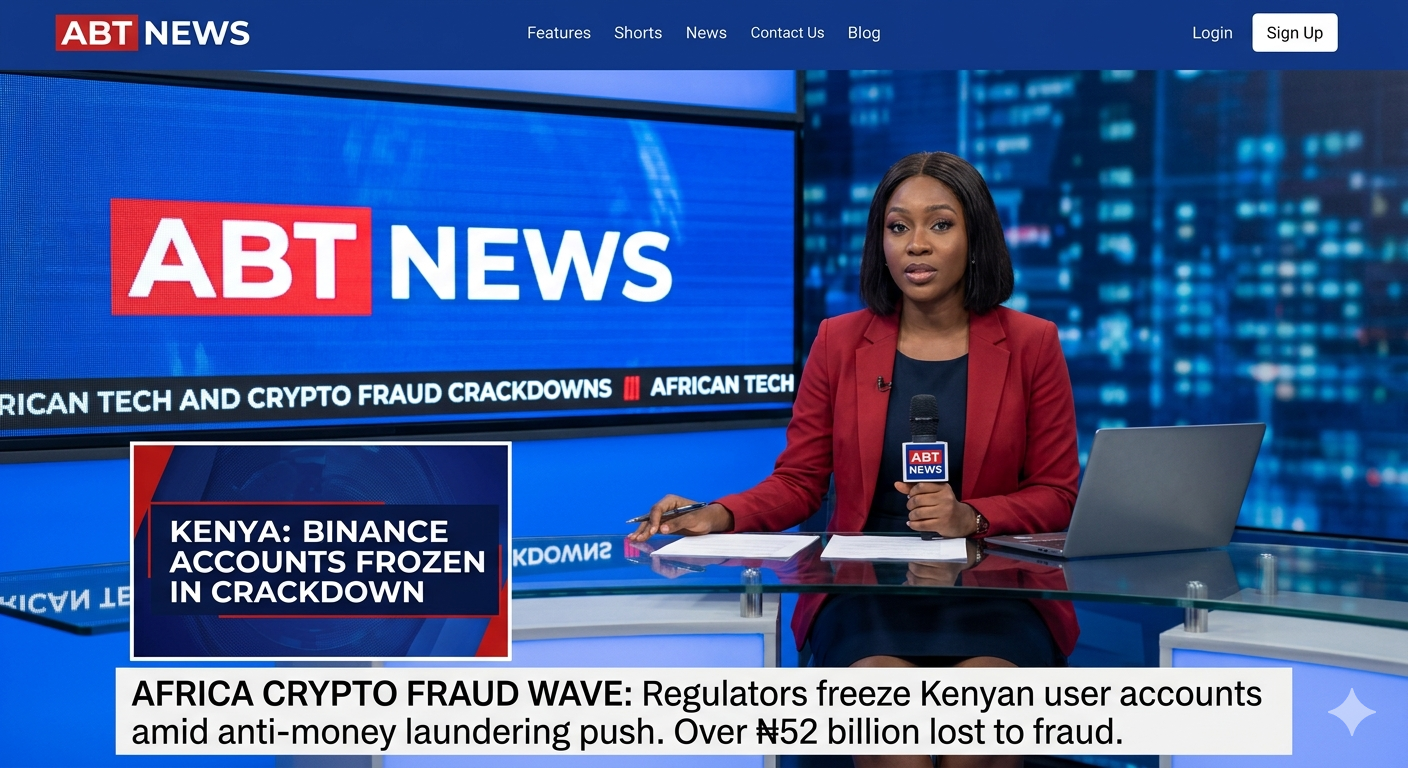

Published: April 22, 2026
NAIROBI — Imagine the scenario: You wake up on a Tuesday morning, coffee in hand, ready to check your portfolio on Binance. Maybe you’re planning to move some USDT or hedge against local volatility. But instead of your dashboard, you’re met with a chilling notification: your account is restricted.
This isn’t a technical glitch or a forgotten password. Across Kenya, an undisclosed number of Binance users are finding their funds in a state of high-stakes limbo. The culprit? A widening crackdown by Kenya’s Directorate of Criminal Investigations (DCI).
Why the Sudden Freeze?
The DCI’s move is part of a massive sweep targeting suspected financial fraud, money laundering, and terrorism financing. While Binance has confirmed it is complying with direct requests from Kenyan authorities, the lack of transparency has sparked a digital firestorm, with affected users launching the #BinanceUnmasked movement to demand answers.
The timing is far from accidental. Kenya is currently under immense international pressure to clean up its financial image:
- The FATF Pressure Cooker: While regional peers like Nigeria and South Africa successfully exited the Financial Action Task Force (FATF) “Grey List” in October 2025, Kenya remains under “increased monitoring.” To exit the list and restore global investor confidence, Kenyan regulators must prove they can police high-risk sectors—with crypto at the top of the list.
- The VASP Act of 2025: Late last year, the government operationalized the Virtual Asset Service Providers (VASP) Act, bringing exchanges under the formal oversight of the Central Bank of Kenya (CBK) and the Capital Markets Authority (CMA). This latest wave of freezes is the first major “show of force” under this new legislation.
The Human Cost: “Real Life Doesn’t Pause”
For many Kenyan youth, crypto isn’t just a hobby; it’s a primary source of income. Social media reports indicate that some accounts have been frozen for over 60 days without formal charges or a clear timeline for resolution.
“Compliance shouldn’t mean leaving people in the dark while their debt grows,” one trader shared under the #BinanceUnmasked hashtag. “Real life doesn’t pause—bills are piling up.”
What Happens to the Frozen Funds?
If your account is among those flagged, the road ahead is purely investigative. According to legal experts and the DCI:
- The Scrutiny: Authorities are requesting deep-dive transaction histories and identity verification (KYC) links to see if funds are tied to illicit “identity farming” or suspicious cross-border movements.
- The Verdict: Access to accounts can be restored if the user is cleared. However, if funds are linked to criminal activity, they are subject to forfeiture under the country’s strict Anti-Money Laundering (AML) laws.
- The Binance Stance: The exchange has largely redirected users to contact local law enforcement directly, citing its commitment to “global compliance standards.”
The Bottom Line
The era of the “Wild West” for crypto in East Africa is officially over. As the Kenyan government races to meet FATF standards, the line between financial security and individual property rights is becoming increasingly blurred. For the Kenyan trader, the message is clear: the regulators are no longer just watching—they are acting.
For more deep dives into Africa’s shifting crypto landscape, visit www.abtnews.net.


 By
By









Brazino777Login… Samba fever, eh? Must be targeting the Latin American market. I hope the vibes are great and the wins are hot, hot, hot! Have a pop at it: brazino777login