
By the ABT News Desk
Flip a switch in London, New York, or Paris, and the lights come on. It is a fundamental expectation of modern life, an invisible engine that drives Western economies without a second thought. Yet, across the African continent, that simple flip of a switch is often met with darkness.
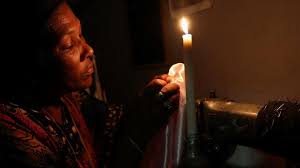
Despite boasting some of the world’s fastest-growing economies and abundant natural resources, nearly 800 million people in sub-Saharan Africa still lack access to electricity. For those connected to the grid, power is often sporadic, characterized by rolling blackouts and sudden surges. This chronic energy deficiency is not just an inconvenience; it is an anchor weighing down the continent’s potential in almost every ramification.
Why is the Grid Failing?
The inability of many African nations to achieve constant energy supply stems from a complex cocktail of historical, financial, and political factors.
First is aging infrastructure. Many national grids were built decades ago and were designed to serve much smaller populations. Today, rapid urbanization and explosive population growth have stretched these obsolete systems far beyond their breaking point.
Second is a chronic lack of investment. Building and maintaining national power grids requires billions of dollars. Bureaucratic red tape, heavily subsidized tariffs that run utilities into debt, and, in some cases, severe corruption and mismanagement have deterred both domestic and foreign private investment.
Finally, there is an over-reliance on outdated energy models. Many countries rely on centralized, fossil-fuel-dependent power plants. When global fuel prices spike, or when supply chains are disrupted, the entire national grid suffers.
The Toll on Economies and Lives
The impact of this energy poverty is devastating. Economically, it stifles industrialization. Manufacturing plants cannot operate efficiently when machines shut down unpredictably. To survive, businesses are forced to rely on expensive, highly polluting diesel generators. This skyrockets the cost of production, making locally made goods uncompetitive in the global market and driving up prices for everyday consumers.
The human cost is even more profound. In healthcare, erratic power supply means life-saving equipment fails during surgeries, and vital medicines and vaccines that require refrigeration spoil. In education, millions of children are unable to study after sunset, and schools are blocked from entering the digital age. Ultimately, energy poverty traps communities in a cycle of economic stagnation, drastically reducing the overall quality of life.
The Hardest Hit Nations
While the energy crisis is widespread, certain countries are particularly crippled by it:
- Nigeria: Despite being one of Africa’s largest oil and gas producers, Nigeria’s national grid notoriously collapses multiple times a year. The “Giant of Africa” runs largely on the deafening roar of private diesel generators.
- South Africa: The continent’s most industrialized nation has been plagued for years by “load shedding”—scheduled, daily rolling blackouts caused by the severe mismanagement and decay of the state utility company, Eskom, and its aging fleet of coal-fired power stations.
- Zimbabwe and Zambia: Both nations rely heavily on the Kariba Dam for hydroelectric power. However, severe, climate-change-induced droughts have frequently plummeted water levels, slashing power generation and plunging both countries into darkness.
- Chad, Burundi, and Malawi: These nations suffer from some of the lowest electrification rates globally, with vast majorities of their rural populations completely cut off from any national grid.
Flipping the Script: What Can Be Done?
The situation is dire, but not unfixable. Africa holds a unique advantage: the opportunity to “leapfrog” the dirty, centralized, fossil-fuel-heavy grids of the West and build a decentralized, green energy network.
To improve the situation, several steps must be taken:
- Regulatory Reform: Governments must unbundle state monopolies, create transparent regulatory frameworks, and offer cost-reflective tariffs to attract private power developers.
- Investment in Smart Grids: Upgrading transmission infrastructure to reduce “line losses” (power lost during transmission) is crucial.
- Decentralization: Moving away from the reliance on a single, massive national grid toward localized mini-grids and off-grid solutions.
The Energy Sources of Tomorrow
To achieve energy sufficiency, Africa must look to the sky, the wind, and the earth.
- Solar Power: Africa has the richest solar resources on the planet, yet holds only a fraction of global installed solar capacity. Solar mini-grids are the most viable solution for rural areas, requiring no massive transmission lines to provide entire villages with reliable power.
- Geothermal Energy: The East African Rift Valley is a geothermal goldmine. Kenya is already leading the way, generating nearly half of its electricity from reliable, constant geothermal sources.
- Wind and Hydro: Wind farms in places like Senegal and South Africa are proving highly effective. Meanwhile, modern, smaller-scale run-of-the-river hydroelectric projects can provide baseload power without the massive environmental disruption of mega-dams.
Africa is standing at an energy crossroads. The lack of reliable power is undeniably holding the continent back. But by embracing decentralized, renewable technologies and reforming utility governance, African nations can finally flip the switch, powering an economic revolution that will brighten the future for hundreds of millions.
For advertising enquiries, send a mail to advertise@abtnews.net or call +447918790290 For more details and assistance on Energy requirements or on Solar Mini Grid, send a mail to info@iatafrica.com

 By
By