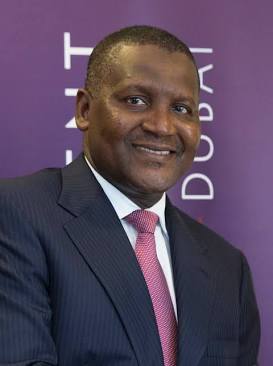

We all want to see Nigeria dominate the global economic stage. We celebrate our billionaires, our grit, and our legendary hustle. But a provocative new question is shaking up the Nigerian business world: Can our nation really produce 10 more Aliko Dangotes?
And we don’t mean 10 wealthy individuals. We mean 10 visionary entrepreneurs building titan institutions worth over $100 billion each.
For context, look at the global heavyweights: NVIDIA, Google, Meta, Amazon, Boeing, Walmart, McDonald’s, Kellogg’s, Microsoft, and Apple.
The burning question is simple but uncomfortable: Can the current Nigerian system actually power companies of that staggering magnitude?
The Secret of the Dangote Empire: Playing ‘Government’
To understand the sheer weight of this question, we have to look at the Dangote Group. To build the empire we see today, Africa’s richest man didn’t just build factories—he had to build the very ecosystem around them.
He built his own power systems. He constructed his own logistics systems. He paved his own transportation networks and even built a seaport.
Think about that for a moment. In more developed economies, the government and national systems handle this groundwork. But when a Nigerian entrepreneur wants to reach a global scale, they must first become their own power company, road developer, and port operator before they can even start manufacturing.
This makes the cost of scaling a business in Nigeria extraordinarily high.
The Power Deficit: Why Talent Isn’t Enough
This isn’t about criticizing Nigeria; it’s about unapologetic, patriotic realism. Can we consistently produce the scale of companies we admire in America and China without first building the systems that make such companies possible?
Analysts project that the Dangote Group could approach a valuation of over $100 billion in the coming years. Yet, to maintain that massive industrial scale, the group reportedly has to plan for tens of thousands of megawatts of dedicated power generation just to keep its own operations running.
Now, imagine a Nigeria with:
- 10 Dangote-sized industrial groups
- 10 globally competitive technology giants
- 10 world-class manufacturing champions
Could the national grid power them?
America boasts roughly 1.4 million megawatts of installed electricity generation capacity. China has even more. It is not a coincidence that these nations birthed Apple, Walmart, and Amazon. They literally have the power to keep these giants running.
The Invisible Layer of Billion-Dollar Empires
The deeper lesson here is a bitter pill to swallow: Great companies are built by great entrepreneurs, but great entrepreneurial ecosystems are built by great systems.
Billion-dollar companies are rarely just happy accidents. While the world loves a “rags-to-riches” billionaire story, there is always an invisible layer of infrastructure beneath them that made their vision possible.
- Power systems.
- Transportation systems.
- Capital markets.
- Education systems.
- Legal frameworks.
- Innovation pipelines.
These systems work together in the background over decades to produce predictable, world-beating outcomes. Systems are predictable. Miracles are not.
The Ultimate Verdict for Nigeria
The takeaway for Nigerian policymakers, business leaders, and citizens is clear. If we want 10 more Dangotes, we must think far beyond just praising entrepreneurs.
We must obsess over electricity. We must revolutionize our ports and railways. We must strengthen our capital markets and educational institutions. Because while brilliant entrepreneurs build companies, it is the system that dictates how many of them are allowed to survive and scale.
The greatest economic question facing Nigeria today isn’t whether our people have the talent to become the next Dangote. The real question is: Will we build a system capable of producing ten of them?
Stay tuned to ABT NEWS for more hard-hitting analysis on Nigeria’s economy, business, and future.


 By
By