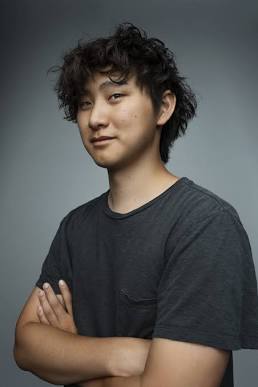

Meta’s top artificial intelligence executive has issued a stark warning that human control over society hangs in the balance. In a viral essay published on X on Sunday, November 22, Meta Chief AI Officer Alexandr Wang declared that “superintelligence is arriving” and urged the technology industry to reject what he called a passive “handover” of human agency to machines.
“We should not be okay with a ‘handover’ of society to AI,” Wang wrote in the post, which has racked up roughly 18 million views. He added that it is “hard to imagine a world where humanity maintains control with superintelligence that is 1000x smarter and more capable than humans in every field”.
The Breakthrough Behind the Warning
Wang, who co-founded Scale AI before joining Meta last year to lead its Superintelligence Labs, tied his warning directly to rapid breakthroughs in frontier AI reasoning. Specifically, he pointed to a milestone announced days earlier: an AI-assisted proof of the Riemann Hypothesis—a foundational 167-year-old unsolved math puzzle—produced by mathematician Levent Alpöge using Anthropic’s Claude model and certified by the Lean and Mathlib communities.
While the Clay Mathematics Institute has not yet granted official recognition to the 17-million-line code proof, Wang called the achievement the output of an “alien mind that we don’t understand”. He argued that developing the atomic bomb would look like “a homework problem compared to the Riemann Hypothesis,” signaling that raw intellect is no longer what separates AI from top human experts.
Why Wang Says Control Is at Risk
In his essay, Wang outlined several critical shifts driving the urgency:
- Closing the Final Gaps: According to Wang, the only remaining barriers preventing AI from surpassing humans across nearly every profession—including AI research itself—are practical hurdles such as domain-specific knowledge, system integration, and real-world experimentation.
- A Pivotal 12 Months: Warning against “lazy thinking within the AI industry” that treats human displacement as inevitable, Wang stressed that “how humanity acts over the next year will have great consequence on what future world we live in”.
- Industry-Wide Signals: Wang’s statement landed just hours after OpenAI chief scientist Jakub Pachocki published a paper warning of an approaching capability cliff and proposing an industry-wide development ceiling.
Viral Backlash: High Alarm, Few Concrete Solutions
While prominent figures such as former Google CEO Eric Schmidt echoed the gravity of Wang’s warning, the billionaire executive’s post sparked widespread skepticism across social media and the tech community.
Critics quickly pointed out that despite calling for urgent action to preserve human control, Wang offered few actionable policies, regulatory frameworks, or technical guardrails. Unlike OpenAI’s proposal for a development ceiling, Wang’s essay stopped short of proposing a capability pause or numeric stop-line for Meta’s own frontier models.
In a follow-up post on November 23, Wang defended Meta’s internal safety posture, noting that he and CEO Mark Zuckerberg had previously delayed an internal model release for safety reviews and prioritized allocating computing power toward tools that empower users rather than unchecked autonomous self-improvement. Still, for many observers, the debate underscores a growing tension in Silicon Valley: the leaders racing fastest to build superintelligence are increasingly sounding the alarm that they do not yet know how to govern it.



 By