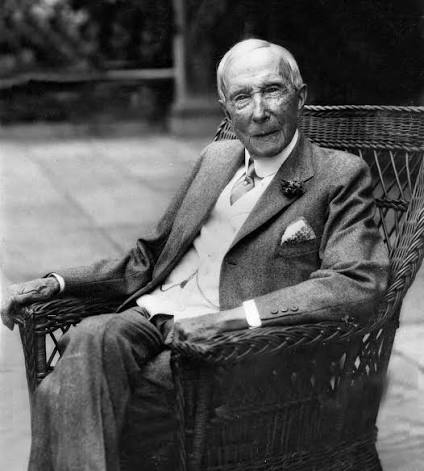

ABUJA — Senator Henry Dickson, National Leader of the newly formed Nigeria Democratic Congress (NDC), has publicly acknowledged noticeable irregularities in the party’s recently concluded direct primaries, urging aggrieved aspirants to exercise patience as the party navigates its rapid expansion.
In a recent interview on Arise TV, followed by a statement on his official X handle, Dickson sympathized with the aspirants, admitting the exercise was “not flawless.” He attributed the administrative bottlenecks to the party’s infancy, noting that the NDC is only four months old and was thrust into a highly compressed electoral timeframe encompassing registration, congresses, and conventions.
Dickson also pointed a finger at the Electoral Act, arguing that the APC-led majority erred in mandating compulsory direct primaries, which strained the NDC’s manual processes given the massive influx of candidates.
Dismissing social media rumors, Dickson clarified that no official winners have been announced yet. He assured supporters that the party’s 2nd NEC meeting has established a Reconciliation Committee to manage post-primary grievances and promised that future primaries will be technologically driven.
Despite the hurdles, Dickson commended the party’s self-funded base for their sacrifices and urged unity behind the NDC’s 2027 presidential ticket: Peter Obi and Senator Rabiu Musa Kwankwaso. “We are in this together, and we are all committed to ensuring the success of our party and our presidential team,” he stated.
Why the NDC Struggled with Credible Primaries
Based on Dickson’s admissions and the political context, the NDC’s inability to execute flawless primaries comes down to four structural hurdles:
- Party Infancy: The NDC is only four months old. It lacks the entrenched institutional frameworks and tested administrative machinery that older parties use to run nationwide elections.
- Legislative Constraints: The Electoral Act’s mandate for compulsory direct primaries forced the young party to organize complex, decentralized voting across thousands of wards rather than simpler delegate-based conventions.
- Volume of Aspirants: The massive popularity of the Obi-Kwankwaso ticket triggered a massive influx of aspirants. The party simply lacked the manual logistics to process this “teeming number” of candidates effectively.
- Time Compression: Building a national register, holding ward/state congresses, and running a national convention and primaries within a four-month window left zero margin for error or pilot testing.
Is the Party Ready for Business?
Yes, but with growing pains.
The NDC has achieved something remarkable by successfully fielding a heavy-hitting presidential ticket (Obi/Kwankwaso) and establishing a nationwide footprint in just 120 days. They are entirely self-funded by citizens, bypassing the traditional “godfather” or state-sponsored financing that dictates Nigerian politics. Dickson’s immediate transparency about the flaws and the swift creation of a Reconciliation Committee show a mature, self-aware leadership style.
However, their administrative execution is currently buckling under the weight of their own popularity. To truly be “ready for business” ahead of 2027, the NDC must rapidly digitize its internal systems—as Dickson promised—and successfully navigate the incoming wave of post-primary litigation and internal grievances without fracturing its base.
The Role of ‘Obidients’ in the NDC
The “Obidients” are no longer just a loose support base; they are the absolute engine room of the NDC.
With Peter Obi leading the ticket, the Obidient movement provides the primary infrastructure for the party. They are the financial lifeline driving the “self-funded” status Dickson praised. Furthermore, they are responsible for the sheer volume of participation—the Obidients supplied the massive wave of aspirants that overwhelmed the primary system. In essence, they transitioned from a protest voting bloc in 2023 to the institutional foundation of the NDC in 2026.
The Village Boys Movement (VBM)
The Village Boys Movement (VBM) is a newly emerged, grassroots socio-political force designed as the direct antithesis and challenger to the pro-Tinubu “City Boy Movement.”
- Who they are: Led by Maazi Tochukwu Ezeoke (known as the “Village Headmaster”), the VBM is heavily composed of Obidients and rural-to-urban youth who reject the moneybag, establishment politics associated with the “City Boys.”
- Their Role: They act as the rugged, boots-on-the-ground mobilization wing for Peter Obi and the NDC ahead of the 2027 elections. They reject political godfathers and focus on competence, integrity, and anti-corruption.
- Recent Action: The VBM recently organized a massive solidarity march in Abuja on May 30, 2026, backing Peter Obi’s official emergence as the NDC’s presidential candidate. They represent the localized, uncompromised muscle of the new party.
It pays to advertise on ABY NEW www.abtnews.net Please send all enquiries to advertise@abtnews.net or +447918790290


 By
By