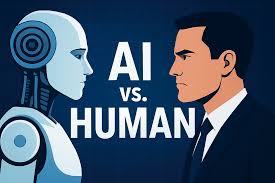

Imagine a city perfectly optimized by algorithms. Traffic flows without a single bottleneck, smart grids distribute energy flawlessly, and parks are spaced with mathematical precision. It sounds like a futuristic utopia—but experts warn it could easily mutate into a clinical, soul-less nightmare.
As Generative AI (GenAI) tools like ChatGPT and DeepSeek rapidly infiltrate urban planning, a critical question is echoing through the halls of architecture and design: AI can design a city, but can it actually understand what matters to the people living in it?
In a groundbreaking analysis published on The Conversation, prominent urban design experts Professor Abeer Elshater (Ain Shams University) and Professor Hisham Abusaada (Housing and Building National Research Center) issued a stark warning. They argue that using GenAI in urban planning is akin to playing with fire.
“GenAI in urban design is like fire—powerful, but dangerous without human control,” the professors noted. “Used well, it can help urban designers think more broadly… Used poorly, it risks reducing urban design to automated generalization, detached from the lived experience of cities.”
To prevent machines from building disconnected, copy-and-paste urban landscapes, the researchers laid out a blueprint of 10 essential cornerstones to keep humans firmly in the driver’s seat. Here is how humanity must fight to keep the “human” in future cities:
1. Retain Human Sovereignty
The direction of any urban study must come from a human researcher, not a prompt. If planners rely on AI to figure out what to study or how to frame a local housing crisis, the output will inevitably be generic, uninspired, and inconsistent.
2. Active Interrogation, Not Passive Co-Piloting
Large Language Models (LLMs) generate plausible-sounding text based on data patterns—not verified truths. Accepting AI city models at face value risks embedding hidden data biases directly into the concrete of our future neighborhoods.
3. Hyper-Local Context is King
Cities are living, breathing ecosystems shaped by unique cultural, political, and social histories. AI naturally gravitates toward generalized, cookie-cutter solutions. A zoning policy that thrives in one global megacity could completely destroy the community fabric of another if local realities are ignored.
4. Beware the “Confident Lie”
In high-stakes debates like rent control, public transport routing, or zoning, LLMs speak with absolute authority—even when they are hallucinating entirely false information. Trusting an AI too quickly can ruin public trust in urban research.
5. The Fake Reference Trap
Urban planners must act as rigorous fact-checkers. AI models are notorious for fabricating entirely non-existent academic references and historical data to support their design suggestions. Intellectual validation must remain a strictly human job.
6. Counteracting AI “Amnesia”
AI does not “remember” the way humans do. It lacks true continuity across long conversations and frequently loses track of earlier structural assumptions. Because AI forgets, the long-term coherence of massive city projects relies entirely on human oversight.
7. Bridging the Technical and Emotional
While an AI can calculate the exact shadow cast by a high-rise, it cannot comprehend the emotional comfort a community feels gathering under a specific historic street canopy. Designers must look inward at human emotion, not just outward at machine metrics.
8. Democratic Community Feedback over Machine Synthesis
AI can summarize public opinions in seconds, but it cannot replace the nuanced empathy required to balance competing neighborhood interests. True civic engagement requires human ears.
9. Guarding Ethical Accountability
If an AI-designed traffic system or housing project fails, a machine cannot be held legally or morally accountable. Humans must own the risk, meaning humans must own the final decisions.
10. Designing a Thoughtful Symbiosis
The goal is not to banish AI from architecture, but to define a collaborative partnership where machines manage data complexity while humans focus on creativity, ethical judgment, and community-building.
The ABT Verdict
The AI revolution in urban planning is no longer a distant prospect; it is happening right now in 2026. Ultimately, the challenge ahead isn’t whether machines can think up better cities, but how we choose to think with them. If we surrender the blueprints of our communities to unfeeling algorithms, we risk losing the very soul of where we live.
What do you think? Would you trust an AI to design your neighborhood? Let us know in the comments below or visit www.abtnews.net for more tech and society updates.

 By
By