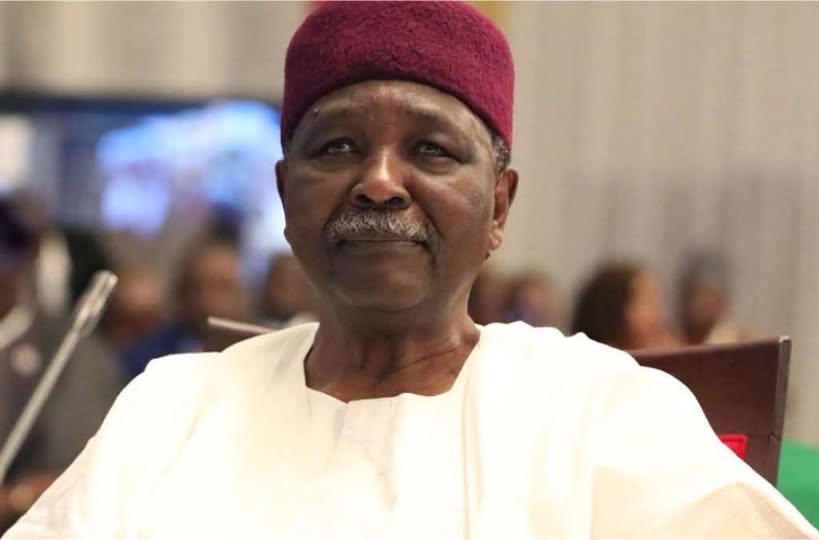

ABUJA, NIGERIA — It was a gathering of Nigeria’s political, military, and corporate elite as former Head of State, retired Gen. Yakubu Gowon, publicly unveiled his highly anticipated autobiography, “My Life of Duty and Allegiance.” The event, held in Abuja on Tuesday, May 19, 2026, quickly turned into a multi-billion naira fundraiser to honor the elder statesman’s legacy, while also sparking a renewed national conversation about Nigeria’s complex history, the scars of the civil war, and the unfinished business of nation-building.
A Shower of Billions The launch of the 20-chapter tell-all memoir drew staggering financial support from Nigeria’s wealthiest figures and military veterans.
Retired Gen. Theophilus Y. Danjuma, who served as the Chief Presenter of the book, led the charge with a colossal ₦3 billion donation. Danjuma, represented at the event by former Chief of Defence Staff, retired Gen. Martin Luther Agwai, went a step further beyond the cash donation. He directed that 12 copies of the book be purchased and distributed to the libraries of each of the 20 universities that have awarded Gowon honorary doctorate degrees over the decades.
Corporate titans also threw their weight behind the launch. Africa’s richest man and Chairman of the Dangote Group, Aliko Dangote, contributed ₦500 million. Meanwhile, Abdul-Samad Rabiu, President of BUA Group, purchased copies of the memoir worth ₦25 million.
President Bola Tinubu was represented by Vice President Kashim Shettima at the well-attended gathering, which was chaired by former President Goodluck Jonathan. The Catholic Bishop of Sokoto Diocese, Matthew Hassan Kukah, delivered a poignant review of the book, praising its historical depth.
Unveiling Civil War Secrets While the donations made headlines, the contents of “My Life of Duty and Allegiance” have sent shockwaves through Nigeria’s historical establishment. Gowon used the memoir to set the record straight on some of the most contentious moments of the 30-month Nigerian Civil War.
Among the startling revelations, Gowon detailed how the refusal of the United States and Britain to supply arms to the Nigerian federal government during the war forced his administration to seek military hardware from the Soviet Union and a Lebanese black-market businessman.
The book also delves into his complex relationship with Chukwuemeka Odumegwu Ojukwu. Gowon revealed that northern military officers wanted to move against Ojukwu following the January 1966 coup, but Gowon protected him, a decision he made out of a desire for military unity.
A Brief History: Gowon in Power (1966–1975) To understand the gravity of the memoir, one must look back at Gowon’s tumultuous time in power. Assuming the role of Head of State in August 1966 at the young age of 31 following a bloody counter-coup, Gowon was thrust into leading a deeply fractured nation.
Achievements:
- “No Victor, No Vanquished”: Following the end of the devastating civil war in 1970, Gowon famously declared this policy, which prioritized national reconciliation, reconstruction, and reintegration over punishing the secessionist Biafrans.
- The NYSC: In 1973, he established the National Youth Service Corps (NYSC) to foster unity by deploying young Nigerian graduates to live and work in states outside their cultural and geographical origins.
- ECOWAS: On the diplomatic front, Gowon was instrumental in the 1975 creation of the Economic Community of West African States (ECOWAS), driving regional economic integration.
- Infrastructure Boom: Buoyed by the 1970s oil boom, his administration heavily invested in massive national infrastructure, including the creation of federal universities, highways, and bridges.
Misdoings and Criticisms:
- The War Toll: Gowon’s legacy remains heavily debated due to the severe humanitarian toll of the civil war, particularly the blockade of the Eastern Region, which led to mass starvation.
- Broken Promises: His most significant political misstep was reneging on his promise to return Nigeria to civilian democratic rule in 1976. Claiming the country was “not ready,” he postponed the handover indefinitely. This decision alienated his military base and directly led to the bloodless coup that ousted him in 1975 while he was attending an OAU summit in Uganda.
Regrets and Hindsight: In his new autobiography, Gowon did not shy away from his regrets. He explicitly reflected on his early “altruistic” decision to retain Ojukwu as governor of the Eastern Region despite Ojukwu’s refusal to recognize his authority as Head of State. Gowon admits that keeping Ojukwu in office, hoping to preserve military comradeship, was, in hindsight, a “huge mistake” that ultimately paved the way for the secession of Biafra and the resulting tragic war.
Today, however, at 91 years old, Gowon is celebrated as an elder statesman whose early wartime leadership and subsequent commitment to a united Nigeria prevented the permanent disintegration of Africa’s most populous nation.
For more exclusive political features, book reviews, and breaking national news, stay tuned to ABT NEWS at www.abtnews.net.

 By
By