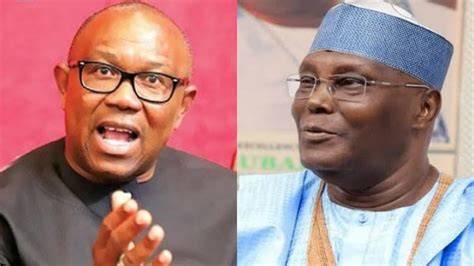

The landscape of Nigerian politics is famously dynamic, and the recent realignment involving major political heavyweights has once again shuffled the deck ahead of the next general elections. With the reported departure of Peter Obi and Rabiu Kwankwaso from the African Democratic Congress (ADC) fold, the opposition landscape is undergoing a significant transformation.
For former Vice President Atiku Abubakar, a veteran of Nigerian electoral battles, this development presents both a complex challenge and a unique strategic opportunity. As the opposition fractures and realigns, what are Atiku’s remaining options, and what does a realistic pathway to victory look like for him?
The Impact of the Realignment
The initial concept of a mega-coalition housing multiple opposition figures under one umbrella—such as the ADC—was viewed by some political analysts as a formidable threat to the ruling party. However, the exit of Obi (with his massive youth and southern/middle-belt base) and Kwankwaso (with his iron grip on the Kano and North-West grassroots) signals a fragmentation of that unified opposition front.
For Atiku, this means he is no longer competing for influence within a crowded coalition, but it also means he must find a way to win in a multi-horse race where the opposition votes could be severely split.
Atiku’s Strategic Options
To mount a successful campaign, Atiku must navigate this newly fragmented landscape. Political strategists point to three primary options currently on his table:
1. Re-consolidating the PDP Base Atiku’s most immediate option is to return to the drawing board and fully unify the Peoples Democratic Party (PDP). The internal rifts that plagued the party in previous cycles must be definitively healed. If Atiku can bring the powerful PDP governors and regional power brokers back into a cohesive unit, he retains control of the most established opposition machinery in the country.
2. Forging New, Targeted Alliances While a grand mega-party might be off the table, bilateral alliances are not. Atiku’s camp could focus on targeted negotiations with regional leaders. Rather than trying to merge parties, he could negotiate direct endorsements or power-sharing agreements with key figures in the North-Central and South-West to siphon votes away from the ruling party and his opposition rivals.
3. Positioning as the “Experienced Unifier” With Obi and Kwankwaso charting their own courses, Atiku can position himself as the mature, tested statesman capable of stabilizing a turbulent economy. He can attempt to appeal to the older demographic, traditional institutions, and the business elite who might be wary of populist movements but are still seeking an alternative to the current administration.
The Pathway to Victory
Winning the Nigerian presidency requires a delicate mathematical balance: securing the highest number of overall votes while also gaining at least 25% of the vote in two-thirds (24) of the states. Here is what Atiku’s pathway to that threshold looks like in this new paradigm:
- Sweeping the North-East and North-West: Atiku must dominate his home zone (the North-East) and aggressively challenge Kwankwaso and the ruling party in the vote-rich North-West. His campaign would likely rely on his deep traditional ties and the narrative of returning power to the North to consolidate these numbers.
- Reclaiming the South-South: Historically a PDP stronghold, the South-South saw fractured voting in recent elections. Atiku’s pathway relies heavily on bringing this region back firmly under his column, requiring intense negotiations with current and former governors of the oil-producing states.
- Capitalizing on Economic Realities: Atiku’s core campaign message has always centered on his business acumen and his record during the privatization era of the early 2000s. His pathway to victory involves convincing the working class and the business community across all geopolitical zones that he possesses the specific macroeconomic expertise needed to revive the Naira, attract foreign investment, and lower inflation.
The Road Ahead
The departure of Peter Obi and Rabiu Kwankwaso from the ADC framework ensures that the race to 2027 will not be a simple two-way contest. It will be a complex, multi-factional battle for the soul of the electorate.
For Atiku Abubakar, the pathway to victory exists, but it is extremely narrow. It will require flawless political arithmetic, the pacification of internal party rivals, and an unprecedented ability to convince a skeptical electorate that his wealth of experience is exactly what Nigeria needs in its current economic climate.
For the latest political analysis and breaking election updates, keep your browser locked to www.abtnews.net

 By
By