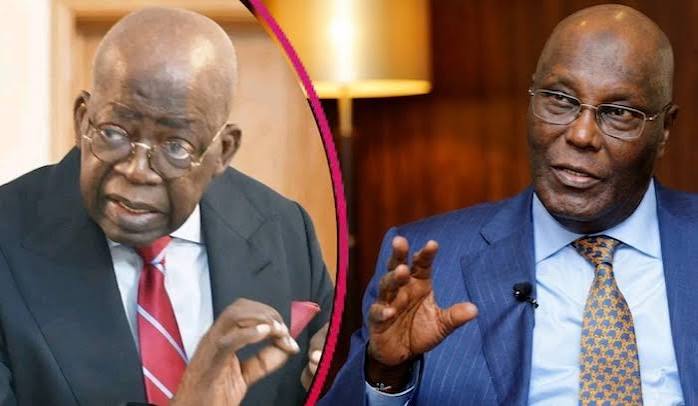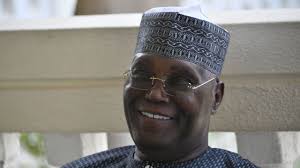

As the political landscape begins to take shape for the post-Bola Tinubu era, the familiar figure of former Vice President Atiku Abubakar is once again at the center of national debate. Despite mounting headwinds and a rapidly shifting electoral demographic, the political heavyweight remains determined to secure Nigeria’s highest office. However, his ambition is currently colliding with one of the most deeply entrenched unwritten rules in Nigerian politics: zoning.
The Zoning Dilemma and a Shifting Landscape
Nigeria’s informal zoning arrangement, designed to ensure a balance of power between the North and the South, poses a formidable obstacle to Atiku’s 2027 aspirations. Following the eight-year tenure of former President Muhammadu Buhari—who hails from the North—the unwritten consensus dictated a shift of power to the South, which paved the way for the current administration.
For Atiku, a Northern Muslim from Adamawa State, attempting to reclaim the presidency for the North so soon after Buhari’s tenure is viewed by many political analysts as a virtually insurmountable challenge within traditional party structures. Recognizing this hurdle, Atiku has recently aligned himself with the African Democratic Congress (ADC)—a party that explicitly does not utilize the zoning system for its presidential ticket—signaling his intent to bypass the traditional geographical limitations of the PDP and APC. Yet, convincing a southern electorate to support a northern candidate under these circumstances remains a steep uphill climb.
Demystifying the Wealth: Fact vs. Fiction
Beyond the zoning debate, Atiku faces a persistent challenge in the court of public opinion regarding his financial status. A recurring narrative among political critics and segments of the voting public is a misunderstanding of his vast wealth, with some falsely asserting that he has “no means of livelihood” and questioning how he achieved his billionaire status.
While political rhetoric often clouds the facts, public records and business histories paint a very clear picture of Atiku’s wealth generation, which spans over four decades of aggressive private sector investment.
To understand how Atiku Abubakar made his fortune, one must look at his transition from a civil servant to a dominant industrialist:
- Customs and Early Real Estate: Atiku served in the Nigeria Customs Service for 20 years, rising to the rank of Deputy Director before retiring in 1989. His foray into wealth building began much earlier, in 1974, when he used a 31,000 Naira loan to build a house in Yola. He rented it out and used the proceeds to build another, eventually developing a massive real estate portfolio across the country.
- The INTELS Goldmine: The true cornerstone of Atiku’s billionaire status is his involvement in the oil and gas logistics sector. In the early 1980s, alongside an Italian businessman, he co-founded Nigeria Container Services (NICOTES). This company later evolved into INTELS Nigeria Limited, a multi-billion Naira logistics giant that provides critical infrastructure and support services to Nigeria’s lucrative oil and gas industry.
- The Priam Group: Today, Atiku’s diverse business interests are consolidated under an umbrella brand known as The Priam Group. As an industrialist, he is widely regarded as one of the largest private-sector employers in Nigeria. His portfolio includes:
- Agriculture and Manufacturing: Extensive farming operations and Adama Beverages Limited.
- Media and Communications: Gotel Communications, a major multimedia and television outfit in the North.
- Education: The American University of Nigeria (AUN) in Yola, the first American-style private university in Sub-Saharan Africa.
- Franchising: He also holds the Nigerian franchise rights for the international fast-food chain, Chicken Cottage.
The Bottom Line
While critics may continue to scrutinize the intersection of his time as a civil servant and his early business ventures, the assertion that Atiku Abubakar lacks a means of livelihood is factually incorrect. He is a formidable business tycoon whose empire employs tens of thousands of Nigerians.
However, translating private sector dominance into electoral victory is an entirely different battle. As 2027 approaches, Atiku’s wealth and business acumen are not in doubt; it is his ability to overcome the stringent demands of regional zoning and connect with a younger electorate demanding fresh faces that will ultimately determine if his presidential prospects remain dismal, or if he can engineer one final, historic political upset.

 By
By