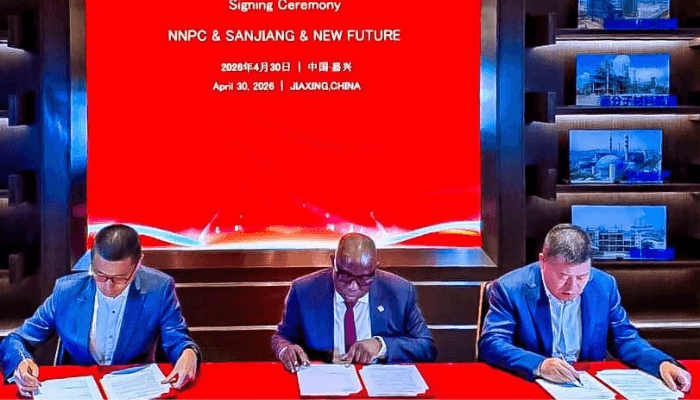

In a major pivot to rescue Nigeria’s notorious state-owned refineries, the Nigerian National Petroleum Company Limited (NNPCL) has just signed a sweeping Memorandum of Understanding (MoU) with two Chinese industrial powerhouses. The deal, inked in Jiaxing City, China, aims to resurrect the Port Harcourt and Warri refineries—facilities that have infamously swallowed over $2.4 billion in public funds over the years without producing a meaningful drop of refined fuel.
According to a recent report by BusinessDay, NNPCL Group Chief Executive Bashir Bayo Ojulari signed the three-way Technical Equity Partnership (TEP) with Sanjiang Chemical Company Limited and Xinganchen (Fuzhou) Industrial Park Operation and Management Co. Ltd. After more than six months of rigorous technical and management engagement, this partnership is designed to finally complete the outstanding construction and engineering work, upgrade the facilities to cleaner fuel standards, and manage the ongoing operations of these vital assets.
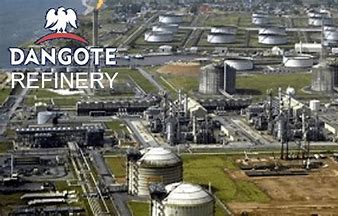
But as this promising development makes headlines, a critical question arises for industry watchers and the average Nigerian: With the 650,000 barrel-per-day Dangote Refinery now up and running, where do these state refineries fit in?
A Replacement or a Complement to Dangote Refinery?
To put it simply: This is a complement, not a replacement. The Dangote Refinery in Lagos has already begun reshaping domestic fuel economics, single-handedly bringing Africa’s largest economy closer to petroleum independence. However, no nation aiming for total energy security relies entirely on a single privately owned facility, no matter how massive.
Here is why reviving the state refineries complements the Dangote mega-project:
- Breaking Monopolistic Dynamics: Having operational state refineries introduces healthy competition into the domestic market. If Port Harcourt and Warri can compete on cost and product quality, it prevents the creation of a private monopoly, ensuring that pump prices remain fair and market-driven.
- Strategic Geographic Distribution: While Dangote serves as a massive hub in the South-West (Lagos), having operational refineries in the South-South (Rivers and Delta States) drastically cuts down logistics and bridging costs for fuel distribution to the Eastern, Southern, and Northern parts of the country.
- The Petrochemical Pivot: A standout element of the NNPCL-China deal is its ambition beyond just petrol. The partnership aims to expand petrochemical capacities and develop co-located, gas-based industrial hubs—a model heavily utilized in China’s special economic zones. This diversifies Nigeria’s output from just fuels to the raw materials needed for plastics, fertilizers, and manufacturing.
What Should We Expect in the Oil Sector Henceforth?
If the NNPCL and its Chinese partners can successfully transition this MoU from paper to operational reality—moving past the historical curse of abandoned rehabilitation contracts—the Nigerian oil sector is on the verge of a golden era. Here is what we should expect:
- The Final Death of Fuel Imports: The combined capacity of a fully functional Dangote Refinery, alongside revived Port Harcourt and Warri refineries, will utterly wipe out Nigeria’s reliance on imported refined products. This has historically been the biggest drain on Nigeria’s foreign reserves.
- Forex Stabilization: By producing our fuel and chemicals locally, the relentless demand for US Dollars to import petrol will crash. This will offer massive relief to the Naira, potentially strengthening the currency in the long term.
- Volatile Pump Prices Could Stabilize: Localized refining removes the cost of international freight, insurance, and the unpredictability of global supply chain shocks. Nigerians can expect more stable, and potentially lower, pump prices.
- A Boom in Industrialization and Jobs: The creation of gas-based industrial and chemical hubs in the Niger Delta will spur a new wave of manufacturing. This means massive job creation, shifting the Nigerian economy from merely extracting crude oil to refining and manufacturing high-value petroleum products.
The Bottom Line for ABT NEWS Readers: The days of viewing Nigeria’s refining landscape as a graveyard of billions of dollars may finally be coming to an end. The Dangote Refinery proved that refining in Nigeria is possible; the new NNPCL-China alliance must now prove that state-backed infrastructure can be profitable and sustainable. Together, they are not competitors fighting to replace each other, but the twin engines that will finally drive Nigeria toward total energy independence.
Stay tuned to www.abtnews.net for more exclusive updates on this developing story.


 By
By