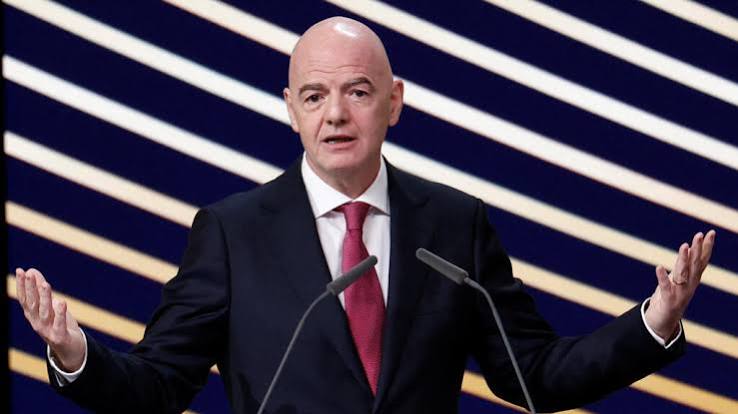

ABUJA, Nigeria — FIFA President Gianni Infantino has stated that Nigeria currently lacks the critical infrastructure required to host the FIFA World Cup, though he expressed optimism that the West African football powerhouse could stage the global showpiece in the future.
Speaking during an interview on Arise Television’s morning show in Abuja on Monday, Infantino noted that while Nigeria possesses “the resources, the passion, and the will” to host major tournaments, its current facilities fall short of the massive logistical demands of a 48-team World Cup.
“Today, no. Tomorrow? Why not?” Infantino said when asked about Nigeria’s readiness to host football’s premier competition. “When I look at the resources and the possibilities that are being projected, I think Nigeria has all the cards. Nigeria is close.”
The Four Infrastructure Pillars Nigeria Must Fix
Infantino emphasized that staging a modern World Cup requires far more than enthusiasm on the pitch. To meet FIFA’s strict bidding standards, he identified four core areas requiring heavy investment:
- World-Class Stadiums: Recent FIFA bid requirements mandate at least 14 stadiums with a minimum capacity of 40,000 seats, expanding to 80,000 for the opening match and final.
- Hospitality & Hotels: Sufficient luxury and mid-range accommodation to house dozens of national teams, officials, media, and hundreds of thousands of visiting fans.
- Aviation & Airports: Modernized international and domestic terminals capable of handling high-volume, rapid intercity air traffic.
- Transportation Networks: Reliable rail, road, and public transit ecosystems connecting host cities and match venues.
“The key to hosting a World Cup is infrastructure: the stadiums, the hotels, the airports, transportation,” Infantino explained. “That is where investment is really necessary.”
Infantino pointed to Morocco—set to become the second African nation to host the tournament when it co-hosts the 2030 World Cup alongside Spain and Portugal—as an example of a country that has built a complete hospitality and sporting ecosystem extending beyond stadiums.
Recent Facility Inspections Show Progress
The FIFA president’s remarks came just days after touring ongoing football development projects in Nigeria. During his visit, Infantino inspected the FIFA Forward Technical Centre under construction at the Moshood Abiola National Stadium in Abuja—a $4.88 million project funded through FIFA’s Forward 3.0 programme that includes a 68-room players’ hostel and two training pitches.
He also visited the newly remodeled Warri City Stadium in Delta State, praising the 17,000-to-20,000-capacity venue.
“For example, I visited a national training centre in Abuja, in Warri as well. A very nice stadium. Very nice,” Infantino noted, adding that ongoing construction across the country proves Nigeria is “on the right path.”
A Stepping-Stone Strategy for Future Bids
Before launching a bid for the senior men’s World Cup, Infantino advised Nigeria to rebuild its hosting credentials by staging smaller youth and continental tournaments.
| Tournament | Year | Outcome / Status |
| FIFA U-20 World Cup | 1999 | Successfully hosted by Nigeria |
| FIFA U-17 World Cup | 2009 | Successfully hosted (Golden Eaglets finished runners-up) |
| Africa Cup of Nations (AFCON) | 2027 | Lost hosting bid to joint Kenya, Tanzania, and Uganda proposal |
Because FIFA’s continental rotation policy bars Africa from bidding for the 2034 tournament (awarded to Saudi Arabia) and the 2038 edition following Morocco’s 2030 co-hosting role, 2042 represents the earliest realistic window for an African World Cup bid. Securing hosting rights for upcoming AFCON editions or FIFA youth and women’s tournaments in the interim would serve as a vital proving ground for Nigeria’s long-term ambitions.
Reporting by ABT News Sports Desk


 By