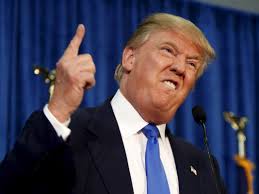

WASHINGTON — In a sudden move that threatens to plunge the global economy into a renewed trade war, President Donald Trump has announced that he will drastically hike tariffs on cars and trucks imported from the European Union to 25%, effective next week.
The announcement, delivered via a post on Truth Social late Friday, essentially shreds the fragile reciprocal trade framework negotiated between Washington and Brussels just last summer.
“I am pleased to announce that, based on the fact the European Union is not complying with our fully agreed to Trade Deal, next week I will be increasing Tariffs charged to the European Union for Cars and Trucks coming into the United States,” Trump wrote, blindsiding European markets ahead of the weekend. “The Tariff will be increased to 25%.”
Crucially, the President added a major caveat aimed at boosting domestic manufacturing: “It is fully understood and agreed that, if they produce Cars and Trucks in U.S.A. Plants, there will be NO TARIFF.”
THE REASON BEHIND THE HIKE
The new 25% levy reverses the 15% rate established under the so-called “Turnberry Agreement”—a trade pact struck last July at Trump’s golf course in Scotland and formalized in August 2025. That deal had originally lowered Trump’s steep “liberation day” national security tariffs in exchange for the EU slashing its own duties on U.S. industrial and agricultural goods.
So why the sudden escalation?
Officially, Trump cited the EU’s “non-adherence.” U.S. officials have grown increasingly frustrated by the sluggish pace at which Brussels has moved to formally ratify its side of the agreement. While the European Parliament voted to progress the deal in March, it has remained bogged down in the EU’s bureaucratic “trilogue” process—requiring sign-offs from the European Commission, the European Council, and the Parliament.
However, analysts point to deeper geopolitical friction. The delay in Brussels was partly fueled by European anger over Trump’s renewed campaign to acquire the Danish territory of Greenland. Furthermore, the tariff threat arrives just a day after Trump fiercely criticized German Chancellor Friedrich Merz, demanding that Germany focus on ending the Ukraine war rather than “interfering” with U.S. policy regarding Iran.
By raising tariffs under Section 232 of the Trade Expansion Act of 1962 (a national security authority that recently survived a major Supreme Court challenge), Trump is bypassing the courts and going straight for Europe’s economic jugular.
THE EXPECTED EU REACTION: RETALIATION AND OUTRAGE
The reaction from Europe has been swift and furious. German MEP Bernd Lange, chair of the EU Parliament’s international trade committee, immediately condemned the move, stating it proved the U.S. has become an untrustworthy ally.
“This is no way to treat close partners,” Lange declared. “Now we can only respond with the utmost clarity and firmness, drawing on the strength of our position.”
The European Commission echoed this sentiment, issuing a statement reaffirming its commitment to the transatlantic relationship but heavily implying that retaliatory measures are on the table if the U.S. violates the agreed-upon ceiling.
Economic experts warn that Brussels is highly likely to strike back. Oxford Economics projects a scenario where the EU responds by imposing a mirrored 25% tariff on U.S.-made motor vehicles (up from the current 10%), which would strike a heavy blow to American automotive exports.
WHO LOSES THE MOST?
The biggest casualty in this transatlantic crossfire will undoubtedly be the German automotive sector. The U.S. accounts for over a fifth of the EU’s automotive export market. Heavyweights like Volkswagen, BMW, and Mercedes-Benz are highly exposed, but companies lacking robust manufacturing footprints inside the United States—such as Porsche and Audi—stand to face the most catastrophic disruptions.
As the 25% hike sits on top of standard most-favored-nation duties, European automakers will soon face a crippling 27.5% combined tariff burden. They will be forced to absorb the massive costs, drastically raise prices for American consumers, or pull back their shipments to the U.S. entirely.
As the clock ticks down to next week’s implementation, the world braces for what could be the most severe transatlantic economic clash of the decade.
Stay tuned to ABT NEWS at www.abtnews.net for continuous updates on this breaking story.


 By
By