
By ABT NEWS | www.abtnews.net
What does productivity really mean in today’s volatile and disruptive world?
For years, productivity has been associated with effort, long hours, task shifting, and constant activity. But in reality, productivity is measured by both input and output, and more importantly, by how the work is done. Productivity is not only about getting things done faster. It is about doing the right things, efficiently and effectively.
The Multitasking Fallacy
One principle remains clear: Multitasking is a fallacy. True productivity requires focus, structure, and clarity of execution.
We often fool ourselves into thinking that juggling multiple tasks makes us more effective, but the science proves otherwise. Research from the American Psychological Association reveals that shifting between tasks can consume up to 40% of a person’s productive time. Furthermore, a landmark study from the University of California, Irvine, shows that it takes an average of 23 minutes and 15 seconds to fully refocus after a single interruption.
For entrepreneurs and CEOs, this means that creating an environment of constant pings and context-switching isn’t driving results—it is actually driving a 50% increase in error rates and burning out top talent.
AI: Redefining How Work Gets Done
Today, Artificial Intelligence (AI) is redefining how work gets done. While some view it as a replacement for people, we must also acknowledge a simple truth—certain tasks will inevitably be automated. History has shown us this before. Gone are the days of telephone operators at NITEL manually connecting calls.
However, AI is not here to replace human capability entirely. It is here to enhance it. McKinsey & Company’s latest 2026 Global AI Survey highlights a profound shift: while over 80% of workers report that AI has improved their individual productivity, early corporate adopters are seeing 20% to 40% overall productivity gains.
For CEOs and business leaders, the real challenge is not whether to adopt AI, but how to balance and navigate its use within their organizations to improve productivity while maintaining human judgment, discipline, and creativity. The professionals who will lead in this new era are not those who resist change, but those who understand how to leverage it.
Actionable Examples: The Smart Worker in Practice
AI should not replace disciplined, thoughtful, and adaptive workers. Rather, it should cover the gaps in inefficiency and enable higher-value work. Here is what working smarter looks like in practice:
- AI-Assisted Sales and Customer Service: Instead of replacing human sales teams, businesses are using AI to analyze past interactions, predict when deals will close, and assist representatives in real time. For example, tracking “AI-assisted sales per associate” in the retail sector has led to an 18% boost in conversions. Meanwhile, AI chatbots handle routine queries around the clock, freeing up human agents to navigate complex, high-stakes customer relationships.
- Automated Data and Reporting: Financial and HR teams are using AI to scan documents, automate reporting, and flag compliance errors. This eliminates hours of manual data entry, allowing professionals to focus on strategic planning, relationship building, and innovation.
- Batch Processing for Deep Work: To combat the multitasking trap, leaders are implementing “batch processing”—dedicating specific blocks of time for emails and messages. By using AI assistants to summarize communications and draft routine responses, executives preserve their deep, uninterrupted focus for complex problem-solving.
The Global Opportunity: From Africa to the World
This shift presents a clear opportunity:
- For individuals — to evolve
- For organizations — to optimize
- For markets — to become more competitive
In Africa’s emerging economies, where talent, resilience, and adaptability already exist, the integration of AI into daily work processes can unlock a new level of productivity and global relevance.
Guarding the Future of Work
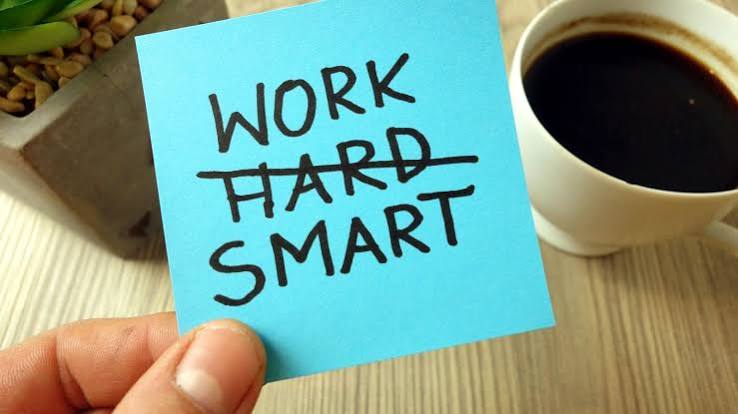
The future of work is not about working harder. It is about working smarter – with the right tools, in the right environment.
As we move forward, it is important that this transition is guided responsibly. Guardrails, governance, and regulation are essential to protect workers and ensure that the gains of this new era are shared equitably across our workforce. McKinsey’s 2026 data emphasizes that organizations with clear AI governance and C-suite oversight are the ones actually scaling safely and delivering tangible business value.
Stay tuned to ABT NEWS (www.abtnews.net) for more insights on business, technology, and the future of work.
ABT NEWS Platform is absolutely free for all to enjoy. However please support us by grabbing a copy of the above eBook. A portion of the sales goes towards supporting girls to acquire AI skills. Donations towards that are also possible via PayPal using our email: info@abtnews.net



 By
By