
ABT NEWS SPECIAL REPORT
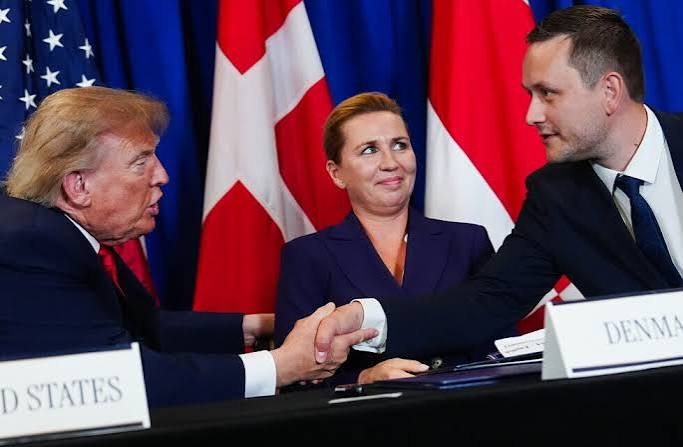
COPENHAGEN & NUUK — Following months of geopolitical tension, the newly signed trilateral defense and security agreement between the United States, Denmark, and Greenland has brought a palpable sense of relief across the North Atlantic. The pact officially puts to rest overt speculation regarding potential US annexation or forced acquisition of the Arctic island, codifying that Greenland’s territorial integrity and constitutional right to self-determination remain absolute.
However, beneath the headline relief lies a far more nuanced story. While diplomatic headlines celebrate a win for international law, the genuine sentiments across Danish and Greenlandic societies reveal a complex mix of pragmatic compromise, strategic victory, and quiet vigilance over long-term autonomy.
US Space Force facilities at Pituffik Space Base. Source: Pool / Getty Images
Key Terms of the Trilateral Agreement
The compromise balances American defense priorities with European sovereignty principles through several core provisions:
- Reaffirmed Sovereignty: Explicitly upholds the territorial integrity of the Kingdom of Denmark and safeguards Greenlanders’ constitutional right to eventual self-determination.
- Expanded Defense Access: Permits Washington to modernize and expand facilities at Pituffik Space Base and designate potential new defense areas at Narsarsuaq and Mestersvig.
- Joint Investment Screening: Mandates unanimous approval from Washington, Copenhagen, and Nuuk for non-NATO or non-EU investments in critical infrastructure and rare-earth mining.
- Independence Clause: Dictates that if Greenland elects full independence in the future, it commits to remaining within NATO and assuming the defense obligations established in this accord.
The View from Copenhagen: A Triumph of Soft Power and Realism
In Denmark, political commentators, diplomats, and the general public view the agreement as a significant triumph of quiet diplomacy over aggressive posturing. Prime Minister Mette Frederiksen’s government successfully rallied EU and NATO allies to establish firm boundaries around international law, demonstrating that small nations can withstand pressure from superpowers when backed by collective security principles.
“National borders and the sovereignty of states are rooted in international law. You cannot annex another country—not even under the argument of international security,”
– Prime Minister Mette Frederiksen and Greenlandic Prime Minister Jens-Frederik Nielsen declared in a joint stance.
For everyday Danes, the sentiment is one of pragmatic relief. The public had grown deeply uncomfortable with the prospect of an escalating trade or diplomatic rift with the United States. While some defense analysts note that granting expanded US military access, including potential undersea tracking rights, is a high price, the general consensus across Danish media is that accommodating legitimate security interests was the only viable pathway to neutralize annexation threats.
The Inatsisartut parliament building in Nuuk. Source: mtcurado / Getty Images
The View from Nuuk: Relief Tinted with Caution
In Nuuk, public reaction is markedly more cautious. The immediate threat of unilateral coercive action has evaporated, reassuring a population that vehemently rejected any notion of being “bought” or annexed. However, Greenlandic civil society and political factions are scrutinizing the long-term trade-offs embedded in the pact.
- Self-Determination Preserved: Lawmakers in the Inatsisartut welcomed the explicit recognition that Greenland’s path toward independence remains intact and governed solely by its own people.
- Economic Autonomy Concerns: The clause granting the US input over foreign investment screening in mining and infrastructure raises eyebrows in Nuuk. While intended to restrict non-NATO adversaries, local business leaders worry it could give Washington veto power over critical mineral projects essential for Greenland’s future economic independence. Atlantic Council
- Environmental and Cultural Guarantees: Environmental groups and indigenous community representatives have emphasized that expanded military footprints must adhere strictly to environmental safeguards and preserve traditional hunting and fishing grounds. Indiatimes
ABT NEWS Synthesis
The US-Denmark-Greenland agreement marks a turning point in Arctic geopolitics. Washington secures the strategic military footprint and critical mineral security it sought, while Denmark and Greenland preserve the rule of law and territorial sovereignty. For the people of Denmark and Greenland, the dark cloud of an existential territorial crisis has lifted, replaced by an acceptable framework for co-existence in an increasingly contested High North. Time will tell whether this will usher win -win scenario for all or will trigger the Trumpian Oliver Twist syndrome to ask for more!
ABT NEWS Platform is absolutely free for all to enjoy. However please support us by grabbing a copy of our eBook below. A portion of the sales goes towards supporting girls to acquire AI skills. Donations towards that are also possible via PayPal using our email: info@abtnews.net


 By
By