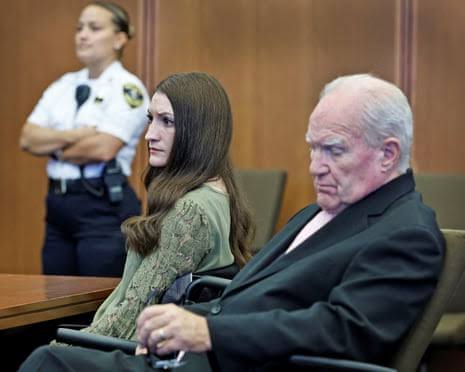

Many people are understandably confused when a highly publicized trial ends not with a dramatic resolution, but with a sudden mistrial. In the tragic case of Lindsay Clancy, the Massachusetts mother who admitted to killing her three young children in January 2023, there was no “mistrial verdict.” In the legal system, a mistrial inherently means the jury failed to reach a verdict.
Here is the legal reality of what unfolded in Plymouth Superior Court in early September 2026, structured through the journalistic lens of And, But, Therefore (ABT) to cut through the confusion.
The Core Story: And, But, Therefore
AND: Lindsay Clancy stood trial for the murder of her three children, with her defense arguing she was devoid of criminal responsibility due to severe postpartum psychosis, and the prosecution arguing she was legally sane, capable of planning, and in control of her actions.
BUT: After five weeks of grueling testimony and roughly 38 hours of deliberation, the jury became hopelessly deadlocked at an 11-to-1 split,. The jury foreperson indicated a single holdout juror refused to agree with the others on the application of reasonable doubt.
THEREFORE: Judge William Sullivan was forced to declare a mistrial on September 4, 2026. This means the case remains legally unresolved, sending Clancy back to a state psychiatric hospital under her pre-trial conditions, while prosecutors must now decide whether to pursue a retrial, negotiate a plea, or drop the charges.
What Really Happened: The Legal Breakdown
To understand the mechanics of this outcome, it helps to look closely at the procedural facts that led to the trial’s collapse.
- The Deadlock: In the U.S. criminal justice system, a jury must reach a unanimous decision to convict or acquit. In Clancy’s case, the jury was split 11-to-1. It has not been formally disclosed which way the majority leaned, though defense attorney Kevin Reddington strongly implied the holdout juror prevented a verdict that would have resolved the case.
- The Failed Appeal: In an unusual legal maneuver, the defense filed an emergency appeal with the Massachusetts Supreme Judicial Court just before the mistrial was declared. They argued the holdout juror harboured bias against mental illness and was refusing to follow the judge’s legal instructions regarding the law. The state’s highest court denied this emergency intervention, as courts are extremely hesitant to interfere with private jury deliberations.
- The Declaration: On September 4, 2026, after the jury explicitly stated “with a heavy heart” that they could not and would not reach a consensus, Judge Sullivan officially declared a mistrial.
- The Immediate Aftermath: A mistrial does not mean Clancy is free, nor does it mean she is legally guilty. The slate is effectively wiped clean. She reverts exactly to her pretrial conditions, meaning she remains securely held and under psychiatric care at Tewksbury State Hospital, where she has been held since 2023.
What This Means for the Dispensation of Justice in the U.S.
The Clancy mistrial is a stark reflection of several deeply entrenched realities within the American legal system, particularly when it intersects with maternal mental health.
1. The Extreme Difficulty of the Insanity Defense
The trial highlighted the rigid, binary nature of the law when faced with complex psychiatric realities. Under Massachusetts law, the jury had to determine a very specific legal threshold: Did her mental state make her fundamentally unable to tell right from wrong, or unable to follow the law? The justice system often struggles to map clinical realities—like severe postpartum psychosis and auditory hallucinations—onto legal definitions of criminal culpability, leaving juries to bridge a virtually impossible gap.
2. The Power of Unanimity
The case powerfully demonstrates the bedrock principle of the American jury system: absolute unanimity. A single juror holds the constitutional power to halt a verdict if they harbor reasonable doubt—or if they refuse to acquit,. While this can lead to frustrating mistrials that consume massive amounts of time and resources, the rule exists to ensure citizens are not stripped of their liberty without total consensus from their peers.
3. The Burden on the State and the Path Forward
The dispensation of justice is now entirely in the hands of the Plymouth County District Attorney, who has stated that decisions regarding a retrial will be made at a later date. The state faces a difficult calculus:
- Retry the case: Subject the family, the community, and the legal system to another agonizing trial, hoping a newly selected pool of 12 jurors can find consensus.
- Negotiate a plea deal: Offer a plea to lesser charges (such as manslaughter or second-degree murder) to guarantee a conviction and avoid another trial, which could potentially result in a bench trial decided by a judge.
Key insight: The Clancy case did not fail the legal system; rather, the system operated exactly as designed. When 12 citizens cannot unanimously agree on a person’s moral and legal culpability, the law mandates a reset rather than a forced conclusion.



 By
By