
By ABT NEWS (www.abtnews.net)
A man spent many years raising his beloved son. He fed him, educated him, and taught him values. He watched him grow from a little boy into a confident young man. Like every good father, he wanted his son to succeed. But he never imagined that one day, they would become fierce political opponents.
Then it happened. An election was announced, and both father and son wanted the exact same seat. Both believed they had something to offer the people. Both entered the race, the campaigns began, and supporters took sides as tension grew. Battle lines were drawn while families and friends were divided! When election day arrived and the votes were counted, a shockwave hit the nation: the son had defeated his father. How are the mighty fallen!
The Ikoku Masterclass in Political Peace
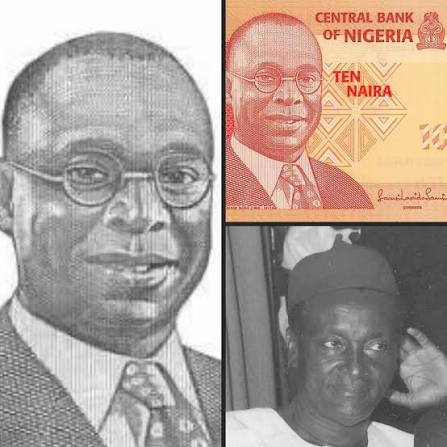
The father was not just any man. He was Alvan Ikoku, the respected nationalist and great educationist whose face proudly sits on Nigeria’s ₦10 note. You can see his enduring legacy and the historical context of this story on the Nigerian currency. Yet, despite his monumental status, the people chose his son, Samuel Goomsu Ikoku.
Here are the incredible facts of that historic day:
- The Battle Lines: During the Eastern Regional Assembly elections, Samuel represented the Action Group (AG), while his father, Alvan, contested the same seat under the United National Independent Party.
- The Upset: On March 15, 1957, Samuel defeated his legendary father by a narrow margin of just 59 votes.
- The Aftermath: What happened next is a lesson for today. There was no family war. No insults. No accusations of betrayal or campaigns of hatred. The father accepted the verdict of the people and chose peace over bitterness.
More than 60 years ago, a father and son stood on opposite sides of a political contest and remained family.
The Saraki Drama: A Modern Contrast
Now, contrast this 1957 miracle with the intense political playout in Kwara State involving the famous Saraki family.
- The Succession Crisis: In 2011, the late political heavyweight Dr. Abubakar Olusola Saraki insisted that his daughter, Senator Gbemisola Saraki, should succeed his son, Dr. Bukola Saraki, as governor.
- The Defiance: Bukola Saraki completely disagreed with his father’s wishes and instead threw his weight behind Abdulfatah Ahmed under the Peoples Democratic Party (PDP).
- The Split: Furious at the rejection, the elder Saraki abandoned the ruling party with his loyalists, moved to the Allied Congress Party of Nigeria (ACPN), and handed Gbemisola the governorship ticket.
- The Fallout: Bukola’s candidate trounced Gbemisola at the polls, humiliating their father and fracturing the family.
While Bukola Saraki later traveled to Los Angeles to apologize and reconcile with his father before his passing, the political damage was severe. Gbemisola was left deeply angered, and the political wedge between the brother and sister persisted for years, with Gbemisola remaining in the opposition camp.
The Dangerous Reality of Modern Politics
Today, the political climate is often far more toxic than the days of Alvan and Samuel Ikoku.
- People attack lifelong friends because of politics.
- Family members hurl insults at one another for supporting a different candidate.
- Politicians are viewed as unquestionable messiahs.
- The moment you criticize a preferred candidate, you are branded a saboteur, a traitor, or an enemy.
Suddenly, years of loyalty and friendship mean absolutely nothing because of a single election. This is dangerous. Politics was never meant to make us enemies; it was meant to give us choices.
The Ultimate Lesson
Democracy is not when everyone agrees. Democracy is when people disagree without hatred. The lesson from the Ikoku family is profoundly simple: If Alvan Ikoku could accept losing an election to his own son without tearing his family apart, surely we can accept that our friends and neighbors might not support the same candidate as us.
Samuel Ikoku won the election, but Alvan Ikoku won something even greater—the respect of history. Decades later, we are still talking about his dignity.
Will future generations say the same about us, or will they only remember how we turned our elections into a war against one another? How can today’s politicians and their supporters learn this lesson to ensure that political views do not destroy relationships with those who matter most?

 By
By