
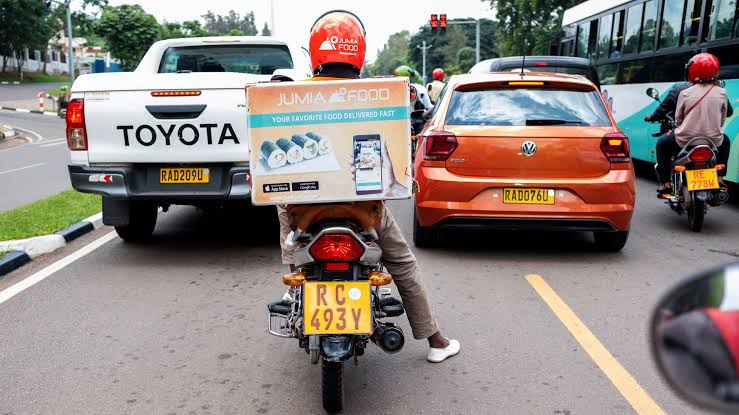

LAGOS — For fourteen consecutive years, Jumia Technologies AG has carried both the promise and the heavy burden of being dubbed the “Amazon of Africa.” Founded in 2012, the e-commerce pioneer has built distribution networks across some of the world’s most complex logistics environments. Yet, throughout its entire history, Jumia has never recorded a single profitable year.
As the company navigates its 14th year of operations, investors and market analysts are asking a crucial question: Can Jumia achieve a genuine commercial breakthrough, or is it simply bleeding out at a slower pace?
The Financial Reality: Shrinking Deficits vs. Shrinking Runway
Jumia’s full-year 2025 SEC filings present a stark picture of resilience tested by harsh financial limits:
- Full-Year 2025 Revenue: $188.9 million
- Net Loss (2025): $61.5 million
- Accumulated Losses Since 2012: $2.2 billion
- Cash Remaining (End of 2025): $77.8 million
On paper, the operational turnaround led by CEO Francis Dufay shows clear momentum. Annual losses have steadily narrowed over the past three years:
| Fiscal Year | Net Loss | YoY Deficit Reduction |
| 2023 | $104.2 Million | Baseline |
| 2024 | $99.1 Million | Down ~4.9% |
| 2025 | $61.5 Million | Down ~37.9% |
While a 38% reduction in net loss in 2025 is meaningful operational progress, business fundamentals remain unyielding: shrinking losses are not profits. With cash reserves down to $77.8 million at the end of 2025 and continuing cash burn through mid-2026, Jumia was approaching a critical runway squeeze.
Enter Temu: The Competitive Crossfire Intensifies
Compounding Jumia’s internal cost pressure is a rapidly changing competitive landscape. The aggressive expansion of global bargain platforms like Temu and Shein across key African markets has heightened the battle for digital shoppers.
Temu’s direct-from-factory ultra-low pricing model and heavy digital advertising blitz have forced Jumia to rethink its value proposition. In response, Jumia has pivotally retooled its supply chain, expanding direct onboarding of Chinese manufacturers (hosting over 24,000 Chinese merchants by late 2025) to ensure competitive prices on everyday physical goods.
The Turnaround Strategy: Cut, Consolidate, and Conquer the Secondary Cities
Under Dufay’s restructuring mandate, Jumia has abandoned the broad “growth-at-all-costs” playbook that defined its early years:
- Market Pruning: The company exited non-core and underperforming markets—scaling down from 14 countries to 8 core markets (Nigeria, Egypt, Kenya, Morocco, Ghana, Ivory Coast, Senegal, and Uganda).
- Service Rationalization: High-burn, low-margin units like Jumia Food delivery and Jumia Prime subscriptions were permanently shuttered to conserve capital.
- Secondary City Expansion: Instead of over-competing in expensive tier-1 capitals, Jumia built an extensive network of regional pickup stations in secondary towns. Today, over 60% of physical orders originate outside primary metropolitan areas, significantly dropping fulfillment costs per order.
The $50 Million Lifeline: Can Jumia Reach 2027 Profitability?
To extend its operational runway, Jumia secured a $50 million equity injection from institutional heavyweights. The round was led by the World Bank’s International Finance Corporation (IFC) with a $25 million commitment, alongside major shareholder Axian Telecom and other institutional backers.
  $50M Capital Raise (August 2026)
  ├─ International Finance Corporation (IFC): $25.0M (50%)
  ├─ Axian Telecom & Institutional Investors: $25.0M (50%)
  └─ Primary Objective: Fund inventory supply, logistics infrastructure,
     and extend runway to Q4 2026 breakeven target.
This fresh capital provides Jumia with vital balance sheet stabilization as management targets Adjusted EBITDA breakeven by Q4 2026 and full-year profitability in 2027.
The Verdict for ABT NEWS Readers
Jumia’s journey is far from over. Bleeding slower has bought the platform precious time, and the $50 million backing from the World Bank’s private-sector arm signals institutional trust in its streamlined model.
However, achieving a true commercial breakthrough will depend on whether Jumia can scale order volume in tier-2 cities faster than inflation, local currency devaluation, and global entrants like Temu erode its margins. The year ahead will determine whether Jumia becomes Africa’s enduring e-commerce champion—or a cautionary tale of e-commerce ambition outpacing market reality.


 By
By