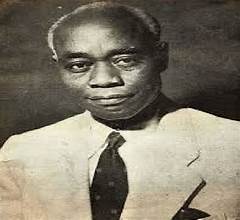

By ABT NEWS | www.abtnews.net
Before the politics, the governance, and the addition of the title “Sir” to his name, he was simply a boy from a village called Unwana in a British colony. He lost his father when he was just one year old. Without a father to guide him, he still rose to become one of the most respected men Nigeria has ever produced.
His Humble Beginnings
Akanu Ibiam was born on the 29th of November, 1906, in Unwana, Afikpo, located in present-day Ebonyi State.
- A Tragic Loss: He was the second son of Chief Ibiam, a highly respected traditional ruler who later became Eze Ogo Isiala I of Unwana. Tragically, his father passed away when Akanu was only a year old.
- Early Guidance: He was raised by his elder brother, Samuel Aka Ibiam, who worked as a teacher at the Hope Waddell Training Institution in Calabar. Young Akanu was guided by strict discipline and strong missionary values.
- Educational Milestones: In 1912, his brother enrolled him at Hope Waddell Primary School. By 1916, he had successfully advanced to the junior secondary section.
- A Temporary Name: He was baptized in 1919 and given the English name “Francis”. He carried this name for over three decades before eventually rejecting it in a profound political statement.
Building the Foundation
To pursue science subjects like physics, chemistry, and biology, he transferred to King’s College in Lagos in 1921. His ultimate ambition was to study medicine. He traveled to the University of St Andrews in Scotland to pursue this dream. In 1934, he qualified as a physician, earning the distinction of being one of the very first Nigerians to obtain a medical degree abroad.
It was at this juncture that his true character shone. While colonial Nigeria offered financial comfort and prestige to African graduates willing to join government service, Ibiam firmly rejected the offer.
He chose to become a medical missionary instead, working for far less, serving people who had almost nothing.
- Pioneering Healthcare: He pioneered the Abiriba Hospital, running it from 1936 to 1945.
- Missionary Dedication: He superintended mission hospitals at Itu and Uburu.
- Selfless Service: He dedicated over two decades to treating leprosy patients, delivering babies, and performing surgeries in harsh conditions. He provided these services for free, or nearly free, in villages that colonial administrators had entirely abandoned.
From Doctor to Statesman
By the 1940s, his community recognized him as a profound leader rather than just a medical professional.
- Early Advocacy: In 1940, he represented his people in the Afikpo Divisional Council. He passionately pushed for universal primary education and was an early advocate for establishing a Nigerian university.
- Political Rise: He successfully won an election into the Eastern House of Assembly in 1951.
- Royal Recognition: Also in 1951, Britain’s King George VI decorated him as a Knight of the British Empire (KBE), officially styling him “Sir Francis Ibiam”.
- Return to His Roots: In 1957, he was appointed Principal of the Hope Waddell Institution, taking the helm of the very school that had trained him in his youth.
Governor of the Eastern Region (1960–1966)
On the 15th of December, 1960, during Nigeria’s independence era, Sir Francis Ibiam was appointed Governor of the Eastern Region of Nigeria. He succeeded colonial governor Sir Robert Stapledon, placing a Nigerian who was raised without a father at the pinnacle of a powerful regional government.
His contemporaries deeply respected his refusal to be flamboyant. He exhibited no greed and engaged in no primitive accumulation of personal wealth. He approached governance exactly as he approached medicine: with service as the absolute priority.
During his tenure, the Eastern Region experienced tangible growth:
- Infrastructure: The region saw the construction of real infrastructure and new roads.
- Agriculture: He developed significant agricultural settlements.
- Industrialization: He facilitated major industries, including the Abakaliki Poultry Farms, the Umuahia Ceramic Industry, and the Aba Textile Mills.
His governorship abruptly ended on the 16th of January, 1966, due to Nigeria’s first military coup, which was led by Majors including Chukwuma Kaduna Nzeogwu. In the ensuing political chaos, he was succeeded by Lieutenant Colonel Chukwuemeka Odumegwu Ojukwu through a military takeover.
The Civil War and the Returned Knighthood
By 1967, Nigeria was plunged into a civil war. The Eastern Region had become Biafra and was fighting for its very survival. During this conflict, Britain provided military support to the federal government.
Watching his people suffer in a war backed by the same British crown that had knighted him, Ibiam made a decision that shocked the political establishment.
- Renouncing the Crown: In August 1967, he officially renounced his British knighthood (KBE).
- Reclaiming His Identity: He permanently dropped the English name “Francis,” which he had used since 1919.
- Returning the Honors: He returned his honors directly to Queen Elizabeth II by delivering them through the British High Commissioner in Enugu. He mandated that he only be addressed as Dr. Akanu Ibiam from that day forward.
Rather than picking up arms during the war, he picked up advocacy. He traveled as far as Germany to appeal for urgent humanitarian relief for Biafra. When the war ended in 1970, he was still abroad undertaking this mission. Upon rushing back to Nigeria, General Yakubu Gowon, the head of the military government, personally assured him of his safety and provided him safe passage back to his home in Unwana.
Post-War Rebuilding and Final Years
Refusing to retreat into bitterness, Ibiam worked closely with his fellow Biafrans to resettle and rebuild their communities. He fearlessly advocated for justice and the equitable distribution of Nigeria’s resources. Furthermore, he served as a special advisor to the military governors of the eastern states.
His massive influence also permeated the faith community:
- Global Leadership: He served as the President of the World Council of Churches from 1961 to 1970.
- African Unity: He chaired the conference that successfully birthed the All Africa Conference of Churches (AACC). He also bravely led the AACC peace mission to Sudan.
- Institutional Foundations: He was instrumental in establishing the Bible Society of Nigeria and the Christian Medical Fellowship.
His legacy was celebrated heavily in his later years. He received honorary doctorates from the University of Ibadan and the University of Ife. He was also honored with the prestigious Commander of the Order of the Federal Republic (CFR). In his hometown, he was revered as a traditional ruler, holding the titles of Eze Ogo Isiala I of Unwana and Osuji of Uburu. His community formally decorated him with this traditional title in 1993 in recognition of his lifelong, dedicated service.
Dr. Akanu Ibiam passed away on the 1st of July, 1995, at the age of 88. Those who knew him noted that he died with his absolute integrity intact. Despite governing one of Nigeria’s most powerful and resource-rich regions, he left office without stealing a single kobo and had only a few properties to his name.
Today, his impeccable name lives on through the Akanu Ibiam International Airport in Enugu, the Akanu Ibiam Federal Polytechnic in Unwana, and numerous statues and flyovers erected in his honor across Ebonyi State.
Why This Matters to ABT NEWS
At ABT NEWS, we are committed to digging into historical truths to bring you narratives of real substance. We do this not for fleeting online engagement, but because our founding fathers—leaders who built without stealing and served without demanding applause—deserve accurate remembrance. Dr. Akanu Ibiam consistently chose principle over personal comfort, even when it cost him a royal knighthood. He must not be reduced to merely a name on an airport building that travelers pass through without understanding his sacrifice.
Sir Akanu Ibiam was never handed greatness; he meticulously built it through every hospital bed he funded, every classroom he fought for, and every honest, selfless decision he made.

 By
By