
By Babajide Moronfolu | ABT NEWS (www.abtnews.net)
There are people we encounter in life whose stories remain with us long after the cameras have stopped rolling and the microphones have been switched off. Dr. David Obinna Anyaele is undeniably one of those individuals.
More than a quarter of a century after one of the darkest days of his life, a remarkable new chapter has unfolded. On July 21, 2026, David Obinna Anyaele joined 182 other scholars who were awarded Doctor of Philosophy degrees during Babcock University’s 15th Postgraduate Convocation and Doctor of Philosophy Hooding Ceremony in Ilishan-Remo, Ogun State.
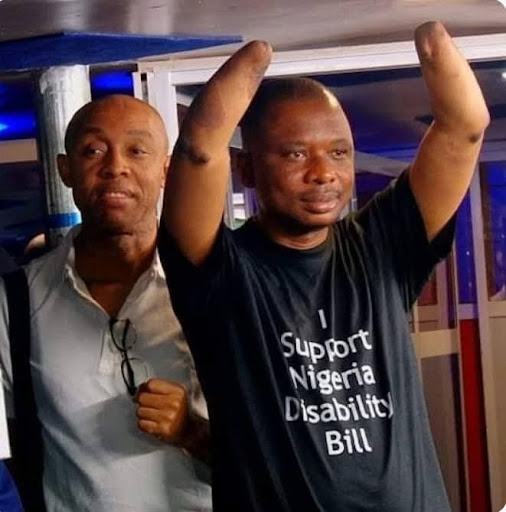
The man whom rebels once left severely mutilated is today Dr. David Obinna Anyaele, PhD.
A Businessman Caught in a Brutal War
To understand the profound significance of that doctoral gown, one has to travel back to 1999. At the time, Sierra Leone was engulfed in a vicious civil war that lasted from 1991 until 2002. The conflict became notorious internationally for atrocities against civilians, including deliberate amputations.
David was not in Sierra Leone as a soldier; he was a Nigerian businessman. He was involved in selling building materials and spare parts, importing the products into Sierra Leone where distributors and other customers bought from him.
Business was going well until the war changed everything. David was captured during the conflict and attacked by rebels. According to his account, his Nigerian identity played a role in the attack because Nigeria was a major participant in the ECOMOG intervention in Sierra Leone. In a devastating act of physical violence, the rebels amputated his upper limbs.
In an instant, a young entrepreneur who had traveled in pursuit of livelihood and opportunity was confronted with an entirely different future.
The Battle Beyond the Hospital
David spent about seven months receiving hospital treatment following the attack. While his mother cried over his condition, he courageously tried to reassure her that he would recover if he received the necessary support.
After leaving the hospital, however, another battle began against stigma, discrimination, and rejection from a society that often looked at disability and saw inability.
- Following the amputation, he lost many friends who began viewing him as a liability who should no longer participate fully in society.
- He eventually relocated from Aba back to Lagos to rebuild his life.
- When he sought assistance to obtain prosthetic limbs, he was reportedly told they would cost about ₦5 million, an enormous sum of money in 1999.
- With government assistance proving difficult to obtain, private individuals eventually helped raise the funds, enabling him to obtain his first prostheses in Germany in 2003.
Those artificial limbs became vital tools in his journey toward independence.
From Lived Experience to Scholarship
David did not abandon the subject that had shaped much of his adult life when he entered academia; instead, he turned his lived experience into rigorous scholarship. He earned his Doctor of Philosophy degree in Political Science, with a specialization in International Law and Diplomacy.
His thesis title could hardly have been more appropriate: “International Disability Law and Service Delivery of National Institutions in Nigeria”.
Reflecting publicly on the demanding coursework, research papers, seminars, and multiple stages of thesis defense, David acknowledged the extreme difficulty of the journey. Yet, his conclusion was profound and simple: “That notwithstanding, I must tell you that it is sweet to pass the whole process and come out successful”.
A Doctorate Is a Responsibility
During the graduation, Babcock University’s President and Vice-Chancellor, Professor Afolarin Ojewole, reportedly reminded the scholars that a doctorate is a call to greater responsibility and that scholarship should ultimately contribute to humanity.
This message deeply resonated with David. He wrote: “On this note, I told myself that with this new found knowledge, I will work harder to seek justice, kindness, and humane society free from discrimination on the grounds of disability”.
For David Anyaele, this PhD represents another weapon in a struggle he has been fighting for decades—not a weapon of violence, but a weapon of knowledge, research, evidence, policy, law, advocacy, and education.
The Power of Persistence and Inclusion
My memories of David go back many years to my active days in television and broadcasting in Nigeria, when I was introduced to him through friends at the Civil Liberties Organisation. I featured him on television and radio, and we worked together on disability, inclusion, and human rights projects. Our association grew so close that I had the distinct honor of serving as the Master of Ceremony at his wedding—an occasion that represented another victory over those who might have assumed marriage, family life, and professional achievement would be impossible for him after the tragedy.
David persistently challenged the narrow lens of sympathy and charity, demanding instead that we talk about rights, access, and government responsibility. He wanted Nigerians to understand that disability could happen to anybody and that inclusion is not an act of generosity, but an act of justice.
His success forces society to ask uncomfortable questions:
- How many potential David Anyaeles have we lost because society refused to give them an opportunity?
- How many brilliant children with disabilities have been denied proper education?
- How many qualified adults cannot get jobs?
- How many people cannot enter offices, schools, places of worship, or public buildings because nobody considered accessibility?
- How many families have been left alone to carry financial and caregiving responsibilities that should be supported by functioning social systems?
“It Is More Profitable to Suffer Hopefully”
Among the words David shared while celebrating his doctorate was a powerful statement of his own: “It is more profitable to suffer hopefully, than to suffer hopelessly”.
Few people have earned the right to make such a statement as powerfully as he has. He knows suffering, physical pain, rejection, and what it means to start again. But he also knows hope.
In 1999, rebels changed David Anyaele’s body forever, but they did not write the ending of his story. More than twenty-five years later, the businessman became a survivor, the survivor became an advocate, the advocate became an institution builder, the campaigner became a public official, and now the student has become a Doctor of Philosophy.
Congratulations, my friend, Dr. David Obinna Anyaele, PhD. May your hope continue to inspire not only persons living with disabilities but everyone who has ever been tempted to believe that tragedy has brought their story to an end.
It hasn’t. Sometimes, the next chapter is the most remarkable one.


 By
By