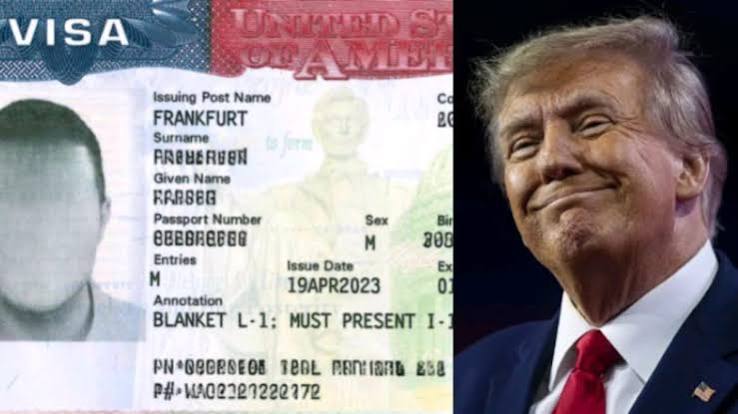

WASHINGTON/ABUJA — In a stringent new immigration policy aimed at curbing visa overstays, the United States has introduced a mandatory visa bond of up to $20,000 for business and tourist visa applicants from Nigeria and several other African nations.
The sweeping measure, which officially took effect on Monday, August 3, 2026, formalizes a Visa Bond Programme that the U.S. initially piloted in August 2025. U.S. authorities cite escalating concerns over visitors remaining in the country beyond their authorized duration, as well as deficiencies in identity verification and data sharing by affected nations.
Under the new directive, U.S. consular officers will individually assess B-1 (business) and B-2 (tourist) visa applicants to determine the required bond amount, which is set at tiers of $10,000, $15,000, or $20,000. These assessments will evaluate the applicant’s purpose of travel, financial standing, employment history, and overall ties to their home country.
The U.S. Department of State clarified that the bond is fully refundable—without interest—provided the visitor leaves the United States within their approved timeframe and strictly adheres to their visa conditions. Any violation of these terms will result in immediate forfeiture of the funds.
According to the State Department, the policy is backed by Executive Order 14159, titled “Protecting the American People Against Invasion.” The order directs federal agencies to reinforce immigration compliance mechanisms, explicitly prioritizing the administration of visa bonds for countries with chronically high overstay rates and weaknesses in document security.
Pilot Program: High Efficacy, Plunging Demand
The State Department noted that the 2025 pilot phase, which tested a $15,000 maximum bond across 50 countries, yielded dramatic results in enforcing compliance. Overstays dropped to fewer than 50 cases in the first ten months of the pilot, a stark contrast to the 45,488 overstays recorded from the same demographic in 2024. Data from the Department of Homeland Security shows that in 2024, the overstay rate stood at 2.06 percent for non-Visa Waiver Programme (VWP) countries, compared to just 0.44 percent for VWP participants.
Despite its success in deterring violations, the financial burden of the bond triggered an 83 percent plunge in visa issuance for the targeted nations between August 2025 and July 2026. Data revealed that nearly half of the estimated 20,000 applicants opted out of the process upon learning of the bond requirement.
“The 2025 visa bond pilot… has provided sufficient data to suggest that a visa bond program is an effective tool for enforcing compliance among bonded visa holders,” the State Department stated. Officials emphasized that the policy serves as leverage to encourage foreign governments to proactively manage and reduce their nationals’ overstay rates, rather than strictly seeking to penalize individual travelers.
The maximum bond threshold of $20,000 is slated for review every seven years to adjust for inflation, beginning October 1, 2027.
Strict Photo Guidelines Implemented
In a separate advisory, the U.S. Mission in Nigeria issued a stern warning against the use of altered or Artificial Intelligence (AI)-generated passport photographs for visa applications, stressing that such submissions will face outright rejection.
“Your photo should be recent (taken within the past six months) and look like you. The TSA or CBP agent must be able to tell it’s you,” the Mission declared.
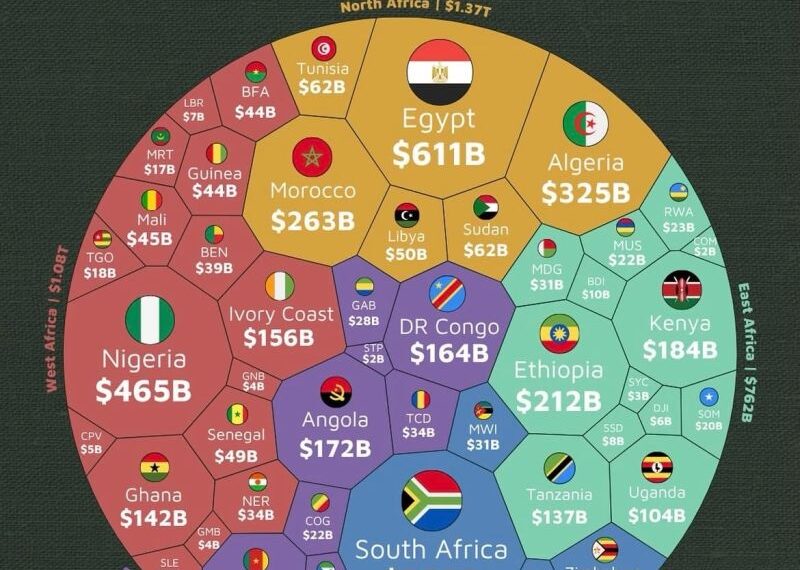
A sweeping list of African nations falls under this new visa bond umbrella. Alongside Nigeria, the affected countries include Algeria, Angola, Benin, Botswana, Burundi, Cabo Verde, Central African Republic, Côte d’Ivoire, Djibouti, Ethiopia, Gabon, Gambia, Guinea, Guinea-Bissau, Lesotho, Malawi, Mauritania, Mauritius, Mozambique, Namibia, São Tomé and Príncipe, Senegal, Seychelles, Tanzania, Togo, Uganda, Zambia, and Zimbabwe.
For more breaking global updates, stay connected with ABT NEWS at www.abtnews.net.


 By
By