
By ABT News Desk
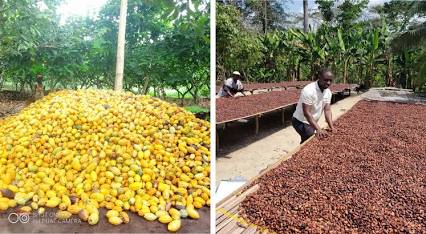
For a hundred years, Africa has shipped its cocoa to the world in raw sacks, only to buy it back in glossy wrappers at a premium. Today, Tuesday, July 14, 2026, four of the continent’s agricultural heavyweights are moving to tear up that arrangement.
Meeting at the Cocoa Value Addition Summit in Abuja, delegations from Nigeria, Ghana, Côte d’Ivoire, and Cameroon, who collectively produce roughly two-thirds of the world’s cocoa, are set to sign the historic Abuja Declaration.
From Bean to Brand
The core injustice of the global cocoa trade is stark: Africa grows the vast majority of the world’s cocoa but captures only about 6% of the $165 billion global chocolate value chain. The beans traditionally leave ports in Abidjan, Tema, Lagos, and Douala raw, while the highly profitable processing, branding, and manufacturing take place in Europe and North America.
“For a hundred years, Africa has sent its cocoa to the world in sacks and received it back in wrappers, paying at both ends of the transaction,” stated Senator John Owan Enoh, Nigeria’s Minister of State for Industry and a cocoa farmer himself, who is hosting the summit. “The distance between a bean and a brand is measured in jobs and in dignity, and on Tuesday, in Abuja, four nations begin closing that distance together.”
A Unified “Cocoa OPEC”
The Abuja Declaration officially establishes the Cocoa Value Addition Alliance. Acting as a single, unified bloc, the four nations will now collectively negotiate with global markets, set common industry standards, and coordinate policy.
This OPEC-style alliance is designed to prevent multinational buyers from playing producer nations against one another — a dynamic that has historically kept farmgate prices depressed. The move is particularly timely, coming on the heels of unprecedented market volatility that saw global cocoa prices swing wildly from historic highs of over $11,000 per metric tonne down to $3,000, and back toward $5,000 within the last 18 months.
Building the Infrastructure
The summit is backed by concrete industrial commitments to ensure the beans can actually be processed at home.
Nigeria is concurrently signing the Cocoa Value Addition Accord, a national compact that legally binds the federal government, state governors, farmers, and financial institutions to measurable domestic processing targets. These targets will be tracked and reported publicly every year by a delivery council.
Massive private investments are already underway to support this transition. A major highlight of the summit is the progress on a 70,000-metric-tonne cocoa processing plant currently under construction by Sunbeth Global Concepts in Sagamu, Ogun State. Scheduled for commissioning in March 2027, the facility aims to be Nigeria’s largest, marking a decisive shift toward robust domestic manufacturing.
Navigating Global Regulations
The newly formed alliance also presents a united front against looming international trade hurdles, most notably the European Union Deforestation Regulation, which takes full effect for major operators on December 30, 2026.
The regulation mandates strict traceability for cocoa entering the EU. Through the alliance, the four nations will advocate for the recognition of their own national traceability systems and stand firm on the principle that the steep costs of environmental compliance must not be pushed down onto vulnerable smallholder farmers.
By uniting their market power, harmonizing crop calendars (as Ghana and Côte d’Ivoire did just last month), and investing heavily in domestic processing capabilities, Africa’s cocoa giants are finally seizing control of the crop that built Europe’s sweetest industry.



 By
By