
Below is a factual breakdown of recent U.S. counterterrorism actions in Nigeria and how recent administrations have addressed religious violence in the region, based on current reporting.
Recent U.S. Military Action in Nigeria
In late 2025, the U.S. approach to counterterrorism in West Africa shifted significantly.
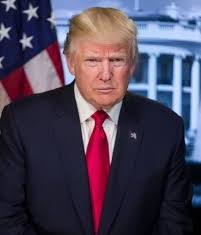
- December 2025 Airstrikes: Following threats to halt aid and deploy troops if violence against Christians was not addressed, President Donald Trump ordered cruise missile strikes in northern Nigeria on Christmas Day, 2025. The strikes targeted bases belonging to Lakurawa, a violent extremist network linked to ISIS. Following the operation, President Trump stated the strikes were aimed at groups responsible for the “mass slaughter” of Christians.
- Targeting Leadership: The U.S. has also engaged in targeted operations against high-ranking terrorist figures. In May 2026, American and Nigerian forces collaborated in an operation that eliminated Abu Musab al-Minuki, a prominent leader of the Islamic State West Africa Province (ISWAP).
While the Trump administration has framed these strikes as major victories that heavily curtailed anti-Christian violence, security analysts and regional experts note that the strikes—while eliminating specific terror targets—do not fully neutralize the broader, decentralized violence driven by Fulani militias and banditry in the Middle Belt.
Diplomatic and Policy Shifts
U.S. policy regarding religious freedom in Nigeria has fluctuated between the Biden and Trump administrations.
The Designation of “Country of Particular Concern”
The State Department uses the “Country of Particular Concern” (CPC) designation for nations that engage in or tolerate severe violations of religious freedom.
- First Trump Administration (2020): Nigeria was added to the CPC list.
- Biden Administration (2021-2024): Nigeria was removed from the list in 2021 ahead of a visit by Secretary of State Antony Blinken. The Biden administration generally emphasized that violence in Nigeria was largely driven by resource competition, climate change, and socio-economic pressures, rather than strictly religious persecution.
- Second Trump Administration (2025-Present): President Trump re-designated Nigeria as a CPC in late 2025. The State Department also introduced a new policy to restrict visas for individuals (and their families) who direct or participate in anti-Christian violence.

Congressional Action
The U.S. Congress has taken an aggressive stance on accountability. Lawmakers are advancing the Nigeria Religious Freedom Accountability Act of 2025, which proposes sanctions under the Global Magnitsky Act against 12 northern Nigerian governors and other officials accused of enabling the persecution of Christians, particularly those tied to blasphemy and Sharia law cases. The State Department has also launched a $3.5 million initiative to track and document religious violence in the country.
The Landscape of Violence in Nigeria
While Christian advocacy groups have strongly welcomed the renewed U.S. focus on religious persecution, the ground reality is deeply complex.
Nigeria’s population is roughly evenly split between Christians and Muslims. Violence is perpetrated by multiple actors with differing motives:
- Jihadist Insurgencies: Groups like Boko Haram and ISWAP operate largely in the northeast. Their goal is to overthrow the Nigerian state and establish a theocracy. They have killed hundreds of thousands and displaced millions, indiscriminately targeting both Christians and Muslims, as well as secular institutions.
- Fulani Militias: In the “Middle Belt”—the fault line between the predominantly Muslim north and Christian south—armed Fulani herder militias have increasingly engaged in what experts call ethnoreligious terrorism. This includes mass abductions and coordinated massacres of Christian farming communities, such as the “Black Christmas” attacks in Plateau State in 2023.
- General Banditry: Widespread economic desperation has fueled a massive kidnapping-for-ransom industry that targets citizens of all faiths.
The Nigerian Government’s Response
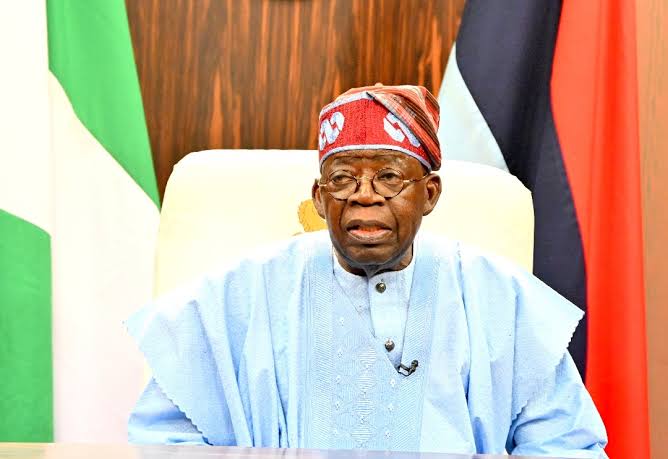
Under President Bola Tinubu, the Nigerian government has pushed back against the narrative that there is a targeted “Christian genocide,” arguing instead that terrorist groups attack anyone who rejects their ideology.
However, to manage relations with Washington and avoid a severe international crisis, the Tinubu administration has opted to cooperate with the U.S. rather than escalate tensions. By sharing intelligence and helping select targets for the recent U.S. missile strikes, the Nigerian government managed to maintain its strategic partnership with the United States while receiving increased counterterrorism and military assistance
It pays to advertise your business, products and services on ABT NEWS Platform. www.abtnews.net. Please send your enquiries to advertise@abtnews.net or +447918790290


 By
By