
When 262 Nigerians—mostly women and children—boarded an Air Peace flight out of South Africa this week, fleeing a renewed wave of violent anti-immigrant attacks, they were met at the airport by a jarring display of political grandstanding. Thabile Sibeko, a woman claiming to be the president of the “Inizwe Nathi Party,” stood before cameras to bid the returnees a mocking farewell.
Her message was as sweeping as it was reckless: “Nigeria is horrible, these people are horrible.” She accused Nigerians wholesale of destroying South African youth with drugs, boldly thanking other foreign nationals while singling out Nigerians for the country’s social woes.
However, a closer examination of Sibeko’s claims and the dubious political platform she claims to represent, reveals a narrative built not on facts, but on the lazy, dangerous scapegoating that has historically fueled Afrophobia. It is time to set the record straight.
The Phantom Politician and Fringe Extremism
First, it is vital to contextualize the messenger. Despite parading as a national political leader, public records and the South African Electoral Commission database show absolutely no record of the “Inizwe Nathi Party.” Sibeko is not a voice of the South African government, nor does she hold a verified mandate from its people. She represents a fringe extremism that capitalizes on national anxieties.
By amplifying the voice of an unregistered, self-appointed populist, we risk treating internet-era xenophobia as legitimate political discourse. South Africa’s socio-economic challenges are profound, but they will not be solved by phantom politicians pointing fingers at departing women and children.
The Reality of Crime and the Injustice of Generalization
Sibeko’s central thesis—that Nigerians are uniquely responsible for South Africa’s drug epidemic—relies on a logical fallacy that criminalizes an entire nationality.
Are there Nigerian nationals involved in transnational crime? Yes. Just as there are South African, European, and Asian syndicates operating within the country’s borders. Crime is an individual enterprise, not a genetic or national trait. When a Nigerian national commits a crime in South Africa, the law must take its full, unyielding course.
However, to use the criminal actions of a fraction of a percent to justify the harassment, assault, and forced repatriation of thousands of innocent people is the textbook definition of xenophobia. Blaming foreigners for systemic issues like unemployment, drug addiction, and crime is a well-worn political distraction. It allows failed local governance to evade accountability by directing the public’s anger toward vulnerable immigrants.
The Nigerians You Don’t See in the Headlines
What Sibeko conveniently omitted from her farewell address is the immense, positive footprint of Nigerians in South Africa. The narrative of the “horrible Nigerian” completely erases the thousands of Nigerian professionals who are deeply woven into the fabric of South African society.
She did not say “bye-bye” to the Nigerian doctors and nurses staffing South African public hospitals in underserved provinces. She did not mention the Nigerian academics, researchers, and professors lecturing at the University of Cape Town, Wits, or the University of Pretoria. She ignored the countless Nigerian entrepreneurs who run legitimate businesses, pay taxes, and create jobs for South African citizens.
A nation cannot quietly benefit from a country’s brightest minds while simultaneously allowing mobs to hunt down its working-class expatriates in the streets.
A Threat to African Unity
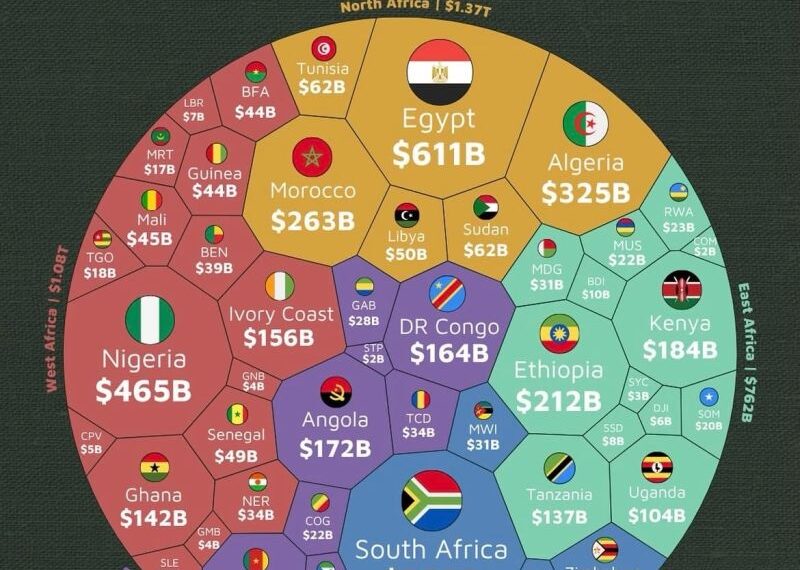
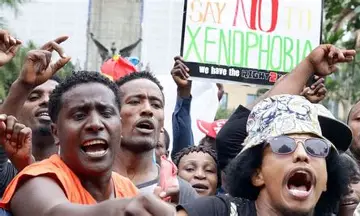
At a time when the continent is striving for economic integration through the African Continental Free Trade Area (AfCFTA), the resurgence of Afrophobia is a massive step backward. South Africa and Nigeria are the two economic powerhouses of the continent. Their relationship should be defined by bilateral trade, cultural exchange, and mutual security—not mobs armed with whips and shields demanding deportations.
South African businesses—from MTN to MultiChoice and Shoprite—have historically thrived in the Nigerian market, generally welcomed by the Nigerian populace without fear of state-sponsored or mob-led violence. The expectation of reciprocity is not just diplomatic courtesy; it is the foundation of pan-African progress.
The Way Forward
Sibeko told the fleeing Nigerians, “We hope you have learned a lesson.”
If there is a lesson to be learned, it is for the leadership of both nations. The South African government must move beyond characterizing these forced exits as “routine immigration enforcement” and aggressively prosecute those who incite and perpetrate xenophobic violence. On the other hand, the Nigerian government must strengthen its diplomatic backbone, ensuring its citizens are protected abroad while building an economy at home that makes economic migration a choice, not a desperate necessity.
Thabile Sibeko does not speak for all South Africans, many of whom have stood in solidarity with immigrants against the violence. But until her brand of hate speech is robustly condemned by mainstream leaders, the tragic flights of terrified families landing in Lagos will remain a stain on the conscience of the continent.
Nigerians are not the enemy of South Africa’s progress. It is time to look at the real issues, rather than chasing shadows at the departure gate.
Stay glued to ABT NEWS www.abtnews.net for all your Global insights, Breaking news and Trending news. All advertising enquiries should be sent to advertise@abtnews.et or +447918790290


 By
By