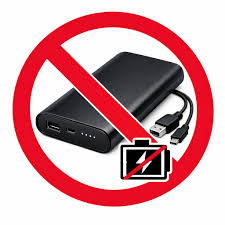

If you are packing your bags for a business trip or a summer holiday, a hidden trap in your hand luggage could disrupt your travel plans, result in thousands of pounds in fines, or even land you in prison!
A massive regulatory shift has quietly rolled through the global aviation industry, and millions of air travelers are entirely unaware of the tightening restrictions surrounding a standard everyday essential: the portable power bank.
The Under-the-Radar Rules: What You Must Know
Driven by the severe fire risks associated with lithium-ion batteries, international aviation bodies have enacted sweeping protocols that change how personal electronics are handled mid-air. Following updated guidelines approved by the International Civil Aviation Organization (ICAO) and the International Air Transport Association (IATA), strict frameworks are now actively enforced across the globe:
- The Two-Device Limit: Passengers are legally restricted to carrying a maximum of two power banks, which must be stored exclusively in carry-on hand luggage. They are completely forbidden in checked hold luggage.
- The One-Device Exception: Travelers must stay vigilant, as certain tighter regional carriers are taking restrictions a step further, limiting passengers to just one power bank per person.
- Strict In-Flight Bans: It is strictly forbidden to recharge power banks on board the aircraft via in-seat USB ports or power outlets. Furthermore, a growing list of major international airlines has banned using power banks to charge mobile phones or tablets altogether while in the air.
- The Accessibility Rule: Power banks must remain reachable and visible at all times during the flight. Some major carriers have gone so far as to ban portable chargers from being stored in overhead bins entirely, demanding they be kept strictly on your person or inside a personal item placed under the seat for rapid crew access.
- The 100Wh Threshold: Most airlines enforce an absolute cap of 100 watt-hours (Wh) per battery unless explicit pre-approval is granted by the carrier (up to 160Wh). Crucially, the Wh rating must be clearly printed on the device by the manufacturer; unbranded, cheap, or damaged chargers will be instantly confiscated at security checkpoints.
A Multi-Million Dollar Nightmare: The Rome Emergency
The terrifying reality behind these tighter restrictions was highlighted by a severe mid-air safety scare. An EasyJet flight (EZY2618) bound for London Luton was forced to make an emergency diversion to Rome Fiumicino Airport.
Mid-flight, a passenger informed the cabin crew that they had mistakenly left a device actively charging from a power bank inside their checked suitcase in the aircraft’s hold. Recognizing the immediate risk of “thermal runaway”—a rapid, uncontrollable rise in chemical temperature that can lead to an unquenchable cargo fire—the captain executed an immediate emergency descent.
The disruption left nearly 180 holidaymakers stranded overnight in Italy, forced EasyJet to incur tens of thousands of dollars in diversion costs, and sparked panic in the cabin. Experts warn that while a battery fire in the passenger cabin can be quickly extinguished by trained crew, a lithium fire in the cargo hold can develop undetected, threatening the structural integrity of the aircraft.
The Consequences: What Are the Penalties for Infringement?
Aviation authorities are treating battery non-compliance with the utmost severity, categorizing undeclared or improperly packed lithium batteries as a hazardous materials violation.
If you breach these regulations, the penalties can be life-altering:
- Unlimited Fines and Prison Sentences: Under regulations enforced by bodies like the UK Civil Aviation Authority (CAA), failing an inspection or causing a safety incident by packing restricted items in hold luggage can result in an unlimited financial fine, up to two years in prison, or both. In other global jurisdictions, statutory fines range from thousands of dollars to immediate criminal detention.
- Civil Liability for Diversions: Airlines have the legal framework to sue passengers to recover the catastrophic operational costs of an emergency diversion—including fuel dump expenses, airport landing fees, and passenger hotel accommodations—which easily reach tens of thousands of pounds.
- Confiscation and Blacklisting: Security teams have zero tolerance for unlabelled or multiple power banks. Beyond losing your property at the gate, violating crew instructions regarding in-flight device charging can lead to being forcefully detained upon landing and placed on airline no-fly lists.
Before you jet off, verify your specific airline’s terms, check the labels on your portable chargers, and ensure your devices are charged before boarding. A few moments of preparation could save you from legal disaster.
GROW YOUR BUSINESS WITH ABT NEWS!
Are you looking to position your brand, product, or professional services in front of an affluent, global audience of corporate executives, legal minds, and elite travelers? Capitalize on our premier digital reach. To secure high-impact advertising space that drives real conversion, send a mail to info@abtnews.net or speak directly with our consultancy team by calling +447918790290 today!


 By
By