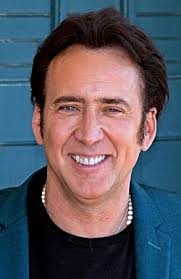

In the volatile landscape of wealth creation, maintaining a fortune is often far more challenging than earning it. Perhaps no modern narrative illustrates this financial reality more vividly than the life and finances of Oscar-winning actor Nicolas Cage.
Once one of Hollywood’s highest-paid mega-stars with a peak net worth hovering around $150 million, Cage became equally famous for a staggering, eccentric spending spree that ultimately brought him to the brink of financial ruin. Yet, while most high-profile financial collapses end in the sterile rooms of bankruptcy courts, Cage chose a radically different path. Through sheer grit, accountability, and an unyielding work ethic, he executed a remarkable decade-long financial resurrection, proving to entrepreneurs and professionals worldwide that a ruined balance sheet can be rebuilt from scratch.
The Golden Era: Building a $150 Million Empire
Throughout the 1990s and early 2000s, Nicolas Cage was a box-office titan. Commanding up to $20 million per film for blockbusters like Con Air, The Rock, Face/Off, and the National Treasure franchise, cash flowed into his accounts faster than he could track it. However, as his income soared, his appetite for the bizarre, the rare, and the extravagant ballooned alongside it.
The Extravagant Burn: Castles, Dinosaurs, and Pyramids
What followed remains one of the most legendary spending sprees in celebrity history. Rather than diversifying into traditional, liquid financial portfolios, Cage poured his wealth into highly illiquid, high-maintenance, and downright eccentric assets.
According to verified public records and asset sales, Cage’s multi-million-dollar portfolio included:
- A Real Estate Empire: He owned 15 personal residences simultaneously, including a $25 million waterfront home in Newport Beach, California, and the infamous, reputedly haunted LaLaurie Mansion in New Orleans.
- International Castles: He purchased two European castles—Schloss Neidstein in Germany and Midford Castle in Somerset, England—spending millions more on extensive renovations.
- A Private Island: A 40-acre paradise in the Exuma archipelago of the Bahamas.
- Bizarre Collectibles: He spent over $276,000 on a 70-million-year-old Tarbosaurus dinosaur skull, famously outbidding Leonardo DiCaprio for it (only to later discover it had been stolen from Mongolia, forcing him to return it to the Mongolian government without a refund).
- Exotic Pets & Luxury Fleets: His inventory boasted a rare octopus, two albino king cobras, a Gulfstream jet, four luxury yachts, a pristine copy of Action Comics #1 (the debut of Superman, bought for $150,000), and a fleet of ultra-luxury cars, including nine Rolls-Royces and a rare Lamborghini formerly owned by the Shah of Iran.
- A Final Resting Place: A nine-foot-tall stone pyramid tomb in New Orleans’ St. Louis Cemetery No. 1.
The Perfect Storm: The Real Estate Crash and Crushing Debt
By the late 2000s, this house of cards collapsed. While the media often blamed his financial demise solely on the octopus and dinosaur bones, Cage clarified the structural reality of his crash in a candid interview with 60 Minutes.
“I was over-invested in real estate,” Cage revealed. “The real estate market crashed, and I couldn’t get out in time.”
When the 2008 global financial crisis hit, the value of his massive property portfolio plummeted. Concurrently, his exorbitant lifestyle had left him heavily leveraged. The Internal Revenue Service (IRS) slapped him with a massive $6.2 million tax lien for unpaid property taxes, and total claims from creditors swelled to over $14 million. To compound his misery, the phone stopped ringing for major studio roles. He faced extreme personal pressure, including spending roughly $20,000 a month to keep his ailing mother out of an institution.
The Financial Lesson: Saying No to Bankruptcy
At this point, facing millions in debt and an aggressive IRS, most financial advisors would have urged Cage to file for Chapter 11 bankruptcy. It would have legally wiped away a significant portion of his liabilities and allowed him a clean slate.
Cage flatly refused.
“One thing I wasn’t going to do was file for bankruptcy,” Cage told GQ magazine during a retrospective on his career. He chose absolute accountability. He decided he would look his creditors and the government in the eye and pay back every single cent he owed.
The Direct-to-Video Grind: “Work Was My Guardian Angel”
To fulfill his massive financial obligations, Cage packed up and moved to Las Vegas—a strategic shift to leverage Nevada’s favorable tax environment—and entered a period of relentless, punishing work.
Between 2010 and 2020, Cage starred in dozens of low-budget, direct-to-video (VOD) and independent movies. He was frequently criticized by mainstream media for taking “crummy” roles and churning out up to four films a year back-to-back.
Yet, for Cage, this was not a joke; it was a disciplined corporate turnaround strategy. Crucially, despite the quality of the scripts, Cage refused to “phone it in.” He brought his signature, high-intensity performance to every single set.
“When I was doing four movies a year, back to back to back, I still had to find something in them to be able to give it my all,” Cage remarked to GQ. “Work was always my guardian angel. It may not have been blue-chip, but it was still work.”
Redemption: Debt-Free and a Millionaire Again
The grind paid off. By pairing his unrelenting work ethic with critical independent triumphs like the psychedelic thriller Mandy (2018) and the deeply moving drama Pig (2021), Cage steadily rebuilt his professional reputation and chipped away at his mountain of debt.
The culmination of this financial marathon arrived with the 2022 meta-comedy The Unbearable Weight of Massive Talent, where he played a satirical version of himself dealing with—poignantly—financial struggles. Shortly before the film’s release, Cage officially confirmed that after a year and a half of final intensive payments, he had completely paid off the IRS and all remaining creditors.
After more than a decade in the financial wilderness, Nicolas Cage emerged entirely debt-free, with his net worth firmly back in the millions.
The ABT NEWS Takeaway
For the readers of ABT NEWS, Nicolas Cage’s financial journey offers a profound masterclass in modern economics and personal psychology:
- The Peril of Illiquid Diversification: High net worth means nothing without liquidity. Diversifying heavily into speculative real estate and luxury collectibles can trigger a fatal cash crunch when macro markets turn.
- The Power of Accountability: Refusing bankruptcy saved Cage’s long-term brand equity. By honoring his debts, he retained the respect of the industry, keeping the door open for his eventual Hollywood comeback.
- Grit as a Financial Asset: When capital disappears, your labor, your skills, and your willingness to grind become your primary leverage.
Nicolas Cage proved that no matter how deep the financial valley, an unyielding work ethic and a refusal to break under pressure can restore both a fortune and a legacy. Today, he stands not just as a cinema icon, but as a symbol of ultimate financial resilience.
For more exclusive business, financial literacy, and economic insights, stay tuned to ABT NEWS at www.abtnews.net.


 By
By