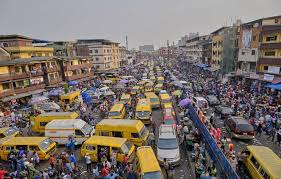

LAGOS, NIGERIA — Lagos is a city accelerating toward the future at a breathtaking pace. Currently home to nearly 20 million people, it is projected to become the world’s most populous megacity by the end of the century, boasting an estimated 88 million residents. It is already celebrated as one of Africa’s premier economic hubs—powering a booming tech sector, fueling the global phenomenon of Afrobeats, and anchoring Nollywood, one of the world’s largest film industries.
To sustain this astronomical growth, the Nigerian government and elite developers have launched aggressive, multi-billion-dollar infrastructure projects. Promoted as the “Dubai of Africa,” luxury coastal developments like Eko Atlantic promise a world-class environment designed to attract global investors and the ultra-wealthy.
However, a harrowing investigation by NPR’s Africa correspondent, Emmanuel Akinwotu, reveals a darker, more volatile reality behind the gleaming glass facades. The race to build this futuristic paradise is fueled by a brutal human cost, paid by the city’s most vulnerable populations.
Your business and services can be advertised here. Reach out to info@abtnews.net
or call +447918790290 or +2349066106786
Violent Evictions and Broken Laws
For generations, working-class communities have lived along the waterfront lagoons and bays of Lagos, functioning as the backbone of the city’s informal economy. Today, these ancestral lands have become prime real estate.
According to reports from communities like Makoko and Ilaje Otumara, the land is being systematically and violently seized by state authorities to clear the path for luxury condominiums. Residents describe scenes of sudden, terrifying destruction. Armed groups and state police forces, sometimes carrying machetes and heavy weaponry, have descended on these informal settlements. Bulldozers have leveled entire neighborhoods in hours, leaving thousands of families abruptly homeless.
What makes these actions particularly egregious is the blatant disregard for the legal system. Displaced residents and human rights advocates have successfully secured court injunctions to halt the demolitions. Yet, eyewitnesses report that the bulldozers keep rolling anyway, proving that legal protections mean very little when stacked against the momentum of massive corporate and state interests.
Your business and services can be advertised here. Reach out to info@abtnews.net
or call +447918790290 or +2349066106786
A Growing Urban Divide
The government frequently defends these aggressive urban renewal strategies as necessary measures for public safety, sanitation, and modern development. But critics point out a glaring paradox: the very people being displaced are those who make Lagos run.
The drivers, cleaners, laborers, and fishermen who form the heartbeat of the metropolis are being aggressively priced out and cast aside. Instead of creating inclusive housing to accommodate the city’s booming population, the real estate boom is focused almost exclusively on luxury high-rises—many of which sit largely empty, serving as speculative assets for the wealthy.
As the coastline is reshaped to mirror Dubai, the socioeconomic gap in Lagos is widening into a chasm. The rapid transformation of the megacity raises a critical global question: who is the future city actually being built for? For the thousands of families currently sleeping in the debris of their former homes, the “Dubai of Africa” is not a dream of prosperity, but a nightmare of displacement.
For more investigative reports and breaking global updates, visit www.abtnews.net.


 By
By