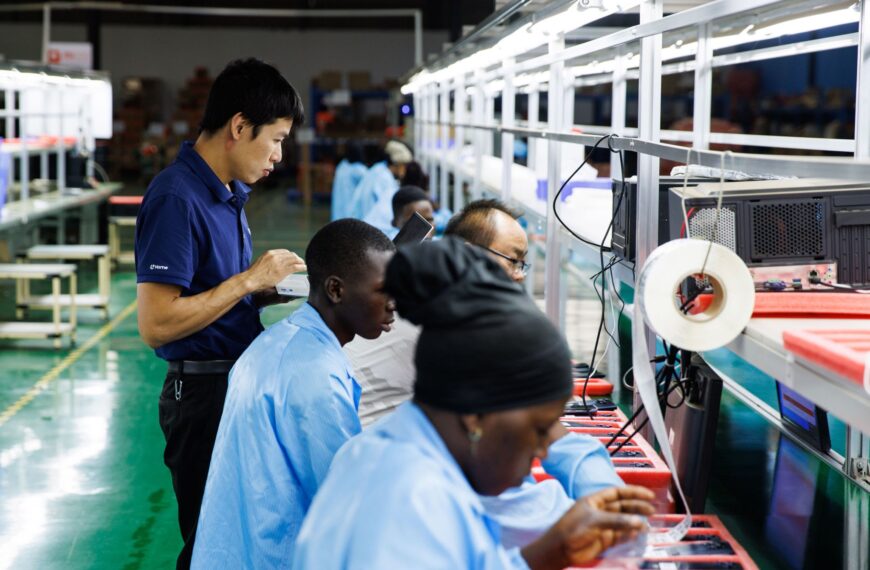

ABUJA, NIGERIA — In a major boost to its economic reform agenda, Nigeria has officially secured a new development and investment partnership with Germany valued at approximately $428 million (€365 million). The bilateral agreement, signed in Abuja on Thursday, aims to significantly scale up cooperation across key sectors including energy expansion, agricultural transformation, industrial development, healthcare, and private-sector financing.
The comprehensive investment package consists of a €65 million commitment dedicated to financial and technical cooperation, alongside a robust €300 million export credit guarantee framework designed to de-risk and support long-term trade projects and investments in Africa’s largest economy.
A Catalyst for Sustainable Economic Reforms
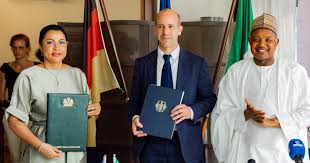
The high-profile agreement was signed at the German Embassy in Abuja by Nigeria’s Minister of Budget and Economic Planning, Senator Abubakar Bagudu, and Minister of State for Budget and Economic Planning, Doris Uzoka-Anite, alongside senior German dignitaries.
Speaking at the signing ceremony, Minister Uzoka-Anite emphasized that the partnership aligns seamlessly with the ongoing macroeconomic reforms being spearheaded by President Bola Tinubu’s administration.
“We recognize that development cooperation must increasingly catalyze investment, innovation, and sustainable financing,” Uzoka-Anite stated, highlighting the government’s shift toward mobilizing private capital to stimulate national growth.
Deepening Strategic and Industrial Ties
German Ambassador to Nigeria, Annett Günther, noted that the breakthrough follows months of intensive bilateral negotiations involving key Nigerian ministries, German development agencies, and representatives from the European Union.
Philip Knill, Deputy Director General at Germany’s Federal Ministry for Economic Cooperation and Development, lauded Nigeria as a “strategic African partner” essential for regional trade, integration, and security. Knill revealed that a German business delegation recently held extensive talks with Nigerian enterprises to explore commercial expansion in the digital economy, industry, and power sectors. Major German conglomerates—including Siemens, SAP, Bayer, and STIHL—are already actively looking to expand their footprints in Nigeria.
Powering Nigeria’s Grid and Empowering Small Businesses
A central pillar of the newly reinforced partnership is Germany’s continued commitment to Nigeria’s energy sector. The European nation reaffirmed its backing for the Presidential Power Initiative (PPI), an ambitious infrastructure overhaul being executed in partnership with Siemens. The initiative aims to upgrade and expand Nigeria’s electricity grid capacity to 25 gigawatts (GW), addressing the country’s frequent power grid challenges.
The agreement also builds upon previous successful collaborations between the two nations. According to German officials, existing joint initiatives have already helped over 16,000 small businesses record measurable income growth, while providing vital agricultural training to roughly 600,000 smallholder farming households.
As Nigeria continues to push forward with aggressive economic restructuring—including foreign exchange liberalization, tax updates, and aggressive food security initiatives—international partners view these steps as critical to restoring investor confidence. Both Nigeria and Germany have committed to ensuring that this $428 million package transitions quickly from a diplomatic agreement into measurable, real-world economic outcomes through enhanced institutional and private sector collaboration.
For more exclusive business updates and breaking global news, visit www.abtnews.net.


 By
By