
By ABT NEWS DESK | www.abtnews.net
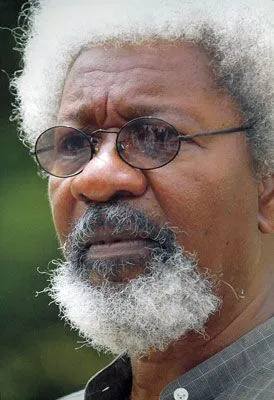
For over six decades, the name Akinwande Oluwole Babatunde Soyinka was synonymous with fearless, unapologetic defiance. This is the man who, in 1965, allegedly held up a radio station at gunpoint to prevent a fraudulent election broadcast. This is the man who endured 22 months of solitary confinement during the Biafran War, and who later rode a motorcycle through the bush to escape the murderous regime of General Sani Abacha.
Whenever Nigeria bled, Soyinka roared with an alarming and deafening crescendo!
Yet, in recent times, a growing chorus of Nigerians has begun to ask a poignant question: Where is Wole Soyinka? In an era marked by crushing economic hardship, soaring inflation, Executive impunity and intense political division, the Nobel Laureate appears to many to have become uncharacteristically taciturn. Has the ultimate critic of the establishment finally laid down his pen? Is it the heavy toll of age, or is there a more complicated political dynamic at play with the current presidency?
Below is a breakdown of the possible factors shaping the “silence” of Africa’s greatest literary giant.
Setting the Record Straight: The Trump “Ban” Myth
Before examining his current stance on Nigerian politics, it is crucial to address a widespread misconception regarding Soyinka and his history of protest, specifically involving the United States.
A popular rumor claims that Soyinka was banned from traveling to the US after speaking out against Donald Trump during the 2016 elections. This is historically inaccurate. The US government did not ban Soyinka. Instead, the playwright made a voluntary, highly publicized vow: if Donald Trump won the presidency, he would tear up his US Green Card and leave the country.
When Trump secured the victory, Soyinka stayed true to his word. He renounced his permanent residency, packed his bags, and relocated to Nigeria. It was a self-imposed exile and an act of profound personal protest, not a punitive ban by the American government. It demonstrated that his willingness to sacrifice personal comfort for his principles remained intact.
The “Kinsman” Dilemma: Ethnicity and the Tinubu Presidency
The most explosive allegation regarding Soyinka’s recent perceived quietness centers on the current occupant of Aso Rock: President Bola Ahmed Tinubu. Because both men are of Yoruba extraction, critics, particularly from opposition camps, have accused Soyinka of ethnic bias. The argument goes that the man who fiercely tore into the administrations of Goodluck Jonathan and Muhammadu Buhari is now offering a “soft landing” to a president from his own geopolitical zone.
Is this a fair assessment? The reality is complex.
While it is true that Soyinka has not led street protests against the current administration’s economic policies, he has not been entirely silent. Instead, the target of his critique has shifted, which has alienated some of his former admirers. Following the 2023 elections, Soyinka engaged in a fierce war of words not with the ruling government, but with the “Obidient” movement (supporters of Peter Obi), accusing some factions of the movement of exhibiting “fascist” tendencies and intolerance for opposing views.
To his critics, focusing on the opposition rather than the glaring failures of the ruling class looks like protective bias. To his defenders, it is classic Soyinka: attacking what he perceives as a threat to democratic free speech, regardless of who is perpetrating it. He has always been a contrarian, and his recent actions suggest he refuses to be dictated to by the mob, even if it makes him unpopular with the youth.
The Reality of Time: The Lion at 91
Perhaps the most overlooked factor in this controversy is the simplest one: biology.
As of 2026, Professor Wole Soyinka is 91 years old. He has spent over half a century fighting dictators, enduring exile, surviving prison, and carrying the moral weight of a deeply fractured nation on his shoulders. The sheer physical and mental stamina required to be the “voice of the people” on every daily injustice is something a nonagenarian simply cannot sustain.
Soyinka has stated multiple times in recent years that he wishes to retire from public life, often joking that he has “earned the right” to step back. The truth is, a nation of over 200 million people cannot realistically expect a 91-year-old elder statesman to continue leading the charge on the frontlines.
The Bottom Line
Has Wole Soyinka become totally silent? No. But his voice is undoubtedly quieter, highly selective, and fundamentally different than it was in his youth.
For ABT NEWS readers, the takeaway is this: attributing Soyinka’s current posture purely to tribalism or malice ignores the nuance of his 60-year track record and the undeniable reality of his advanced age. While his recent battles with the youth opposition have left a bitter taste for some, it does not erase the fact that he sacrificed his youth and his freedom so that today’s generation could have the democratic right to criticize him.
The Lion of African literature may be resting in the twilight of his life, but the question for today’s young Nigerians should not be “Why is Soyinka silent?” but rather, “Who among us is ready to take his place?”
All rejoinders, rebuttals and enquiries should be sent to info@abtnews.net

 By
By