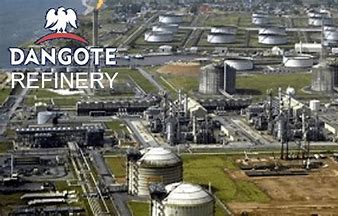

LAGOS, NIGERIA — The battle for the soul of Nigeria’s downstream petroleum sector has escalated into a fierce legal confrontation. The Nigerian National Petroleum Company Limited (NNPC) has officially accused the Dangote Petroleum Refinery of attempting to establish a monopoly over the nation’s fuel market. The accusation comes in response to a fresh lawsuit filed by the $20 billion refinery seeking to void fuel import licences granted to rival marketers.
In court documents filed before the Federal High Court in Lagos, the NNPC argued that granting Dangote’s request to restrict or cancel import permits would severely undermine market competition. The state oil company warned that such a move would expose Africa’s largest oil producer to severe supply disruptions, price instability, and profound risks to national energy security.
The dispute centres around the interpretation of the Petroleum Industry Act (PIA). Dangote Refinery contends that the Nigerian Midstream and Downstream Petroleum Regulatory Authority (NMDPRA) is violating Sections 317(8) and (9) of the PIA by issuing import licences to companies like NIPCO, Matrix Energy, and the NNPC itself. Dangote argues that under Nigeria’s backward integration policy, import licences should only be issued when there is a verified domestic petroleum shortfall, claiming its 650,000-barrel-per-day facility (recently tested at 661,000 bpd) is fully capable of meeting national demand.
The NNPC, however, vehemently rejected this premise. The national oil firm stated that Dangote has failed to provide “credible, independent or verifiable evidence” that it can consistently guarantee uninterrupted, nationwide supply. Furthermore, the NNPC noted that the law permits the issuance of import licences to companies with local refining licences or a proven track record in international crude and petroleum trading.
What Threat Does This Pose to the Upcoming Dangote IPO?
As the Dangote Refinery prepares for its highly anticipated Initial Public Offering (IPO) on the Nigerian Exchange—which has already attracted massive investor interest and high-profile pledges—this brewing regulatory war introduces significant headwinds. The allegations of monopolistic behavior and the ongoing litigation pose several distinct threats to the listing:
1. Heightened Regulatory and Sovereign Risk
Institutional and foreign investors heavily weigh regulatory stability when valuing an asset. A public, drawn-out legal war against the federal government, the state oil company, and the primary downstream regulator (NMDPRA) creates an environment of profound uncertainty. Investors may price in a “regulatory risk discount” if they fear the state could retaliate with punitive policies, tighter operational oversight, or price-capping measures to curtail perceived monopolistic dominance.
2. Supply Chain Vulnerabilities
While the NNPC denied allegations of sabotaging the refinery or deliberately withholding crude oil allocations, the fact remains that NNPC is a critical partner in Nigeria’s crude supply framework. An adversarial relationship with the state oil company raises red flags for potential investors regarding the refinery’s long-term operational stability and its ability to secure consistent, fairly priced feedstock.
3. The “Monopoly” Stigma and Antitrust Scrutiny
Being formally accused of seeking a monopoly by the state is a severe reputational threat. For international investors bound by strict ESG (Environmental, Social, and Governance) and anti-competition mandates, the prospect of backing an entity embroiled in antitrust disputes could dampen enthusiasm. If the courts rule against the refinery, it establishes a legal precedent that Dangote must compete with imported products indefinitely, which could compress the high profit margins investors are banking on.
4. Valuation Volatility
An IPO thrives on confident forward-looking projections. If Dangote’s revenue models are predicated on being the sole supplier of refined products to the Nigerian market, a court ruling that preserves an open-import market could force a recalculation of the refinery’s projected earnings. This uncertainty could lead to a lower-than-expected valuation during the book-building phase of the IPO.
While the Dangote Refinery remains one of the most consequential industrial investments in African history, this legal showdown proves that dominating the physical refining landscape does not automatically guarantee a frictionless transition to dominating the market. As the Federal High Court prepares to hear the case in the coming weeks, the global financial community will be watching closely to see if Africa’s largest refinery can secure its market borders before opening its books to the public.
For more breaking business and energy news, visit www.abtnews.net.


 By
By