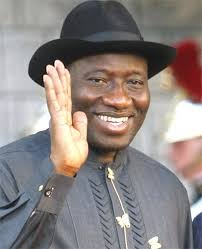

ABUJA — The political landscape in Nigeria is experiencing a seismic shift ahead of the 2027 general elections. In a startling development, powerful political support groups are intensely mobilizing to draft former President Goodluck Ebele Jonathan into the 2027 presidential race. Authoritative sources have disclosed to ABT NEWS that these coalitions are finalizing plans to pick up the Peoples Democratic Party (PDP) presidential expression of interest and nomination forms on his behalf as early as Monday.
The movement, spearheaded by groups such as “The Coalition for Jonathan 2027” and “Goodluckans 2027,” represents a growing wave of nostalgia among Nigerians who are drawing sharp contrasts between Jonathan’s era and the present day. Following recent closed-door meetings with key political leaders, including PDP stalwarts and South-East powerbrokers like Peter Obi, the speculation of a “Jonathan Comeback” is no longer just a rumor—it is becoming a formidable political crusade.
But as the pressure mounts, the critical questions remain: Who is the man behind the hat, can he resist the pressure, and does he realistically stand a chance in the Nigeria of today?
The Goodluck Jonathan Persona: Can He Resist the immence Pressure?
Goodluck Jonathan’s political ascent has often been described as accidental, but his exit from power was deliberate and historic. Appraising his personality reveals a mild-mannered, deeply democratic, and non-desperate leader. He is etched in Nigerian history for his famous 2015 declaration: “My ambition is not worth the blood of any Nigerian,” a statement that averted a looming post-election crisis.
Jonathan is a statesman who respects institutional independence. Unlike typical Nigerian politicians obsessed with state capture, he allowed institutions like the Independent National Electoral Commission (INEC) to function without executive coercion—even to his own political detriment.
Will he resist the pressure? It will be exceedingly difficult. Jonathan has recently stated that he is embarking on “wider consultations” before making a formal decision, a subtle indicator that he is actually considering the race rather than shutting it down completely. However, he is also fiercely protective of his hard-earned legacy as an international symbol of democracy. If he senses that the political terrain is irreparably rigged or that running would diminish his pan-African statesman status, he might firmly politely decline the mandate. Perhaps!
Why the Clamor for His Return?
The clamor for Jonathan is largely driven by “economic and democratic nostalgia.”
- Economic Relief: Many Nigerians remember his tenure (2010–2015) as an era where the cost of living was relatively manageable, businesses thrived under certain policies, and the naira had better standing.
- Respect for Rule of Law: Citizens increasingly miss a leader who was tolerant of criticism. During the 2012 Occupy Nigeria protests, citizens demonstrated freely without fear of state-sponsored violent crackdowns.
- National Cohesion: At a time when Nigeria feels deeply polarized along ethnic and religious lines, Jonathan is viewed as a bridge-builder whose leadership reflects the inclusive values Nigeria urgently needs.
A Tale of Two Nigerias: Jonathan’s Era vs. Today
The Nigeria Jonathan left in 2015 is vastly different from the Nigeria of 2026/2027.
- Institutional Integrity: Under Jonathan, democratic institutions operated with a high degree of autonomy. Today, critics and political analysts point to a deeply entrenched system of “institutional capture,” expressing widespread concerns that strategic institutions like the judiciary, police, and the electoral commission have been compromised by incumbent loyalties.
- The Economy: While Jonathan faced severe backlash for attempting to partially remove fuel subsidies in 2012, today’s Nigeria is grappling with the harsh realities of the total removal of those subsidies, astronomical inflation, and severe currency devaluation.
- Security: While Boko Haram was a massive headache during Jonathan’s time, the current security apparatus is battling a more decentralized and widespread wave of banditry, kidnapping, and localized terrorism across almost all geopolitical zones.
What Are His Chances of Winning?
If Goodluck Jonathan accepts the PDP form on Monday, his road to Aso Rock will be exponentially bumpier than it was in 2011 or 2015.
His chances of winning hinge on his ability to unify a highly fragmented opposition. Currently, the PDP, Labour Party (LP), and the emerging African Democratic Congress (ADC) coalition are struggling with internal factionalism and legal battles.
Furthermore, Jonathan would be going up against President Bola Ahmed Tinubu, a seasoned strategist who operates a deeply entrenched political machine. While Jonathan relied on goodwill and democratic restraint, the current ruling party relies on raw political clout, strategic appointments, and the formidable power of incumbency. To win, Jonathan would need more than just nostalgia; he would need a watertight, unified mega-coalition and absolute vigilance to outmaneuver the incumbent’s electoral machinery.
As Monday approaches, the nation holds its breath. Will the “reluctant president” step back into the brutal arena of Nigerian politics?
Keep your eyes glued to www.abtnews.net as we bring you live updates on this developing political earthquake.

 By
By